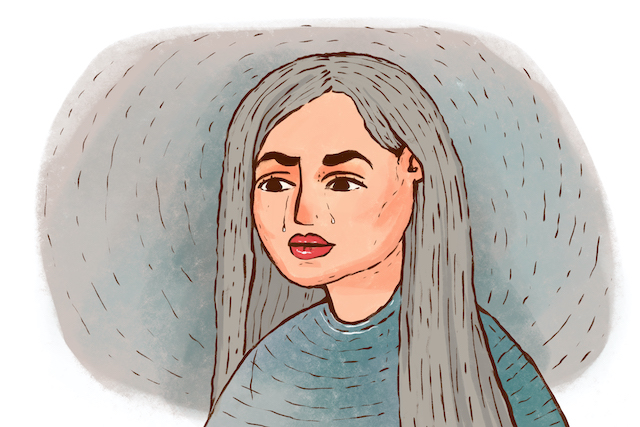
“The wound is the place where the Light enters you.” ~Rumi
I’ve spent most of my adult life helping people heal.
I’m a podiatrist, a foot and ankle surgeon, and I’ve seen pain in many forms. Torn ligaments. Crushed bones. Wounds that just won’t close. But if I’m being honest, the deepest wounds I’ve encountered weren’t the ones I treated in my clinic. They were the invisible ones, the ones that patients carried silently, and the ones I had unknowingly been carrying myself.
I used to think healing was straightforward. Diagnose. Treat. Follow up. Recover.
That made sense to me. That’s how I was trained. But life and people are rarely that neat.
Years ago, I was treating a woman in her mid-sixties with chronic foot ulcers from diabetes. Medically, we were doing everything right. The right dressings, offloading, antibiotics, regular check-ups. But her wounds weren’t healing. I couldn’t understand why. I grew frustrated. I started questioning my treatment plan. I blamed myself.
Then one day, she said softly, “Sometimes I don’t even want them to heal.”
She wasn’t being difficult. She was being honest.
Her husband had passed, she lived alone, and these appointments were one of the few times someone checked in on her, looked her in the eye, and asked how she was. Her wounds gave her a reason to be seen.
That stopped me in my tracks.
I realized I had been treating her foot, but I wasn’t seeing her, not fully. I was missing the emotional story behind the physical wound. And in doing so, I was also missing something in myself.
I had always prided myself on being composed, efficient, capable. Residency had trained me to push through fatigue, stress, and long hours. It rewarded perfectionism and punished vulnerability. So I wore my resilience like armor.
But under that armor, I was tired. I was emotionally dry. I felt disconnected from the very thing that made me want to become a doctor in the first place: the human connection.
It wasn’t until I saw the pain beneath my patients’ stories—grief, loneliness, shame, fear—that I started to acknowledge the pain I was carrying too.
Not physical pain. Not burnout in the textbook sense. But something softer and harder to name: an unspoken ache to feel more whole.
I’ve had patients apologize to me through tears for “wasting my time,” as if their suffering wasn’t worth attention. I’ve had patients tell me stories of trauma that had nothing to do with their feet but everything to do with why they weren’t healing.
I started listening more. I stopped rushing. I began asking, “How are you, really?” And slowly, as I created space for others to be vulnerable, I began to offer that space to myself too.
I started journaling again. I made peace with taking time off. I reconnected with friends I had been “too busy” to call. I spoke to a therapist, not because I was in a crisis, but because I was curious about the parts of myself I had ignored for too long.
Healing, I learned, isn’t always about fixing what’s broken. Sometimes, it’s about acknowledging what hurts, even if there’s no clear diagnosis.
In medical school, we’re trained to be experts. To have answers. To guide.
But healing, real healing, doesn’t always happen in the exam room. Sometimes it happens in a quiet moment of shared understanding, when two human beings drop their roles and just see each other.
I’ve stopped pretending I have it all together. I’ve started being more honest with myself and with others. My patients sense that, and I think they trust me more because of it. Not because I’m perfect, but because I’m real.
What Have I’ve Learned?
Healing isn’t linear. Neither is growth. People don’t just want to be fixed. They want to be seen.
Pain isn’t always physical. And sometimes the deepest wounds are the quietest.
Presence heals more than performance.
I don’t think I’ll ever stop learning how to be human. But I’m grateful my patients have given me the space to try, not just as their doctor but as a fellow traveler on the road to healing.
Dr. Rizwan Tai is a Houston-based podiatrist and former Chief Resident at UT Health San Antonio. He’s passionate about the human side of healing both for patients and providers. When he’s not in clinic, Rizwan enjoys reflective writing, long walks, and conversations that go beyond surface level. Visit him at vitalpodiatry.com.
“When an old person dies, a library burns to the ground.” ~African Proverb
For most of my life, I thought aging was about bodies slowing down—hair turning white, memory fading, steps getting shorter. But caring for my ninety-six-year-old mother has changed that. I now see something deeper and more painful: the slow erasure of wisdom in a culture that prizes the new, dismisses the old, and moves too fast to notice what it’s losing.
We live in a world that idolizes youth and innovation—new tech, new trends, new ideas. “Old” has become shorthand for “outdated.” When wisdom becomes invisible, we stop asking questions that matter, and we lose the guidance of those who have seen life’s full arc.
One afternoon, as my mother told me a story about her father, I realized something that shook me: if I don’t learn to be fully present with her now, I will not only lose her. I will lose the chance to carry her wisdom forward—and to know myself more deeply.
The Moment It Hit Me
The house was bathed in late-afternoon light, soft and gold. My mother sat across from me, recalling her childhood—ration cards during the war, the first time she heard music on a radio.
Then she stopped mid-sentence. The silence stretched. I felt my familiar impatience rise—that tug to finish her thought, to move on, to get back to my to-do list.
But this time, I stayed.
I stayed through the silence and felt something shift. The pause wasn’t empty—it was full of her effort, her dignity, her reaching through time for something that mattered. If I rushed her, I would erase more than her memory. I would erase her right to find it.
At that moment, I understood that listening is not just kindness. It is preservation—of her story, our relationship, and my own capacity to stay present when life gets hard.
What I Learned About Decline
Caring for an elder is not simply about keeping them safe, fed, or medicated. It’s about bearing witness as their world grows smaller.
Witnessing is not passive. It is active work—the work of noticing subtle shifts in tone, the way their eyes light up at a song they still remember, the pride they feel when they can still tell a story no one else alive remembers.
This process has taught me that dignity is not about staying strong forever. Dignity is about being seen and valued all the way to the end. And that is something we can give to each other—if we are willing to slow down.
The Cost of a Culture That Looks Away
Our society moves at high speed, and it is easier to avert our eyes from aging, decline, and death. Youth is celebrated. Age is feared. “Old” becomes something to hide, something to fix, or worse, something to ignore.
But every time we look away—even just emotionally—we lose something irreplaceable. We lose not only their stories but also the chance to prepare ourselves for the same journey.
These moments of care have become some of the most alive moments of my life. They have taught me patience, tenderness, and a kind of presence no app, no book, no productivity hack could teach.
And they have reminded me that one day, I will be the one searching for words, hoping someone is patient enough to stay.
A Gentle Practice
We can resist the rush and recover the habit of listening. Try this:
Ask one question. It can be small: “What did Sundays look like when you were ten?”
Wait. Let the silence do its work. Let them find the memory.
Preserve it. Write it down or record it—not just for history, but for your own heart. Even one memory saved is a piece of the library kept from burning.
Lessons I Carry Forward
My time with my mother has shown me that love is measured not by big, dramatic gestures but by the willingness to stay—to keep showing up, even when it is inconvenient, even when it breaks your heart.
It has taught me that listening is not passive. It is an act of reverence, a way of saying, “You still matter. Your voice still matters.”
And it has challenged me to push back against a culture that treats wisdom as disposable. The elders are not holding us back. They are holding the map of where we’ve been so we don’t lose our way.
So I choose to stay, to listen, to honor what is fading instead of rushing past it. Because one day, I will be the one pausing mid-sentence, searching for a memory—and I will hope someone stays long enough to let me find it.
Tony Collins, EdD, MFA, is a writer, documentary filmmaker, and educator whose work explores presence, creativity, and meaning in everyday life. His essays blend storytelling and reflection in the style of creative nonfiction, drawing on experiences from filmmaking, travel, and caregiving. He is the author of Creative Scholarship: Rethinking Evaluation in Film and New MediaWindows to the Sea: Collected Writings. You can read more of his essays and reflections on his Substack attonycollins.substack.com.
“We don’t inherit the earth from our ancestors; we borrow it from our children.” ~Native American Proverb
For years, I blamed my parents for my anxiety, my defensiveness, and my need to be right. Then I learned they inherited the same patterns from their parents. And theirs before them.
This wasn’t about blame. It was about breaking a cycle nobody chose.
The Stutter That Taught Me Everything
As a teenager, I developed a stutter. Not just occasional hesitation—paralyzing anxiety about speaking.
I’d anticipate making mistakes when reading aloud. Starting conversations felt like walking through a minefield. The fear of stuttering made me stutter more—a cruel self-fulfilling prophecy.
In college, studying psychology, I discovered something liberating. The anxiety about stuttering was causing the stuttering.
Once I learned to relax, breathe deeply, and stop anticipating errors, the stutter disappeared. Years later, I successfully presented high-stakes business proposals to executives. Not a single stumble.
I thought I’d conquered a personal flaw through willpower and technique. I was wrong.
The Discovery That Changed Everything
During college, I learned my father’s story. As a child, he had a lisp.
His father—my grandfather—thought it was hilarious. He’d make my dad recite tongue-twisters in front of family and friends. Highlighting his speech impediment for entertainment.
That cruel mockery created anxiety. That anxiety transmitted to me.
Different manifestation—stuttering instead of a lisp. Same underlying pattern: fear of speaking, anticipation of judgment, dread of being heard.
The medical field claims stuttering is genetic. But no gene has been identified. What I inherited wasn’t DNA. It was learned behavior.
My father’s anxiety about speaking became my anxiety about speaking. Not through genetics. Through observation, absorption, and unconscious imitation.
This realization brought us closer. We worked together in the family business after college.
Understanding this generational pattern created compassion between us before he died.
We Learn Who We Are from Birth
We begin learning emotional responses from our first breath. Our parents are our first teachers—not by choice, but by proximity.
We watch how they handle stress. Whether they express emotions or suppress them. How they react to criticism, disappointment, conflict.
These aren’t conscious lessons. Nobody sits down and says, “Today I’ll teach you anxiety.” We absorb patterns the way we absorb language. Through immersion.
Attachment theory tells us early bonds shape how we relate to others throughout life. If our caregivers were emotionally unavailable, we learned that seeking connection leads to disappointment. If they were unpredictable, we learned to stay vigilant, always watching for mood shifts.
These patterns feel normal because they’re all we’ve known. Like growing up in a house where everyone speaks softly—you don’t realize you’re whispering until you visit a family that talks at normal volume.
The Patterns We Inherit Without Knowing
I’ve spent twenty years in change management, helping organizations break dysfunctional patterns. The same patterns that cripple organizations cripple families. They transmit across generations like a computer virus copying itself onto new systems.
Anxiety and self-doubt.
Your parent worried constantly. Now you do too. You scan for danger even when there is none.
Perfectionism.
Nothing you did was quite good enough growing up. Now you drive yourself relentlessly. And criticize yourself harshly when you fall short.
Conflict avoidance.
Arguments in your house were scary—shouting, door-slamming, silent treatments. Now you’d rather suffer in silence than risk confrontation.
Emotional unavailability.
Your parents didn’t know how to talk about feelings. Now you don’t either. You change the subject when conversations get deep.
Boundary struggles.
You were told, “Family has no boundaries. We share everything.” Now you can’t say no. You feel guilty prioritizing your own needs.
These aren’t character flaws. They’re learned responses to the environment you grew up in.
And what you learned, you can unlearn.
Why Blame Keeps You Stuck
When I first understood my stuttering came from my father’s anxiety, I was angry. Why didn’t he fix himself before having kids? Why did he pass his damage to me?
Then I learned about his father’s cruelty. And I had to ask: was my father supposed to heal trauma he didn’t even recognize?
Blame requires someone else to change. But you can only change yourself.
Resentment hurts you more than them. It’s like drinking poison and expecting the other person to die.
Here’s the paradox: you can’t heal what you won’t acknowledge. But you can’t move forward while blaming.
The shift that changes everything: “This isn’t my fault. But it is my responsibility.”
Your parents couldn’t teach what they never learned. They did their best with what they inherited. Understanding that doesn’t excuse harmful behavior. But it creates space for compassion.
And compassion—for them and for yourself—is where healing begins.
The Pattern Recognition Practice
Change starts with awareness. You can’t interrupt a pattern you don’t recognize.
Here’s how to begin.
Identify inherited behaviors.
Ask yourself: What behaviors did I watch growing up? When do I sound like my parents—even when I swore I wouldn’t? What struggles did they have that I now face? For me, it was the anxiety about speaking. The anticipation of failure. The internal critic that said, “You’ll mess this up.”
Understand the committee in your head.
Those critical voices aren’t yours. They’re recordings of other people’s voices—parents, teachers, bullies, authority figures.
My internal voice said, “You’re going to stutter. Everyone will notice. They’ll think you’re stupid.”
That wasn’t me. That was fear I learned.
Catch yourself mid-pattern.
Awareness itself is the intervention.
When I felt anxiety rising before speaking, I’d pause. Notice the feeling. Name it: “This is the inherited pattern.”
Then breathe. Deeply. Three slow breaths.
That pause—between trigger and response—is where freedom lives.
Choose a different response.
You don’t have to react the way you’ve always reacted.
Instead of avoiding speaking situations, I deliberately practiced. Small presentations at work. Reading aloud to my son. Each time, focusing on breathing rather than anticipating errors.
The pattern weakened. The new response strengthened.
Just as you learned these patterns, you can unlearn them. With focus, time, and awareness.
The Gift You Give Yourself—and Your Children
Breaking inherited patterns isn’t just about healing your past. It’s about transforming your future.
Every time you interrupt an automatic response, you break the generational chain. You stop transmitting that pattern to your children.
My son doesn’t have speech anxiety. Because I didn’t model it for him. The cycle broke with me.
That’s the most profound gift: stopping the transmission.
You can’t change your parents. You can’t erase your past. But you can choose different patterns moving forward.
When my father and I worked together, understanding these patterns created a bridge between us. I stopped resenting him for what he couldn’t give. He stopped feeling guilty about what he’d passed down.
We both recognized we were doing our best with what we inherited. And we could do better for the next generation.
He’s gone now. But that understanding—that compassion—was healing for both of us.
Where Healing Begins
Your poor self-image isn’t your fault. Your anxiety, your perfectionism, your difficulty with boundaries—none of it is a character flaw.
These are learned behaviors. Inherited patterns. The emotional equivalent of your grandmother’s china—passed down through generations without anyone questioning whether you actually wanted it.
You didn’t choose these patterns. But you can choose what to do with them now.
Recognition is the first step. Not to assign blame, but to understand the mechanism.
Then comes practice. Catching yourself mid-pattern. Pausing. Breathing. Choosing a different response.
It won’t be perfect. You’ll slip back into old patterns. That’s normal. Progress, not perfection.
But over time, the inherited patterns weaken. Your conscious choices strengthen.
And one day, you realize that critical voice is quieter. That anxiety is manageable. That automatic reaction doesn’t feel so automatic anymore.
You’ve broken the cycle.
Start Today
Choose one inherited pattern you recognize. Just one.
This week, notice when it shows up. Don’t try to fix it yet. Just notice.
“There’s the perfectionism.”
“There’s the conflict avoidance.”
“There’s the need for approval.”
Awareness is where change begins.
These patterns took years to develop. They won’t disappear overnight. But they will change. Because they’re learned behaviors. And what you learned, you can unlearn.
Your struggles aren’t character flaws. They’re inherited patterns. And patterns can change.
Mike Palm is a change management consultant with over 20 years leading transformation across 60 corporations. After discovering his stuttering was inherited anxiety from his father—who inherited it from his grandfather—he developed frameworks for breaking generational patterns. He leads a nonprofit supporting 12-step programs and is the author of The Legacy of Emotionally Immature Parents. Learn more here.
“We can’t receive from others what they were never taught to give.” ~Unknown
When I was younger, I believed that love meant being understood. I thought my parents would be there for me, emotionally and mentally. But love, I’ve learned, isn’t always expressed in the ways we need, and not everyone has the tools to give what they never received.
As an adult, I’ve learned something both liberating and heartbreaking: Parents can only give what they have.
I used to get frustrated that my parents couldn’t really understand my mental health struggles. The realization didn’t hit me suddenly. It settled in slowly, in moments when frustration turned into sadness, hurt, and a quiet kind of grief. When I finally allowed myself to face the loneliness and disappointment I’d pushed aside for years, I began to accept it.
If they were never taught emotional regulation, how could they show it to me?
They loved me with the language they knew, even if that language was incomplete.
Later, I realized they never had the tools or support to understand their own emotions. They weren’t ignoring me; they simply didn’t have the capacity. They came from a different generation, with limited knowledge and very little space to explore feelings. Understanding that changed the way I saw them.
Accepting their limitations wasn’t about excusing the harm or pretending everything was fine. It was about finally letting go of a dream that kept me stuck—the dream that one day, they’d become the parents I wished for.
There were moments when I felt deeply misunderstood, like when I tried to talk about my anxiety and was told to just be strong. I didn’t need advice; I needed comfort. Those moments made me realize how different my emotional world was from theirs.
The acceptance can be bittersweet. I had to grieve what I needed but never received—the comfort when I was overwhelmed, the emotional safety to speak freely, and the validation that my mental health struggles were real and not weakness.
Grieving meant sitting with the hurt of being misunderstood, the loneliness of carrying feelings on my own, and the disappointment of not experiencing the closeness I had hoped for. Allowing that grief was painful, yet it also made space for healing.
And it brings a strange kind of freedom.
When I stopped expecting my parents to meet needs they couldn’t meet, I created space for fulfillment elsewhere—through personal growth, meaningful friendships, and chosen family.
Releasing those expectations felt like finally setting down a heavy weight I had carried for years.
I began building my own emotional vocabulary and learned how to soothe the parts of me that once screamed for their understanding. At the same time, my relationship with my parents shifted, not because they changed, but because I stopped measuring them against a version they couldn’t be. I could see them more clearly, with compassion and honesty, and in that clarity, I found peace.
This doesn’t mean it’s easy to be kind and compassionate toward them.
Some days, my inner child still rises up, hurt and angry. Compassion isn’t automatic; it’s a practice. A mindful decision to keep the past from shaping today.
When my inner child rises up:
I feel sudden waves of hurt, anger, or frustration.
Old memories or unmet needs surface, sometimes triggered by small events.
I might withdraw, snap, or ruminate, replaying the moments I felt unseen.
Physically, it feels tense, restless, or tearful.
When I offer compassion:
I pause and acknowledge the feelings without judgment: “It’s okay to feel hurt; this was hard for you.”
I consciously soothe the younger part of me through self-talk, journaling, or comforting routines.
I remind myself that I am safe now and have the tools and support the younger me lacked.
The anger softens, tension eases, and I feel steadier, calmer, and more present.
Impact:
When left unchecked, the inner child keeps me stuck in old patterns, replaying grief and frustration.
Offering compassion validates my experiences, interrupts cycles of shame, and creates space for healing and growth.
Here’s what helps me when it’s hard:
Remembering their humanity
They are not only parents; they are people shaped by their own pain, fears, and limitations. I came to see that their distance or emotional unavailability wasn’t about me but about the wounds and fears they carried from their own lives. Understanding this shifted my frustration into compassion, even when their actions had once hurt me.
Holding two truths at once
I can acknowledge the hurt and understand their struggles. Compassion doesn’t cancel out pain.
Reparenting myself
When I give myself the care I needed as a child, I loosen the grip of old expectations.
It looks like noticing my own feelings without judgment, offering comfort when I’m anxious or sad, and reminding myself that it’s okay to need support.
It means setting boundaries I wished I had, speaking kindly to myself, and creating small rituals of safety and reassurance—a warm cup of tea, journaling, or simply sitting quietly with my emotions.
Reparenting isn’t a single act; it’s a series of mindful choices that teach my inner child they are seen, valued, and loved.
Setting boundaries without guilt.
Acceptance doesn’t mean unlimited access. I can love them and still protect my peace.
Finding my own teachers.
Emotional growth can come from therapy, community, or personal reflection. I’m no longer waiting for them to teach me.
Letting go of the hope that someone will change is one of the most painful forms of love. And sometimes, it’s the only way to make space for your own growth.
I’ve stopped expecting my parents to give me what they never knew how to give, and I’ve begun giving myself the love and care I was missing. Sometimes healing begins with accepting them as they are and then turning that compassion inward.
Shobitha Harinath is a photographer and writer who explores self-growth, healing, and relationships through personal reflection. Her writing offers a space to understand emotions, connection, and inner transformation. Follow her on Instagram: @maybe_existential.
“It’s all right if you can’t remember. Our subconscious is spectacularly agile. Sometimes it knows when to take us away, as a kind of protection.” ~Kathleen Glasgow
A couple of weeks ago, I found myself crying in the park. It was supposed to be just a typical summer day. I was enjoying my usual stroll with my dog, Boni. The sun was shining, and the shade of the trees provided a very welcoming shelter from the burning sun.
Children were running and laughing, and their joy drew me in. Two of them, tiny three-year-olds, were squealing, all happy, wearing Hawaiian-style skirts and flowers around their necks.
I looked to the right, and there was the perfect birthday scene: a whole setup with tables, an abundance of food and drinks, balloons floating in the air, hanging by invisible threads, adults conversing with each other, and more kids playing in different spots.
The atmosphere was so heartwarming that I immediately felt happy for the birthday girl. Inspired by the scene, I asked myself, “Oh, how were my birthday parties?“
Blank.
Oh my, I couldn’t remember my birthday parties as a child past a certain age, no matter how hard I tried. It was as if I were walking to a place I was sure existed, and all of a sudden, I found a wall. Where the hell did it go? Why can’t I see it? Why is this wall here? Immediately, I started crying. “I don’t remember!” I said to myself repeatedly, sad and frustrated.
Boni started walking me around as I tried to recall my memories. “You can do this, Erika, c’mon!” But I couldn’t. My last memory of a birthday party as a child was before I was physically and sexually abused. All parties after that? Blank. Did they exist? I’m pretty sure they did. Did I have fun? I have no idea.
The question here is not the birthday parties per se; I’m sure I had some sort of celebration, but the heartbreak was knowing little Erika was so hurt and traumatized that her brain shut down on such special occasions.
If you’ve been through traumatic experiences, you may be relating to me right now and thinking, “I feel you, Erika. How do we deal with that?” I get you. It is so painful not having experienced certain things, not being able to remember, not being able to hop into some conversations because your childhood was not “normal” or you can’t remember anything.
But I’m here to bring you hope. Even though it is heartbreaking, you can soothe your heart and find peace. That’s what happened to me on that day when I realized I couldn’t remember my birthday parties. I used five steps I’ve learned on my healing journey to help me process my emotions and get back to my center fairly quickly.
You can use these same steps every time you feel triggered by a memory (or lack thereof) or if something from your past is really bothering you.
1. Acknowledge the pain.
If there’s one thing I learned on my healing journey, it’s that pain needs to be seen and acknowledged. There’s no point in wiping our tears away and pretending like nothing happened. I tried that, and it resulted in years of feeling anxious and numb.
Nowadays, I welcome the pain and celebrate the tears. They are a sign of release, and isn’t that what we want? To release these emotions and pain stored in our bodies?
That’s where I started. I acknowledged my pain. And I know this sounds wild, but I started talking to myself there and then. I spoke to little Erika: “I get what you are feeling. It is painful, and it sucks. You didn’t deserve to go through all that. I see you. Feel what you want to feel. I will hold you; I’m here for you.” And I let the tears, the sadness, and the grief take over.
Although it was a bit unusual to go through this process at the park, I believe that walking and being in nature helped me work through my emotions more easily. I’m not trying to have another breakdown at the park, but being surrounded by nature and moving really came in handy!
2. Soothe and regulate.
My next step was to help myself regulate. After allowing my feelings to surface, I wanted to bring myself to a more grounded place. We want to express our emotions, but being in that place for longer than necessary is not ideal either.
So, I used deep, slow breaths to help me relax, gently touched my arms up and down, softly rubbed the palms of my hands against each other, and kept walking in silence. The feelings were still there, but as time passed, they became less intense, and the sense of panic I felt started to fade.
I can’t remember if I hummed, but it helped me regulate my emotions in the past, so I’m leaving it here in case you can use an extra tip.
3. Bring yourself back to the present moment.
After letting grief take over and returning our body to safety, it is time to get back to the present moment, because when we go through situations like this, our mind goes straight to the past, and for that instant, we’re not here anymore. That is normal, but we’ve got to pull ourselves back. And that’s what I did.
Shamelessly, I started talking to little Erika again: “Girl, we got awesome birthday parties now! You are surrounded by love, and home feels safe. It’s simply amazing!“
The trick is to show yourself that you’re no longer in the past.
My hope is that you are safe and in a different position right now and that your painful past circumstances are no longer present in your daily life. If that’s not where you are yet, my heart goes out to you, and I want you to know that you are not alone. It is not unusual for survivors to find themselves in situations that are eerily similar to their past, but after all you’ve been through, you deserve better. You deserve to take your power back. May this be your sign to reach for support to create real safety in your life.
You might have felt powerless back then, but you have the power now. And that takes us to the next step.
4. Make plans for the future:
Here is the thing: in these situations, we tend to focus on what we didn’t have, what we lost, or what we were “robbed” of. But this is you taking your power back. Yes, you didn’t have it back then, but you can give it to yourself right now if you choose to, whether that’s something tangible like a birthday cake or something more emotionally based, like self-validation.
Since you have the power, you get to decide what to do from here. And that’s exactly what I did. I reflected on my conversation with my inner child and figured out my needs—in the moment and moving forward.
So ask yourself what you need, and go all in; this is not the time to be embarrassed or to overlook your needs. Need bigger birthday parties? A more active social life? More rest? Asking everyone to take pictures at events so you can look back and remember?
Sometimes this step takes a bit of time, so it’s okay to ask the question and allow space for the answers to come. Whatever that need is, you can always give it to yourself now. I know you may be thinking it, so let me say this: it is never too late to give yourself what you didn’t have back then. You deserve it!
5. Talk about it.
This step is entirely optional, but I found out through personal experience that it can be highly beneficial to you and your loved ones. In my case, I was walking my dog, and eventually, I needed to get back home, where my partner was waiting for me.
In the past, I’d say nothing about what happened and just keep it to myself. I’d think, “I dealt with it, so what’s the point in sharing?“
But here’s the thing (only valid if we’re talking about healthy, loving, supporting people): when you share what happened to you, your loved one will understand why you may be “off.” They may help you with anything you need; they can give you space and time, or a hug, or a shoulder to cry a bit more on.
Or in my case, a very enthusiastic “Your next birthday parties are going to be SPECTACULAR! We’re gonna celebrate so much and create loads of new beautiful memories!“
People who love you want to know what’s going on with you and to support you in any way they can, so don’t hesitate to reach out.
These were the steps that helped me on that day, and honestly, on any day I felt triggered by memories of the past, or the absence of them. My hope is that they help you, too.
Know that you are not alone, and that from the present moment, anything can happen. Your past may sometimes come to shake you, but you can turn it into a powerful moment of healing and release. Lean into curiosity and show yourself some love and compassion. You really deserve it.
Cheers to filling in the blanks with new, beautiful, happy memories!
Erika Sardinha is an empowerment coach for survivors based in the Canary Islands. Her purpose is to help survivors reclaim their right to be gentle and achieve success in an aligned way, honoring themselves and their journey. She offers private and group coaching for people who’ve been through trauma while providing various free resources to her community. Join Erika’s free Gentle Badass Community for survivors on WhatsApp and grab her 10-day Empowered Self-care Guided Journaling Experience (also free)! Facebook / TikTok
I’ve never believed that change should be reserved for special days, but the New Year tends to carry a sense of promise. It often brings a surge of clarity, motivation, and hope that maybe things really could be different.
And then, as January moves along, that initial energy fades.
Responsibilities pile up. Our bandwidth shrinks. And before we know it, we’re pulled back into the familiar current of obligations, far from the shore we were hoping to reach.
It’s not that we lack willpower or discipline. Most of us are already trying hard. What we often need instead is the right kind of support to help us stay the course when life inevitably intervenes.
That’s why I wanted to share something I think many of you will appreciate.
The Best Year of Your Life Summit 2026, presented by Wisdom for Life, is a free, eight-day online event designed to help you approach the year ahead with intention rather than just hope.
More than 50 respected teachers and guides come together to share practical insights to help you build a solid foundation for the year—one that actually supports your real life.
This is the sixth year of the summit, and hundreds of thousands of people have participated since it first launched.
Whether you’re focusing on your health, relationships, finances, mindset, or sense of purpose, you’ll find grounded tools you can start using right away.
You’ll hear from voices you may already know and trust, including Tara Brach, Jack Kornfield, Sharon Salzberg, Kristin Neff, Ken Honda, Pico Iyer, Sue Morter, Marci Shimoff, and many others.
Each session is intentionally short—about 20–25 minutes—so you’re not asked to carve out huge blocks of time or absorb information you’ll never use. The focus is on insight you can integrate into daily life without overwhelm.
Over the eight days, you’ll explore how to:
Build sustainable energy and vitality so you’re not exhausted by 3pm or short-tempered with the people you love
Strengthen your relationships with tools for better communication and deeper presence
Create financial clarity that replaces the anxiety keeping you up at night with actual confidence
Develop habits that stick because they’re aligned with who you truly are, not who you think you should be
Reconnect with joy and purpose in ways that feel natural, not forced
The summit touches on all the areas that tend to shape our days most:
Habits, mindset, and purpose
Emotional and mental well-being
Physical health and vitality
Relationships and communication
Financial health and abundance
Simplicity, balance, and harmony
Spirituality and self-discovery
Most years, we hope things will be different. We try harder, set more goals, and push through.
This year, try a different approach: build the foundation that makes lasting change possible. Eight days with the right kind of support can help shape your whole year ahead.
“Most people do not listen with the intent to understand; they listen with the intent to reply.” ~Stephen R. Covey
I used to think running a barbershop was all about haircuts, schedules, and keeping clients happy. I measured success by the number of chairs filled, how quickly we moved through the day, and whether everything ran smoothly. Efficiency felt like the most important thing.
Then one afternoon, a moment with a customer changed everything.
Mr. Hicks, a regular, came in looking unusually quiet. He slumped in my chair, barely making eye contact, and gave only short, mumbled answers when I tried to make small talk. Normally, I would have filled the silence, tried to keep him talking, or offered advice. But that day, I paused. I simply listened. I let him sit in silence as I worked, resisting the urge to speak unnecessarily or try to “fix” anything.
Minutes later, he began to share struggles he had been carrying for months—tensions at work, family challenges, the weight of constant exhaustion. By the time I finished his haircut, he looked lighter, calmer, almost relieved.
I realized I hadn’t needed to give advice. I hadn’t needed to solve his problems. I had only given him my attention. That day, I learned a lesson I carry with me every time I sit behind the barber chair: listening is a gift, patience is a practice, and presence can heal in ways words sometimes cannot.
This lesson didn’t just apply to Mr. Hicks. Over time, I began noticing similar moments with other clients, apprentices, and even friends and family.
A young apprentice, struggling to perfect his techniques, came in one morning looking defeated. Instead of correcting him immediately, I stepped back, watched, and let him try on his own. When he finally turned to me for guidance, the lesson became his own. The joy on his face was more rewarding than any praise I could have offered.
I’ve come to understand that patience isn’t just about waiting. It’s about presence. It’s about fully engaging in the moment, without rushing to the next task. In a barbershop, it’s easy to feel pressured—clients waiting, appointments lined up, every second seeming valuable. But slowing down and giving someone your full attention creates connection in a way speed never can.
One afternoon, I faced a particularly challenging situation. A client came in visibly frustrated and tense. Every suggestion I made seemed to irritate him further.
I could have taken offense or brushed him off, but I tried a different approach. I listened not just to his words but to the subtle cues: the tone of his voice, the tension in his shoulders, the hesitation in his movements.
Slowly, he began to relax, and by the time I finished, he was calmer, smiling, and expressing gratitude. That experience reinforced that sometimes, people need more than advice. They need acknowledgment and space to be heard.
I’ve also carried these lessons beyond the shop. With friends, family, and even strangers, I try to pause before responding, asking myself whether I am truly listening or just waiting to reply. I’ve noticed that when I give people room to share openly, relationships deepen and grow more authentic.
Running a barbershop has taught me humility. Not every story is easy to hear, and not every challenge can be solved with words or actions. But being present, patient, and genuinely attentive is a form of service that often matters more than technical skill. I’ve learned that my role isn’t always to fix problems but to create a safe space where people feel seen, understood, and valued.
There have been moments of personal growth too. Early on, I struggled with impatience, rushing through tasks, wanting instant results, and missing the subtle cues from those around me. By paying attention to the human side of my work, I’ve learned to slow down, notice details, and respond thoughtfully rather than react impulsively. This patience has spilled over into other areas of my life—how I manage stress, handle conflict, and nurture relationships.
I’ve also discovered that listening can transform the listener as much as the speaker. Each story I hear challenges me to see the world from a different perspective. I’ve developed empathy I never knew I had, realizing that everyone carries burdens and struggles silently, searching for someone willing to simply acknowledge them. This awareness has made me more compassionate, not just in the shop, but in every interaction.
Sometimes, the lessons come in unexpected ways. I remember a shy teenager who came in for his first haircut. He was nervous, almost silent, and seemed unsure of how to interact. I spoke less, observed more, and let him get comfortable.
By the end of the session, he was laughing, joking, and sharing stories. That simple act of patience, giving him room to open up, reminded me that growth often happens quietly, in small, unassuming moments.
Through all of this, I’ve realized that patience and listening are not passive acts. They are active choices we make every day. They require mindfulness, attention, and the willingness to put another person’s experience before our own need to act or respond. Running a barbershop taught me that these choices, repeated over time, build trust, deepen relationships, and foster genuine human connection.
If there’s one takeaway I can share, it’s this: slow down, be present, and listen. Whether in a barber’s chair, a living room, or a workplace, giving someone your full attention is a rare and valuable gift.
You don’t need special training or expertise, just the willingness to be patient, notice, and understand. The lessons you learn, and the growth you experience, will stay with you long after the conversation ends.
Timothy Warden is a barbershop owner in Stafford who believes haircuts are only part of the story. Listening and presence are just as important. Through his work and daily interactions, he writes about personal growth, mindfulness, and human connection, sharing lessons learned from the barber chair and beyond. Visit his site at numberonebarbershoptx.com.
“Rest is not idleness, and to lie sometimes on the grass under trees on a summer’s day, listening to the murmur of water, or watching the clouds float across the sky, is by no means a waste of time.” ~John Lubbock
For years, I thought exhaustion was a sign I lived fully and did my best that day. I felt proud of being exhausted. I squeezed every bit out of the day, and there was nothing left.
If I felt tired, I pushed myself to do just one more thing. It was always just one more thing. If I needed to lie down, I scolded myself for being weak. Around me, it seemed everyone else could keep going—working late, saying yes to every request, holding it all together, and getting everything done.
So I pushed harder. I drank more coffee, ignored the pounding in my chest, and told myself I’d rest “later,” as a reward. And when that later finally came, I was so exhausted and empty, all I managed for myself was the easiest available comfort food and plopping down in front of the TV.
Deep down, I wasn’t just tired from doing too much. I was tired from being someone I thought others needed me to be. I gave my everything, and nothing remained for me.
People-pleasing is often misunderstood as kindness, but at its core it’s a survival strategy. Psychologists call it the “fawn response.” When fight or flight aren’t possible, some of us learn to stay safe by appeasing others—saying yes, staying agreeable, avoiding conflict at all costs.
This might protect us in unsafe environments, but over time it takes a toll. The body stays on high alert— scanning for others’ needs, monitoring their tone of voice, ready to jump in and smooth things over.
In that state, rest doesn’t feel like an option.
When I tried to pause—sit quietly, lie down, even take a slow breath—my body rebelled. My chest buzzed with tension. My throat tightened, as if rest itself were dangerous. Doing nothing felt risky, as though someone might be upset or reject or abandon me if I wasn’t useful.
So I stayed in motion. On the outside, I looked capable, dependable, “good.” On the inside, I was running on fumes.
The Cost of Never Stopping
When rest feels unsafe, exhaustion becomes a way of life.
The body breaks down. I developed a stress knot in my shoulder, poor posture, and constant fatigue.
The mind spirals.Anxiety grew louder, whispering that I wasn’t doing enough.
The heart aches. Saying yes when I wanted no left me resentful and empty.
I thought if I could just be more disciplined, I’d manage. But discipline wasn’t the problem—my nervous system was.
It had learned, long ago, that slowing down invited danger. So it kept me on guard, pushing, performing, and erasing myself—all in the name of safety, belonging, being approved of and perhaps accepted.
Realizing Rest Is Part of Healing
The turning point came when I read about trauma and the nervous system. I learned that exhaustion and restlessness weren’t proof that I was lazy or broken. They were survival responses. My body wasn’t fighting me—it was protecting me, the only way it knew how.
That realization softened something inside. For the first time, I saw my fatigue not as failure, but as evidence of how hard I’d been trying to survive.
If my body could learn to see rest as danger, maybe it could also relearn rest as safety.
Gentle Practices for Making Rest Safer
The change didn’t come overnight. But step by step, I began inviting rest back into my life—not as laziness, but as medicine.
Here are a few things that helped:
1. Start small.
Instead of trying to nap for an hour, I practiced lying down for five minutes. Just five. Long enough to notice my body but short enough not to panic. Over time, those five minutes grew.
2. Anchor with touch.
When rest stirred anxiety, I placed a hand on my chest or stomach. That simple contact reminded me: I’m here, I’m safe.
3. Redefine rest.
I stopped thinking rest had to mean sleep. Rest could be sitting quietly with tea, staring at the sky, or listening to soft music. It was anything that let my nervous system breathe.
4. Challenge the story.
When the inner critic said, “You’re wasting time,” I gently asked: Is it wasteful to care for the body that carries me? Slowly, I began rewriting that story.
What I’ve Learned
Rest still isn’t always easy for me. Sometimes I lie down, and my chest buzzes like it used to, urging me to get back up. Sometimes guilt whispers that others are doing more, so I should too.
But now I understand: these feelings don’t mean I’m failing at life. They mean my body is still unwinding old survival patterns.
And the more I practice, the more I see rest for what it truly is:
A way to reset my nervous system.
A way to honor my limits.
A way to reclaim the life that people-pleasing once stole from me.
I used to believe safety came from doing more. Now I see that safety begins with stopping.
Closing Reflection
If you’ve ever avoided rest, told yourself you couldn’t afford to relax, or felt guilty when you tried, you’re not alone. Many of us carry nervous systems that equate worth with usefulness and safety with exhaustion.
But what if the truth is the opposite? What if rest is not indulgence but healing? What if slowing down is not selfish but necessary?
Rest may not feel natural at first. It may even feel unsafe and bring up feelings of panic, pressure to get going again, or a sense of falling behind. But with gentleness, patience, and compassion, the body can relearn what it once forgot: that it is safe to stop.
You are not weak for needing rest. You are human. And in a world that pushes constant doing, choosing to rest might be the bravest thing you can do.
Maya Fleischer is a trauma-informed coach and certified Compassion Key practitioner who writes at Unfold Consciously, a gentle space for healing emotional patterns and listening to the body’s wisdom. She offers a free 5-Day Audio Journey for Sensitive Souls that includes daily voice notes and practices to support self-compassion and nervous system healing. You can explore it here: Unfold Consciously – Free 5-Day Journey.
“Survival mode is supposed to be a phase that helps save your life. It is not meant to be how you live.” ~Michele Rosenthal
Childhood is the most cherished time for many. However, nobody gets to adulthood unscathed. We all go through incidents with our friends, family, and at school or otherwise that leave us feeling emotionally bruised or scarred.
Growing up in a household where my parents were busy raising three kids and working hard to better their economic status, somewhere along the way I felt neglected. Not that they did anything intentionally, but I was often plagued, even overwhelmed, by feelings of being misunderstood, lonely, not good enough, and generally not deserving.
It was only after years of people-pleasing, choosing a wrong master’s degree, and climbing the corporate ladder with a great job that the suppressed feelings erupted like a volcano. The result? It made me physically sick with allergies, constant body aches, and rashes that didn’t allow me to sleep, pushing me to a complete breakdown.
That’s when I realized that my body was trying to talk to me. It had been giving me warning signs since childhood.
I used to cry a lot, and hence was called sensitive. I was often sick, and my parents called me a “weakling.” I would scream and shout or just shut down and recede into my room. Either way, they told me to not be so reactive. It became a vicious cycle of feeling overwhelmed and then hating myself for not behaving in a normal way.
Back to my breakdown in adulthood, lying on the floor sobbing, I decided that I wanted to quit my job and pursue psychology. It wasn’t an easy ride from there, but nevertheless studying this subject helped me answer why I was the way I was.
It turns out I wasn’t overreactive or sensitive at all. I was in survival mode, and my body and mind perceived everything as a threat. My body tried to keep me safe from anything remotely different by putting me into a fight, flight, or freeze state. My mind was generally hypervigilant of others’ moods and reactions. So, my body didn’t know how to relax, and it was exhausted over the years.
Our bodies are designed to tackle threats and then move back into a relaxed mode. However, when our minds are unable to process, regulate, or tolerate huge emotions, they go into an “always on guard” mode to protect us. However, the protection turns into our own enemy when we can’t turn off the alarm bells, and we end up living with anxiety.
The cherry on top is that we often live in this state for so many years that it starts feeling normal and comfortable. We then crave drama and attract friends and partners that trigger us, only to go into a tailspin, which keeps us feeling emotionally charged.
But there’s a way out. It takes effort and courage to rewire our mind and body to function optimally and to live a more fulfilling life, but it is possible.
Everybody’s journey is unique, and we must all find out what works best for us. However, here are a few things that worked for me. I sincerely hope that they might be of help if you resonate with my experiences.
1. Remind yourself that you can handle whatever happens.
When we’re in survival mode, we create unhelpful stories in our heads and forecast the worst possible outcomes as a means to keep ourselves safe. The key to releasing our fear-based need to protect ourselves is accepting that we can’t control everything. No amount of worrying can ensure that nothing hurts us.
All we can do is address what’s within our power and then consciously choose empowering thoughts. Remind yourself that even if things don’t work out as you planned, you can handle it, and you’ll be safe.
2. Rewire your brain through awareness.
Regularly ask yourself if your thoughts are creating your emotions or your emotions are creating your thoughts. You’ll be amazed to realize that our mind creates statements that cause us to feel a certain way.
For example, if a friend doesn’t respond back to a text/call, you might make up stories about how maybe you said something to upset them or that something is wrong with them, and that elicits emotions in you accordingly. If you think they’re just busy, you’ll feel differently. So practice becoming aware of your stories so you don’t go into panic mode over thoughts that likely aren’t facts.
3. Scan your body.
Your body speaks in subtle ways. Always check in to know how you are really feeling. Is there tension somewhere? Is your heart beating faster? Is your jaw tight? When you’re curious about your physical sensations, you’ll start to recognize when you’re emotionally charged from reacting to a perceived threat. This enables you to proactively calm your nervous system—perhaps through deep breathing, petting your dog, or getting out in nature.
4. Be compassionate toward yourself.
It isn’t an easy journey, and you must be compassionate toward yourself. You’ve done your best to survive, and now it’s time to become conscious so you can thrive.
Chaitali works as an Integrated Living Coach and is an ardent mental health activist. She believes that mental health is as important as physical health and to grow as a whole, we must integrate the two. She writes on mental health regularly on her website www.themindcurry.com.
“The greatest thing in the world is to know how to belong to oneself.” ~Michel de Montaigne
Some people fear spiders. Some fear public speaking.
My biggest fear? That my plus-one will always be my own reflection.
More and more people are finding themselves in the single life—not because they joyfully signed up for it, but because they’ve quietly resigned themselves to it. Being alone forever is one of the worst things most people can imagine. And yet, nobody’s talking about it.
I have no interest in bashing men—I love them. And I’m not here to shame relationships—I’d still love to experience conscious partnership or marriage one day. But what I am here for is giving a voice to the other side: the reality of singlehood. A reality that has been shamed, underrepresented, and spoken over for lifetimes.
Yes, humans of all kinds fear being single. I happen to live it in the skin of a woman, but the fear itself is cultural, primal, and deeply conditioned.
Not a Witch, Not a Spinster, Not a Divorcee
The stigma of singlehood is sticky and insidious. It convinces people to stay in relationships they’ve outgrown because it’s “better than the alternative.” It whispers that you’re not enough without a partner. And the biggest problem? We have so few role models of people living single, fulfilled lives.
I’m not a witch. I’m not a spinster. And I’m not divorced.
Funny story—when I was once applying for a work visa abroad, the form asked me to declare my relationship status. The options? Married. Divorced. Spinster. That was it. Guess which box I had to begrudgingly tick? I still laugh about it, but it says everything: if you’re not partnered, you must be a problem to categorize.
It’s in Our Bones
The roots of this run deep. For most of history, women’s survival was directly tied to men—financially, socially, legally. That dependency shaped generations of cultural messaging we all still carry in our bones, regardless of gender. We’ve been taught that wholeness comes from someone else.
For anyone who has spent long stretches of life single, there’s a peculiar kind of grief that shadows us, not for something lost, but for something never felt. We grieve the idea of intimacy we were promised, the mythical “other half” we were told to need. It’s less about absence and more about a haunting—mourning the story we’ve been handed rather than our own lived truth.
Maybe Disney messed us up. Maybe it was Jerry Maguire’s iconic “you complete me.” But the truth is, our obsession with relationships is far older than pop culture. It’s centuries old. And it’s led so many of us on a quest for “another” long before we’ve gone on the quest for ourselves.
And now? The dating industry has taken that centuries-old conditioning and turned it into a multi-million-dollar business model.
It shows up in quiet moments, like the friend fresh out of a twenty-year relationship who whispers, “What if I never find someone else?” as if that’s the worst fate imaginable.
Legacy, Good Girl, and the Seventh-Grade Soothsayer
We may have moved beyond needing a partner for a bank account or a roof over our heads, but inside many of us lives a whole cast of characters who haven’t gotten the memo.
In my case, they look like this:
The legacy-burdened one—the part that still believes worth is sealed only once I’m chosen.
The good girl, who doesn’t want to disappoint the family, who smiles politely when someone says, “You’ll find someone soon.”
The people pleaser who wonders if they should tone themselves down to be “more dateable.”
And the inner child who still remembers the sting of being told in seventh grade, “You’ll never have a boyfriend” and worries, even now, that maybe it was a prophecy.
Different faces. Same message: You’re not enough on your own.
Swiping Right on Your Insecurities
The modern dating industry has taken this centuries-old programming and turned it into a goldmine. Apps, relationship coaches, matchmaking services, and self-help books all thrive on making your relationship status yet another problem to be solved.
Not long ago, I was on a twenty-four-hour road trip listening to yet another relationship self-help book. This one at least was about “becoming the one,” but even then, the end goal was still to get the partner. Where are the books about deepening your relationship with yourself, not as a prelude to love, but simply to live your damn best life?
And can we please stop acting like every contrived meeting arranged on an app is a “date”? We used to meet organically in coffee shops or elevators; now we swipe because we’re too afraid to make eye contact in real life.
The funniest part? Friends in relationships often get more excited about my first meets than I do—as if I’m finally about to be rescued from the great tragedy of my singlehood.
Love, Yes; Panic, No
Biology matters. We are wired for connection. We crave intimacy and belonging. This is not about pretending otherwise.
What I’m talking about here is the fear of being single—the panic that drives bad decisions, keeps us in misaligned relationships, and has an entire industry profiting off our insecurities.
Rather than pouring all that longing into loving and being loved by one person, we could simply be… loving. Period. Creating a more compassionate relationship with ourselves. Spreading kindness. Offering to everyone the kind of love that heals the world. Because when we’re busy running from the fear that something is inherently wrong with us, we miss our greatest capacity—to love, in every direction.
The Gift of Being Unpartnered
Here’s the thing nobody tells you: I can literally do anything I want.
If there are socks on the floor, they’re mine.
If the yogurt is gone, I ate it.
I can book a trip on a whim, sleep diagonally, and never negotiate over the thermostat. Netflix isn’t infiltrated with someone else’s questionable taste, and no one wakes me up in my sleep—except my dog.
If I’m honest, my unfiltered fear about being single forever isn’t loneliness. It’s choking on a piece of toast and no one finding me. Or never experiencing the kind of deep intimacy and vulnerability I still hope for.
But here’s the freedom side: I’ve gotten to know myself in a way I never could have if I’d always been in a relationship. I’ve formed an identity that’s mine—unshaped by a partner’s wants or habits. And I want anyone living single to know this is not a consolation prize. This is one valid, powerful way to live. You haven’t failed. Your worth is not measured in anniversaries.
For me, soulmates show up in friendship as much as romance. My best friend and I joke we’ll probably live side by side when we’re old. Deep connection isn’t confined to coupledom, and that truth is liberating.
Single By Trust, Not Default
Seeing singlehood as a radical act of self-trust in a culture obsessed with coupling is… well, radical. And honestly, it’s 2025. We’ve accepted gender fluidity. Sexuality can be expressed on any spectrum you choose. So why are we still categorizing people by relationship status? Why is this still the metric we use to size up someone’s life?
And this isn’t about some performative empowerment—people determined to prove they’re so strong, so independent, so “I don’t need anyone.” That’s still a posture that defines itself in relation to others. What I’m talking about is living fully for yourself, without apology, without your relationship status being a headline of your life.
So maybe the real question isn’t “Will I end up alone?” but “Who can I be if I’m not waiting to be chosen?”
And if you need me, I’ll be training for my next big adventure: walking the Camino trail in Portugal next summer—a pilgrimage powered entirely by my own two feet, my own heart, and absolutely no plus-one required.
Andrea Tessier is a master life coach and Level 2 Internal Family Systems (IFS) Practitioner who helps ambitious, growth-oriented women build self-trust, release perfectionism, and step into authentic leadership. With over six years of experience blending psychology and spirituality, she guides clients to reconnect with their true Self and live with clarity, peace, and wholeness. Download her free Self Trust Starter Kit.