Terms like Chernobyl, Exxon Valdez, or Deepwater Horizon are known to all of us. We inevitably associate them with man-made environmental disasters. Many of us even know what we did that day. But what do you associate with Geamăna? Probably not much.
The cornerstone for the fate of Geamăna was laid behind the Iron Curtain in 1978 during the time when Romania was firmly in the Stalinist hands of dictator Nicolae Ceausescu. The decision was made that a valley in the Apuseni Mountains would become a settling basin for the largest copper mine in Romania. The fact that the small, beautiful village of Geamăna lay in the middle of this valley did not play a major role. It was decided that around 1,000 residents would be simply relocated. The resident families were rewarded for giving up their houses, only they were paid such poor square meter prices that they could only buy inferior land elsewhere, or had to go into debt to find something useful for themselves and their families.
I first became aware of it myself through a travel blog, and about a year later, I was traveling on a bumpy road towards the “toxic valley.”
Click here & follow us for more lists, facts, and stories.
#1 The Water Grave
As we slowly got closer to my goal, the environment changed noticeably. Abandoned mine buildings and ingrown vehicles lined the path left and right. The civilization declined and I was slowly noticing that which always attracts me to such tragic places. An intense oppressive feeling which triggers an uneasiness. A depressive aura spreads and, paradoxically, I feel comfortable with it. Because it triggers the emotion necessary for my pictures in order to put myself fully in this environment.
#2 The Poisonous Lagoon
#3 Insidious
We finally came near the shore and were able to take a first look at the “lake.” I was frankly speechless. “What the h**l is that?!”—It shot through my head and my friend also looked a bit disturbed. The surface seemed to be stone, crisscrossed with dozens of small water veins. If you approached the shore a bit, you saw that the “stone” was actually a muddy, slightly loamy porridge.
#4 Home-Grown
#5 Deceptive Beauty
In the background, you could see the outlines of the huge copper mine that is responsible for this eerie landscape. The Roșia Poieni mine produces around 11,000 tons of copper annually. If you think about this amount more carefully, you can imagine how large is the amount of toxic chemicals that are separated from the copper ore by flotation. Meanwhile, the size of this collecting basin is 360 hectares.
#6 Farewell Again
#7 Immortal
We drove to another spot on the bank and did a few rounds with the drone over the area to get an overview.
The colors that the lake then reveals are downright bizarre. From blood red to rust-brown to azure blue, yellow, and gray. The consistency is also different. Sometimes algae, sometimes so rigid that you can actually walk a few meters on it. And the muddy poison soup keeps rising. Strictly speaking 90 (!) cm per year.
#8 Apocalyptic Prospects
#9 We Build Bridges
The last 11 families who still live on the edge of the lake will soon have to switch. From the former church of Geamana, which once stood on a small mountain above the lake, only the top of the tower now stands out and will probably be completely sunk in a maximum of 2-3 years.
#10 Fallout
#11 The End Of The World
We headed to the old cemetery of Vinta, and we believed that we were wrong because there should have also been a small church. But when we saw the first tombstones sticking out of the water, we knew that the location was right. But where was the church? Later we found out that the old church had already been removed, and the cemetery is now almost completely devoured by the (here algae green) water, with only 2-3 pairs of gravestones and crosses still protruding from the water. It seems that the dead are slowly buried a second time.
An unreal place. As if all life there just disappeared. No animals or fish. I didn’t even notice mosquitoes, even though we stayed so close to the water all the time. The trees in the water were rather the opposite of what is called a ‘flowering life.’
#12 Apocalyptic Prospects
#13 We Burn Bridges
Even if the current mine operator claims that the water is clean according to the given guide values, I can hardly believe it. How is that supposed to be the case with everything you perceive here? It is hardly conceivable that the groundwater of the people still living here will not be affected.
#14 Petrified
#15 Toxic Rhein
In the afternoon, we reached the southern outskirts of Geamăna. There we came across an old lady who was busy feeding her animals. She looked very fragile on the one hand but was very brisk on the move and I admired her steadfastness. Life here is certainly hard and not fair, but she seemed to make the best of it. As I learned later in a documentary, this is one of the last houses of the former place where she has lived all her life. But it seems that she will soon have to leave the place where she grew up, where she buried her husband in 2012, and what she calls home.
#16
#17 It’s Not A Beach
When I looked at the pictures at home again, I reviewed my impressions and emotions, and also why I am always drawn to such tragic places. Above all, I became aware that in addition to the major tragedies on our planet, there were also many small and little-known catastrophes and how important it is to document them as long as this is still possible.
#18 The Tide Is Coming And Will Take Everything From You
#19
#20 Never Surrender
The culprits for this ecological fate can no longer be held accountable and the current mine operators are now responsible, but in the end, they also must somehow live with the circumstances that were once created. For the rest of the people, it is better to find a new home early than late. Their homes will disappear forever in the muddy masses, but certainly not from their hearts.
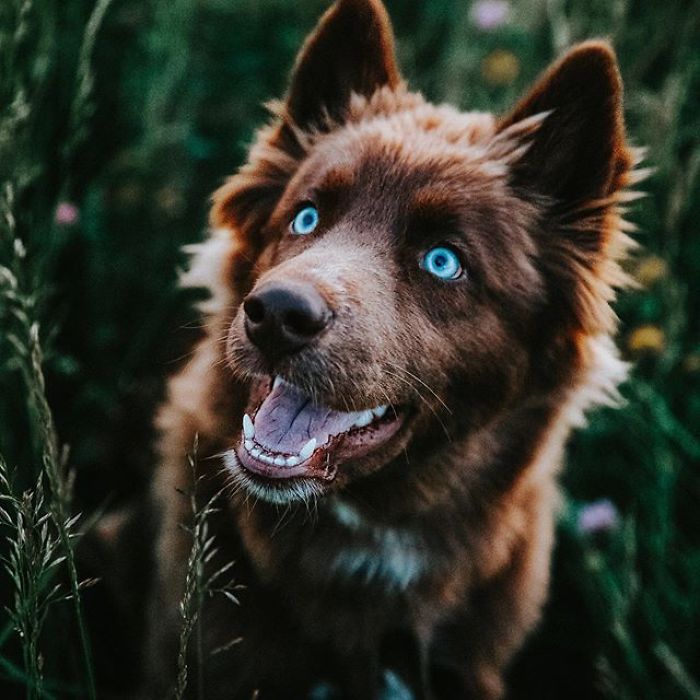
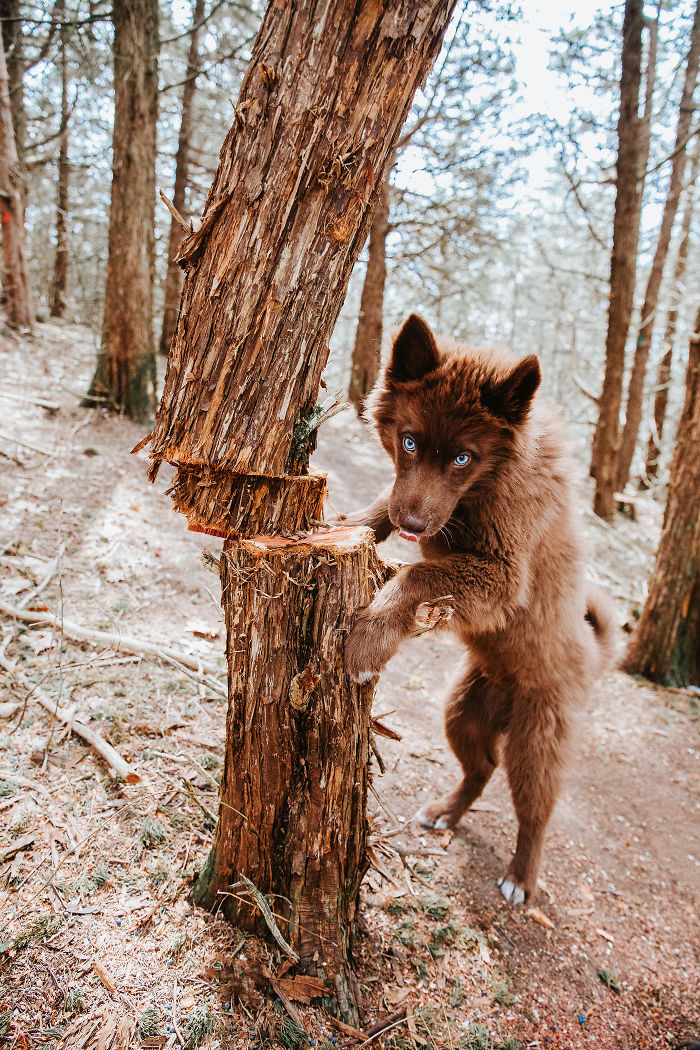
This is Quoi (named after a SeQUOIa tree), who made his debut to the social world on Instagram in March of 2020 under the user name @huskyquoi, and yes, I know he is technically not fully brown—he has a little white spot on his chest—but still, how many huskies have you seen that look like him? And yes, he is 100% Siberian Husky and registered with the AKC. Many people think he is part wolf, and though he may pose like a wolf for photos, he is very much a pampered pup! Quoi’s full name is SeQuoi Tenko (Tenko in Japanese means Heavily Fox). He is currently traveling around the lower 48 of the United States with me, his mum, as we search for a new state to call home!
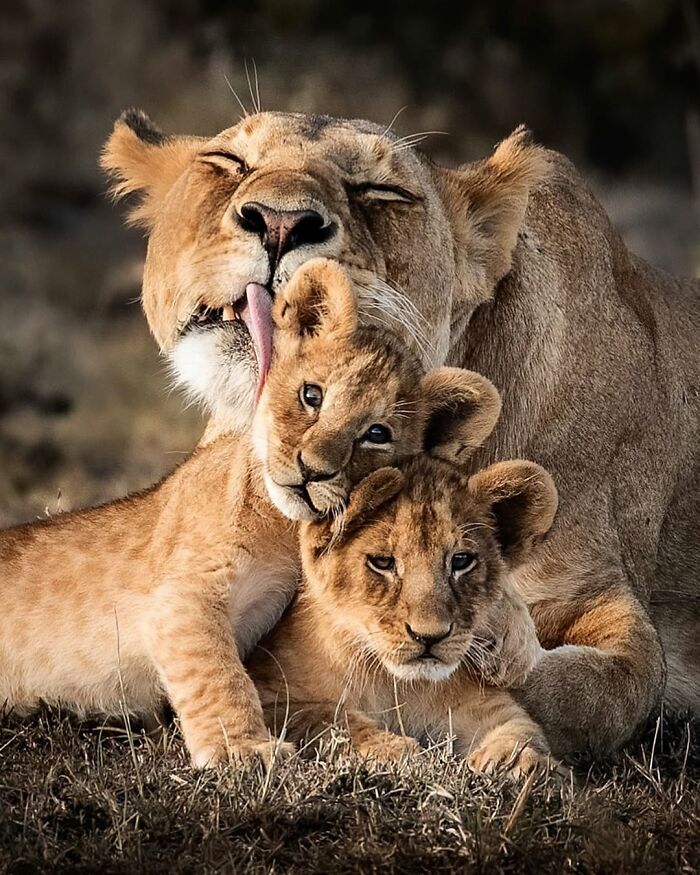
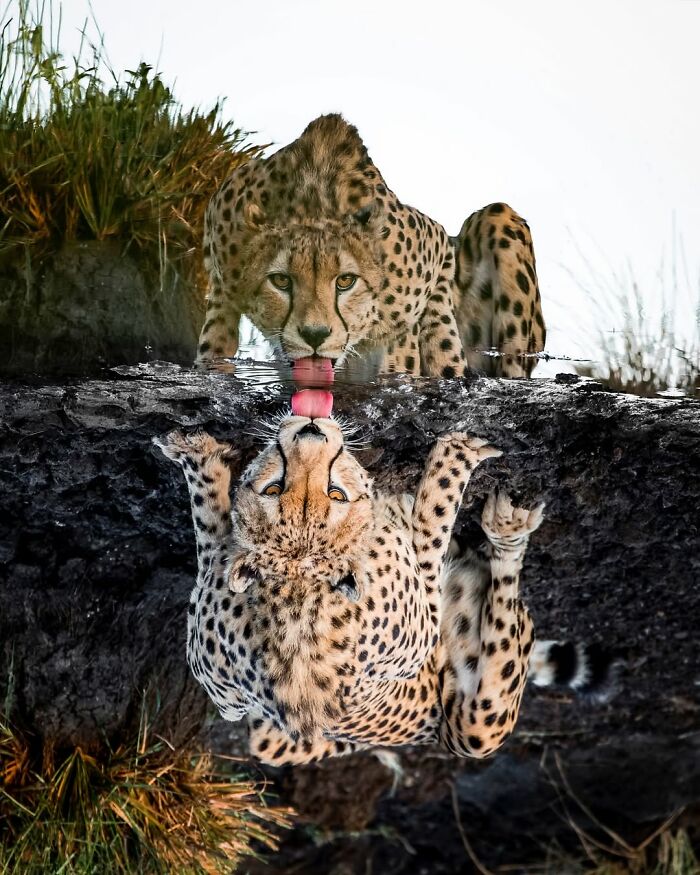
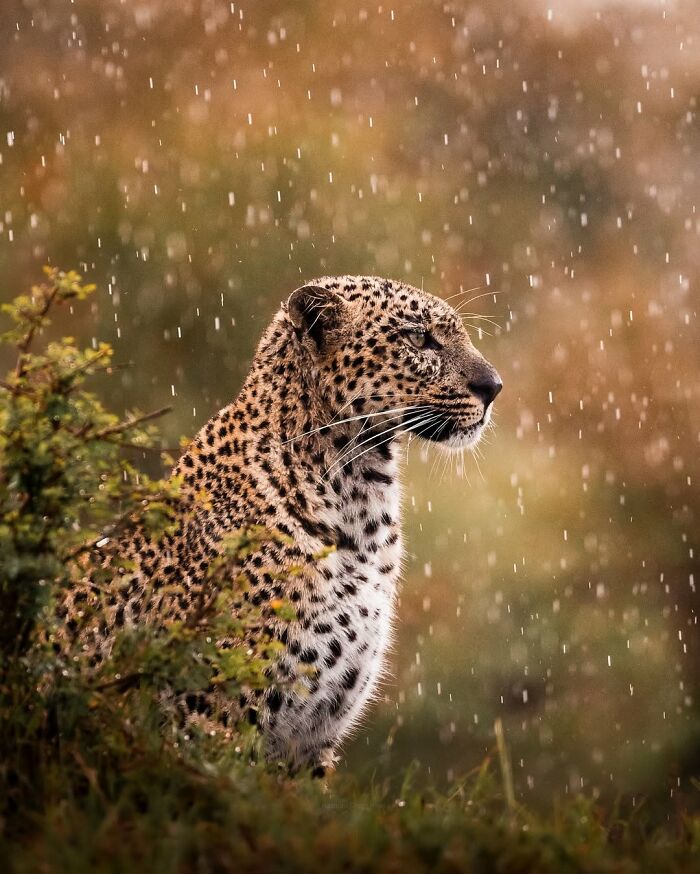
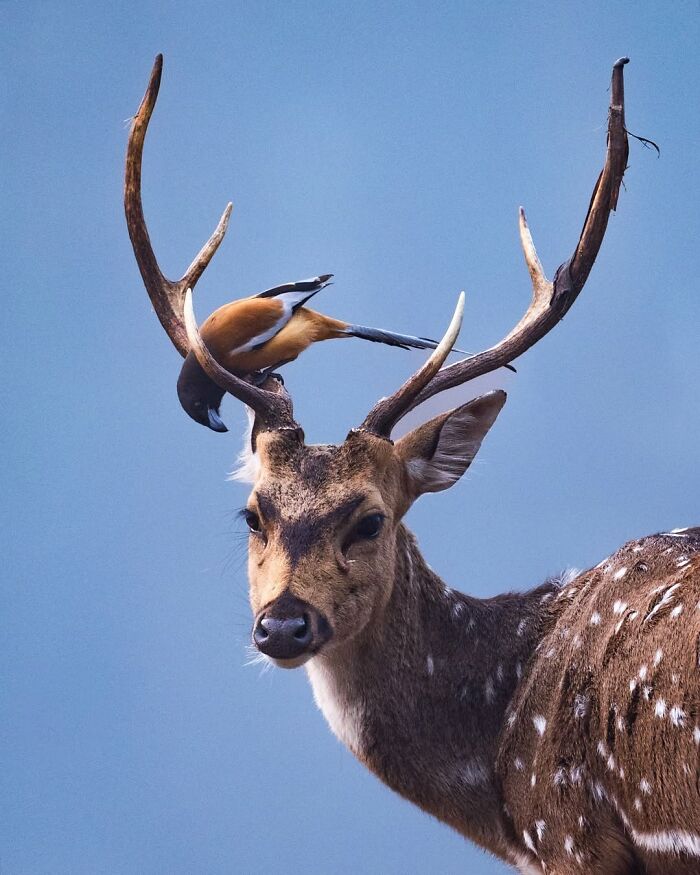
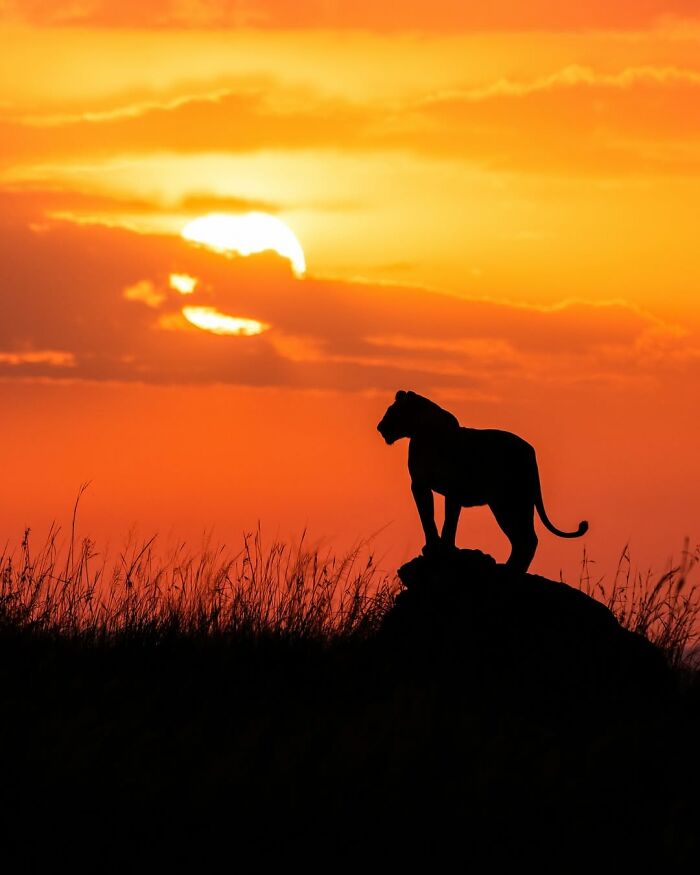
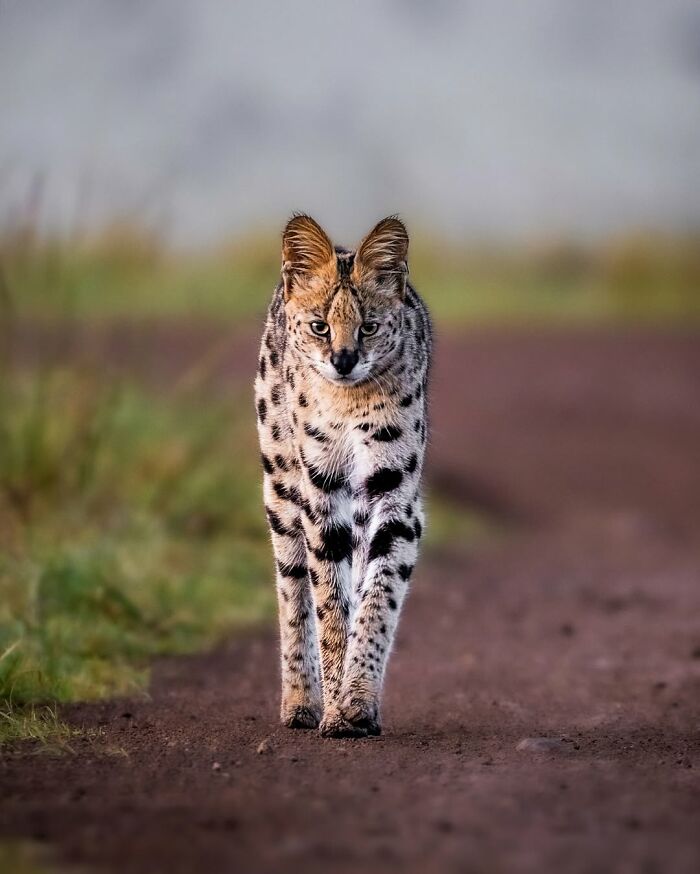
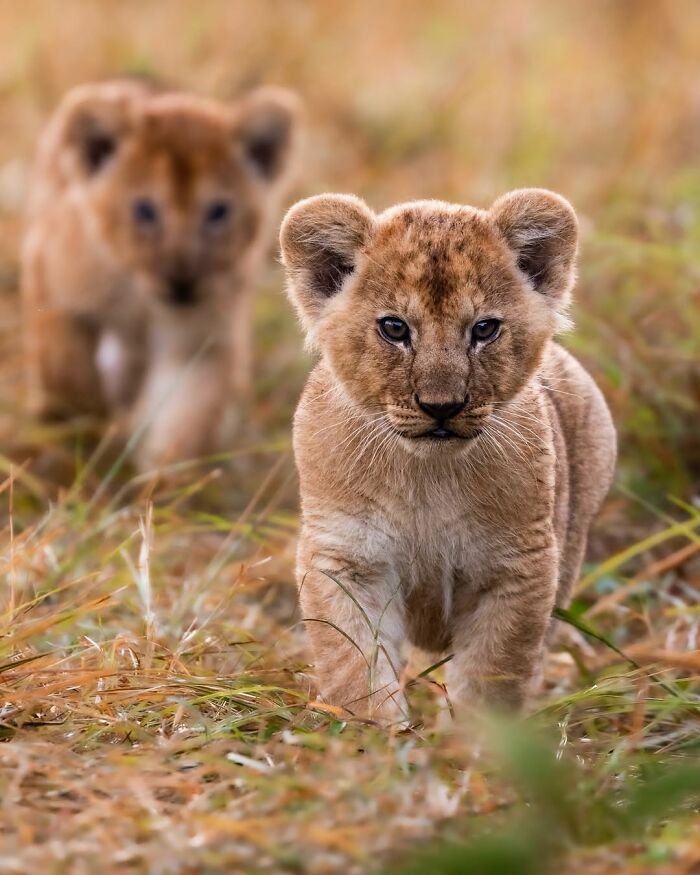
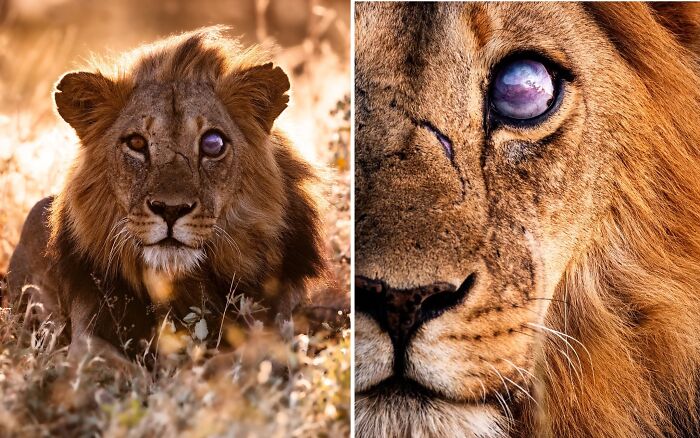
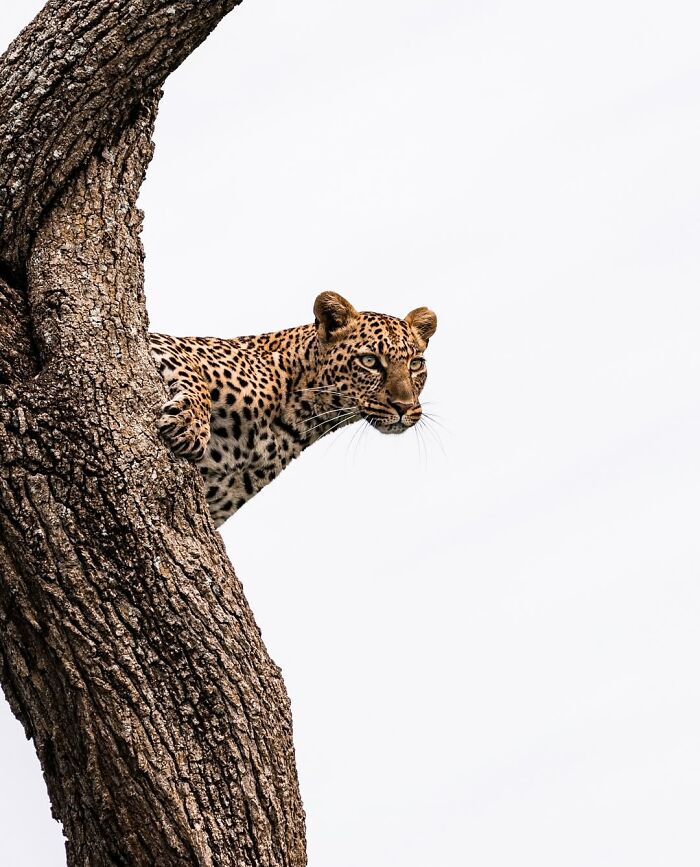
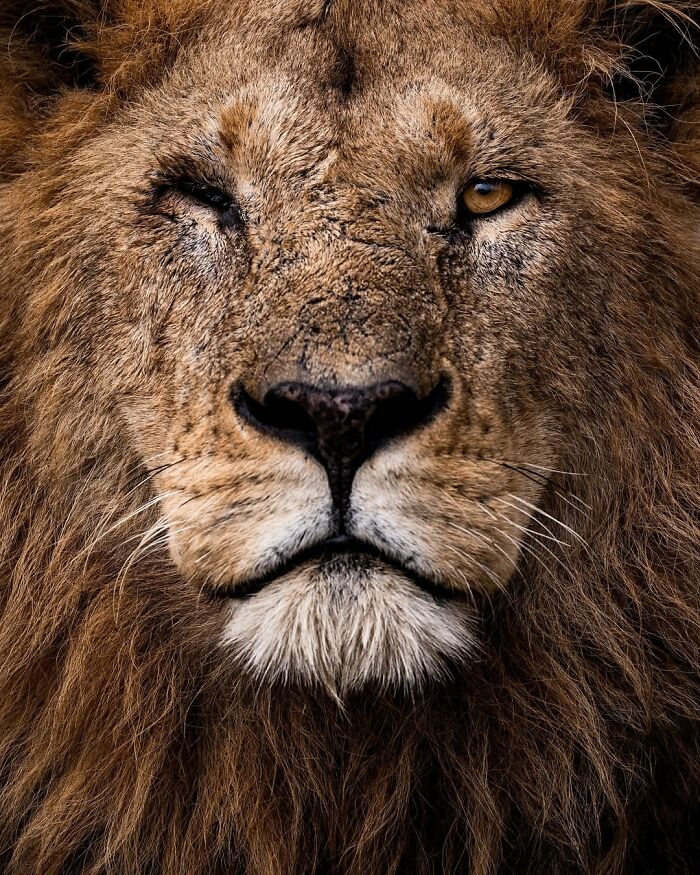
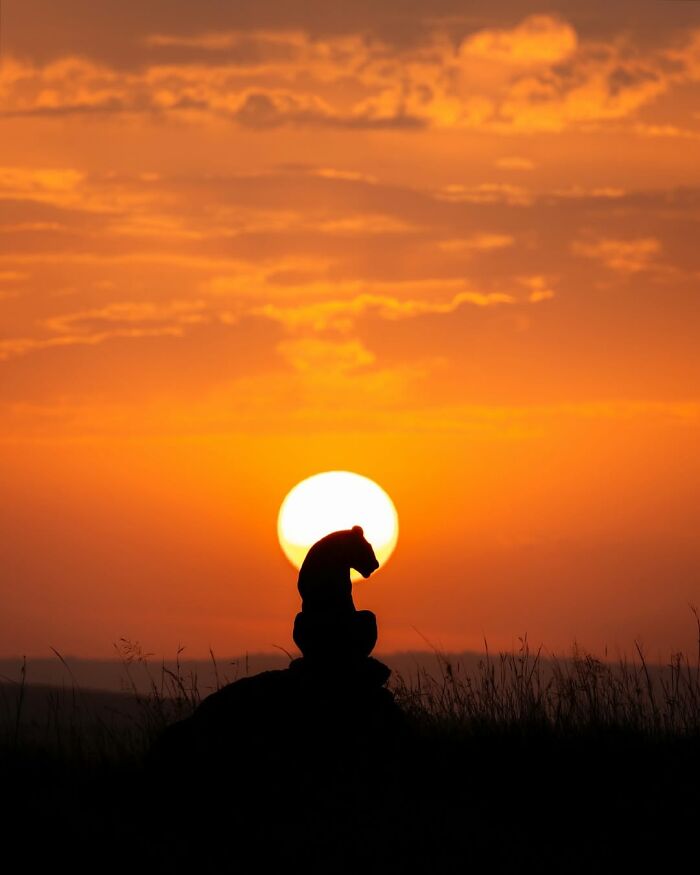
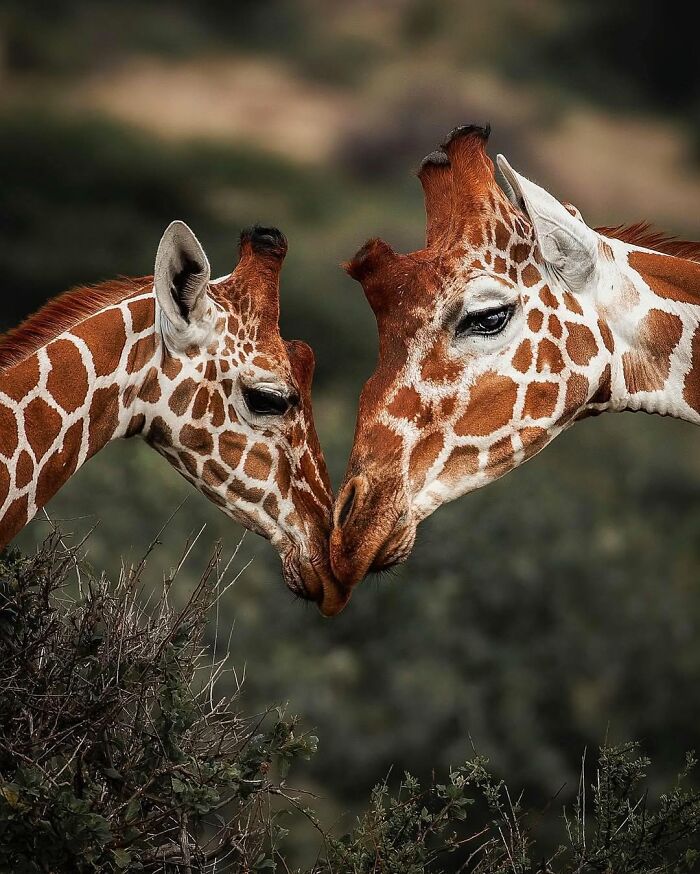
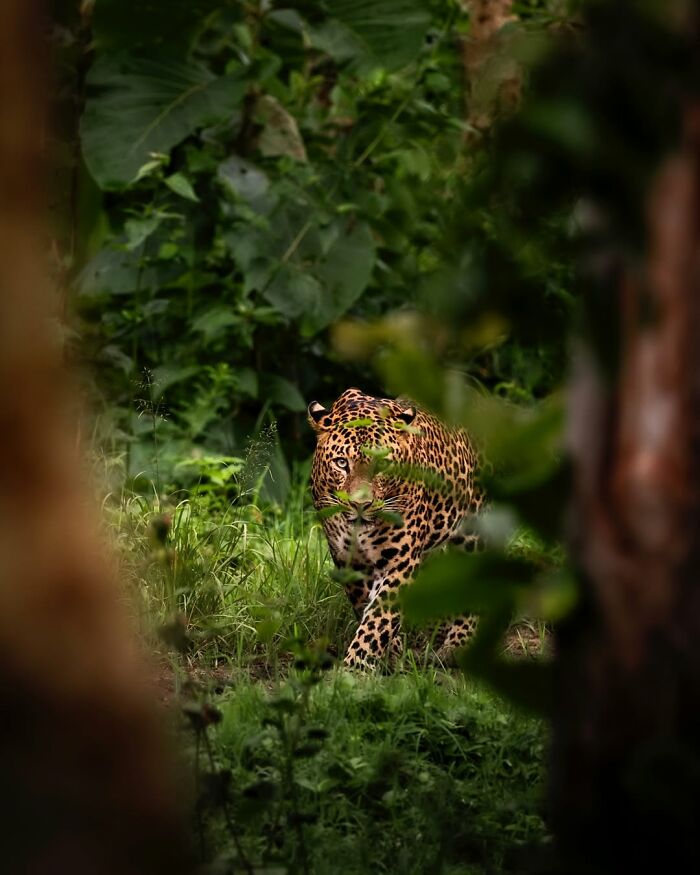
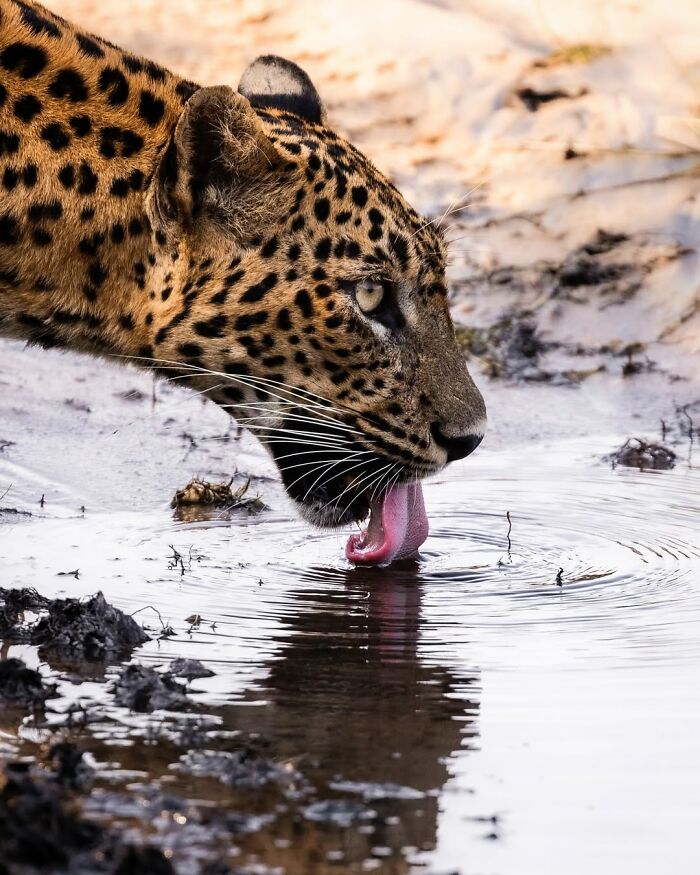
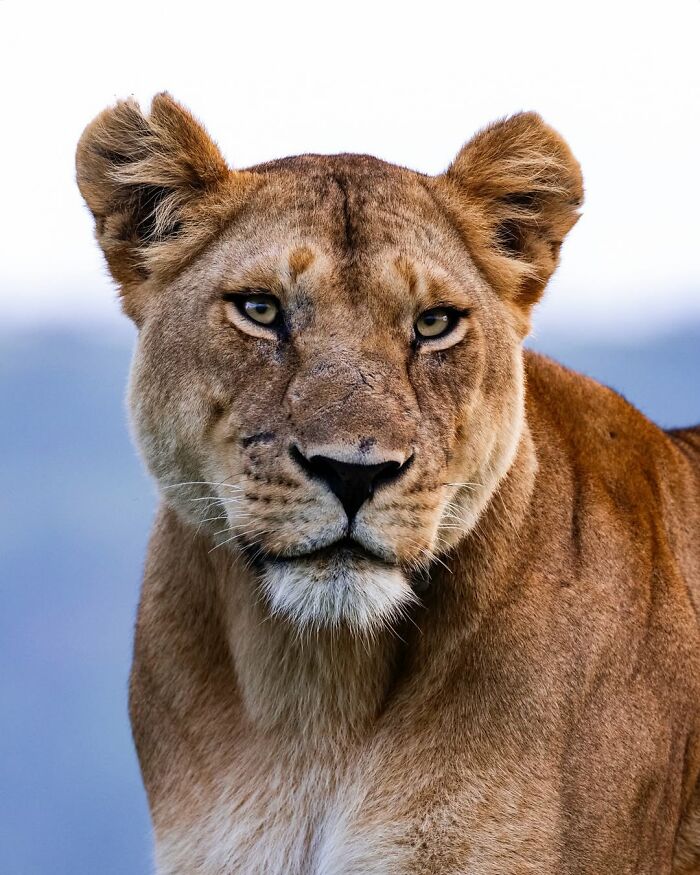
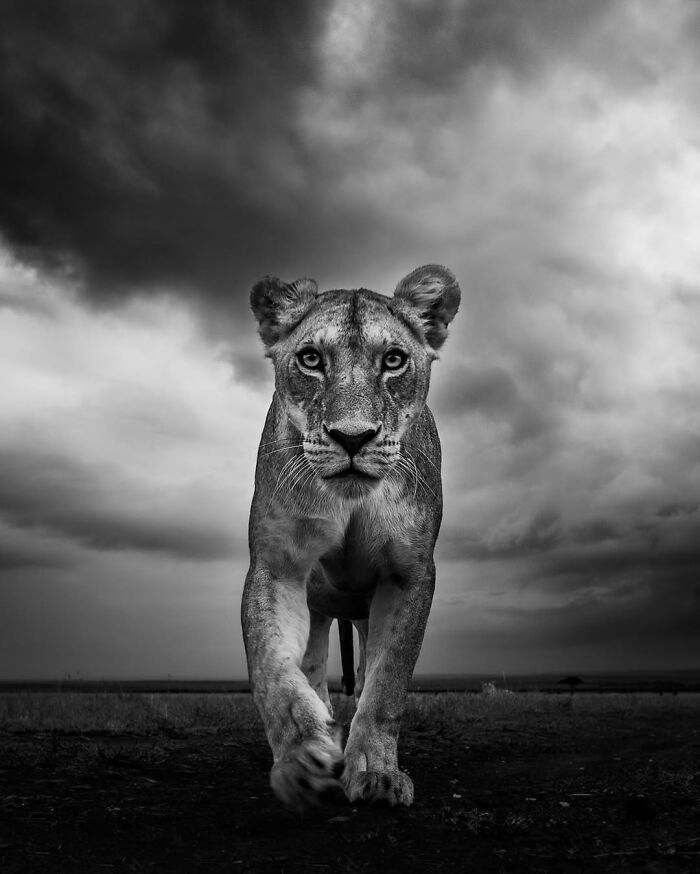
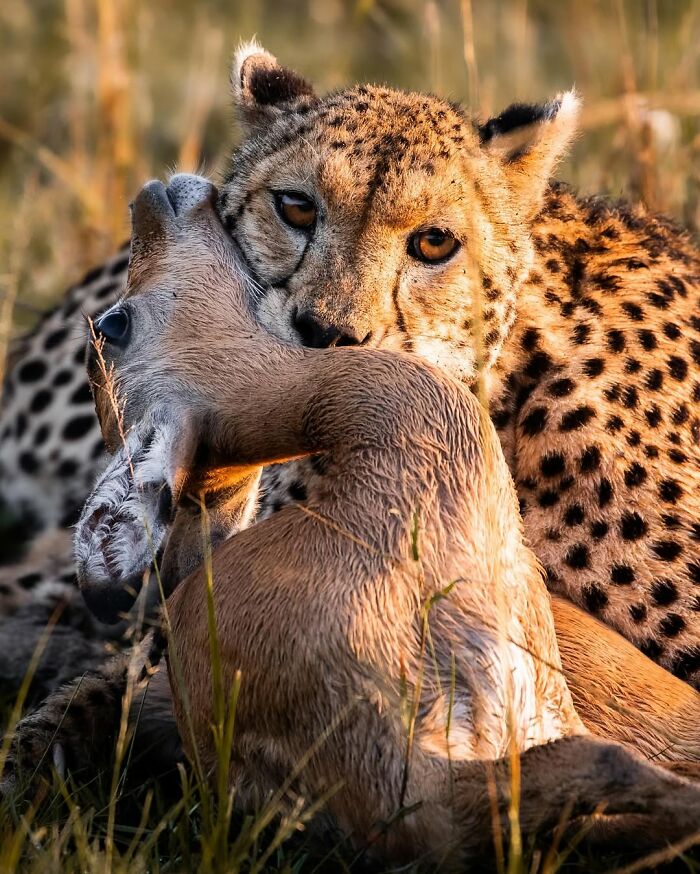
Harman Singh Heer is one of those rare wildlife photographers whose images feel less like photographs and more like encounters with the wild. Growing up in Kenya, he turned the savannah into his backyard and the animals into lifelong companions, capturing their beauty with a patience and respect that shines through every frame. His photos aren’t just technically impressive; they feel alive.
From lions silhouetted against flaming sunsets to birds perched delicately on antlers, each moment he freezes carries emotion, tension and quiet wonder. Following his work is like stepping into a world where nature still rules, where every glance, every shadow, every beam of golden light tells a story. His lens invites us to slow down, breathe, and remember just how extraordinary the natural world truly is.
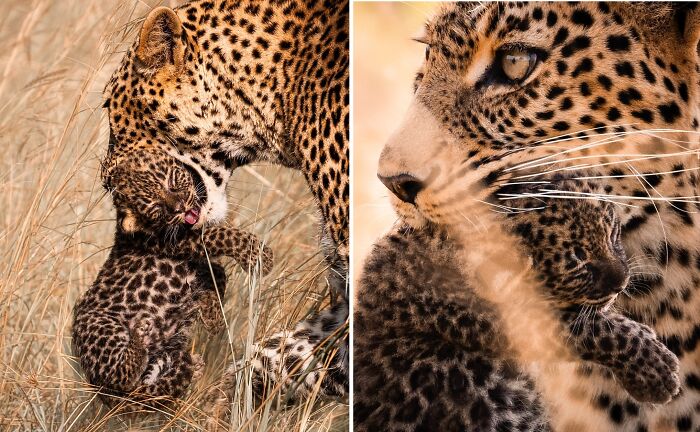
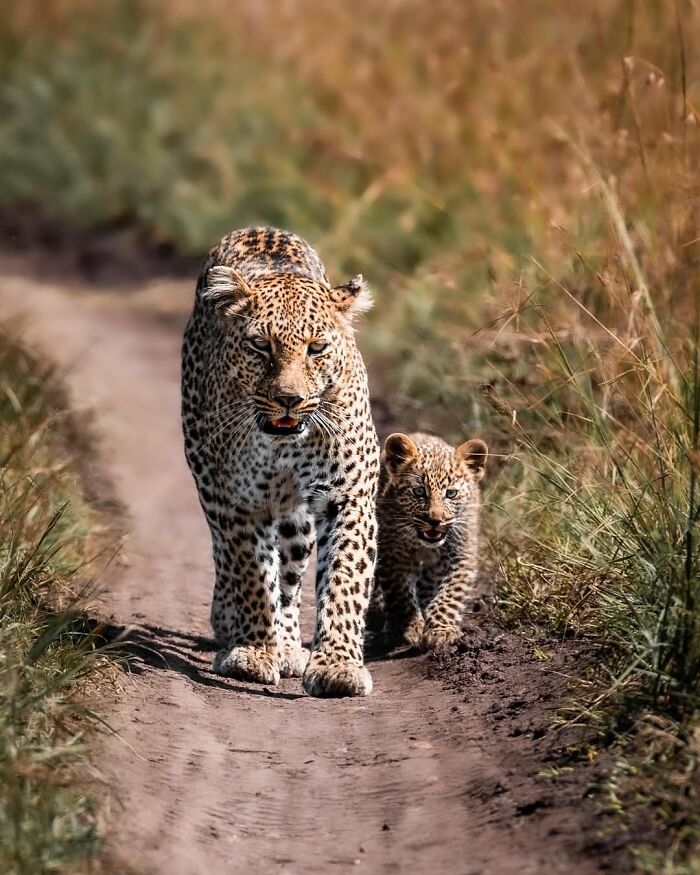
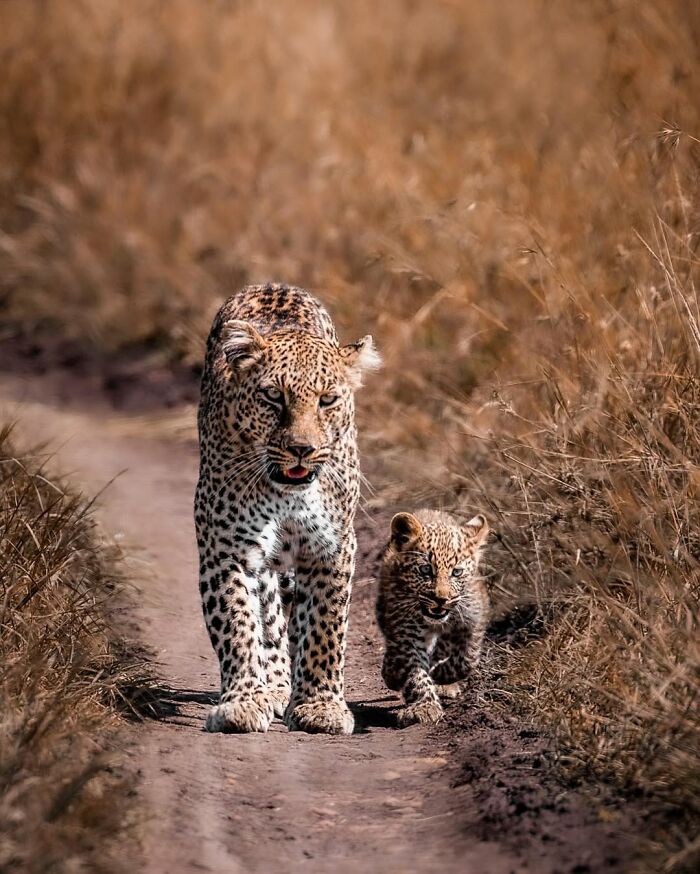
A little leopard cub, just a few days old, enters the world outside its mother’s den for the first time. Its eyes open ever so slightly — the light, the trees, the birds, the open savannah, all anew. Too small to walk, its mother carries it in her jaws safely to a new den hidden in the nearby rocks. This is life in its most fragile form and what a special thing it truly is. These photographs have been years in the making. I have searched for a moment like this since the day I picked up my first camera in 2012, and it finally manifested this June just passed.
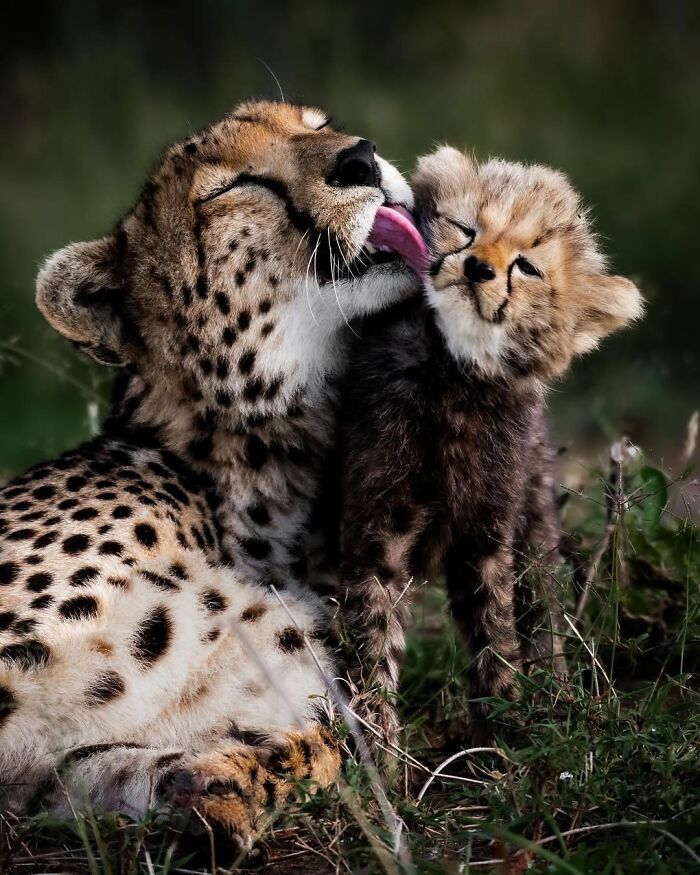
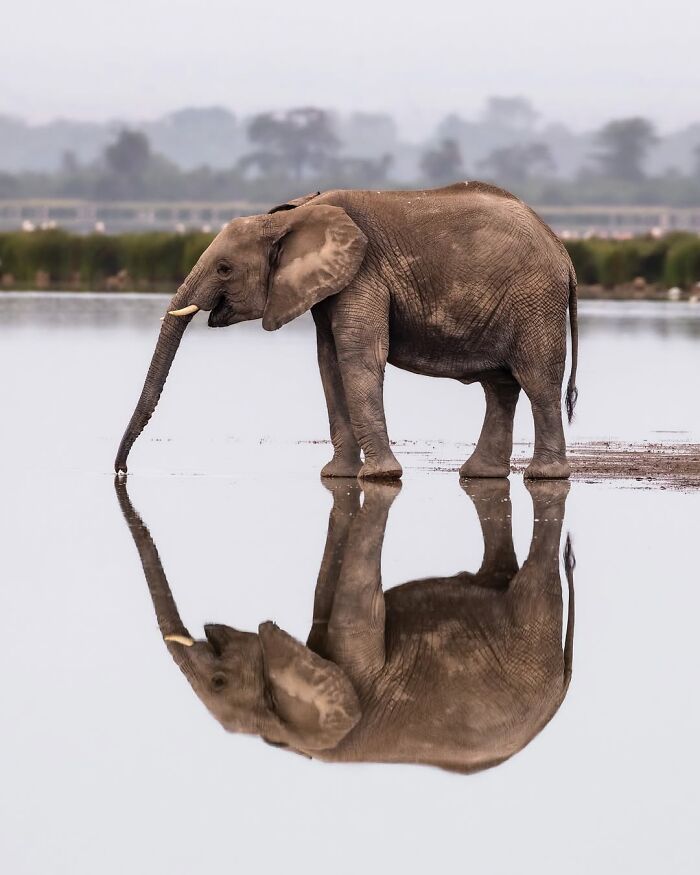
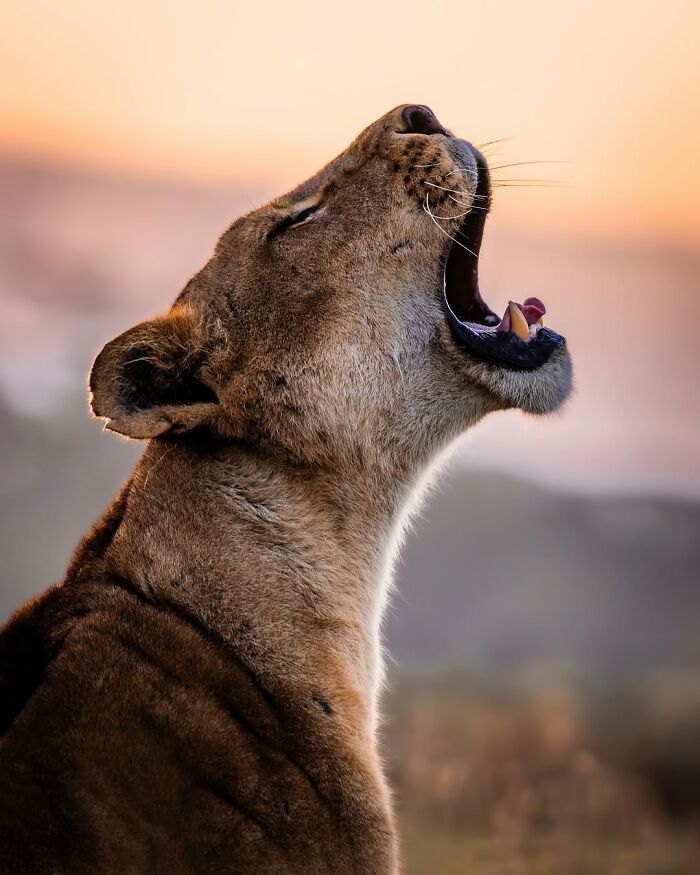
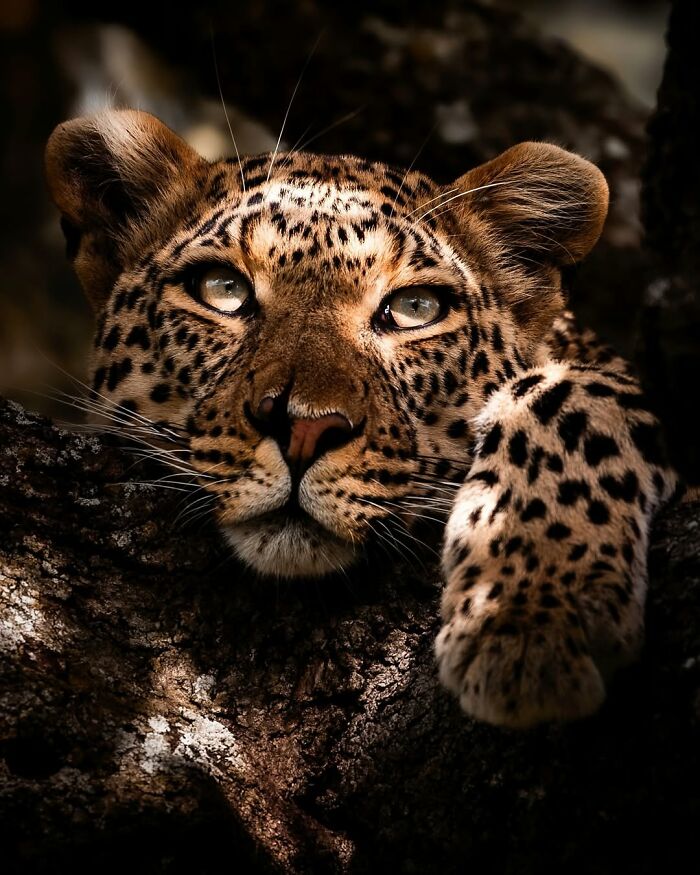
If you decided to click on this post, there’s a good chance you’re an animal lover. We certainly are – discovering new wildlife content is one of our favorite things, and sharing it with you, dear pandas, is even better.
This time, thanks to the Instagram page ‘121clicks,’ we’re thrilled to showcase some of the wholesome – and sometimes downright hilarious – animal moments they’ve shared. Without keeping you waiting any longer, scroll down and enjoy our selection of delightful images.
Beautiful minimalism. Relatable hopes, dreams, fears, and worries. And a unique way to visualize mental health. At the intersection of all these things are the wonderfully pure illustrations by Worry Lines. Through her simple but pleasing drawings, the artist also engages topics like self-care and relationships.
We’ve collected some of Worry Lines’ best drawings to bring a smile to your faces, dear Pandas, so scroll down and let us know which of the oddly comforting drawings you loved the most and why. Remember to upvote your fave illustrations (hint: they’re the ones that you relate to the most and make you feel like you’re wrapped up in a fluffy cloud of acceptance).
If you enjoyed the artist’s work, make sure to follow them on Instagram for her daily updates (and have a look through her store if you want to support her by getting your loved ones something cozy this holiday season).
“I often draw a little character that doesn’t have much of a neck. I like working with visual puns, idioms, and comic metaphors,” the artist talks about her work.
She jokes that her favorite emoji is the clown followed by the bottomless pit and reveals that she isn’t a trained artist. However, she has the discipline of a real professional because she shares a new drawing every single day on her Instagram. She uses the one-drawing-a-day rule to motivate herself and to invest in herself.
Since she started her art project, Worry Lines has not only started up a store for merch featuring her illustrations, she also launched a Patreon account where her fans can support her directly.
In an interview with Vogue Australia, Worry Lines opened up about her art and how she feels about the Covid-19 pandemic.
“This project started as an exercise in anti-perfectionism. I’ve always struggled with being a perfectionist, and I wanted to force myself to put something creative out into the world every day, no matter if it was ‘good’ or not,” she shared her philosophy. And I think the idea of creating something no matter its quality is great advice for a lot of us (I for one, can relate).
The artist told Vogue that she’s glad that there is a growing trend of people curating their social media feeds and improving their mental health by choosing silly, honest, and uplifting content instead of constant news about the coronavirus pandemic.
Meanwhile, Worry Lines is very happy with the community that she’s grown. She’s especially proud that her art helps comfort and encourage people. And she enjoys using her drawings to unite people who have anxieties about life. And that, at the end of the day, is the beauty of Worry Lines: her illustrations unite us in our imperfections instead of dividing us.
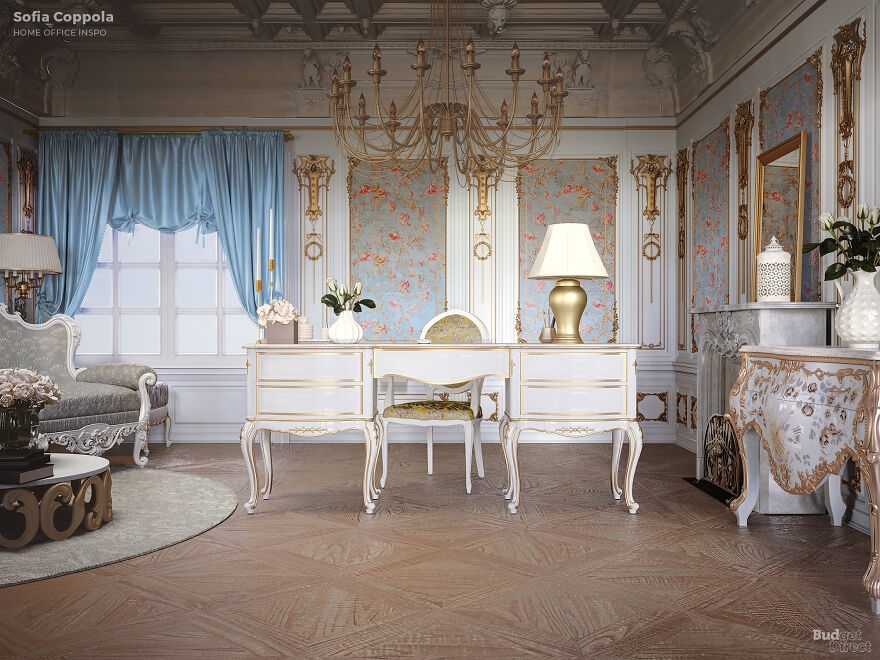
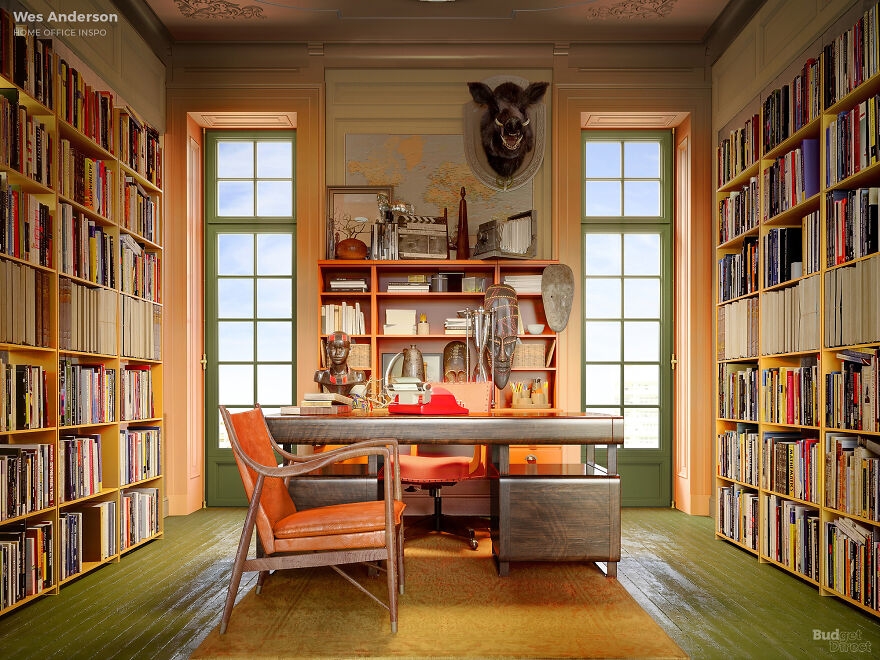
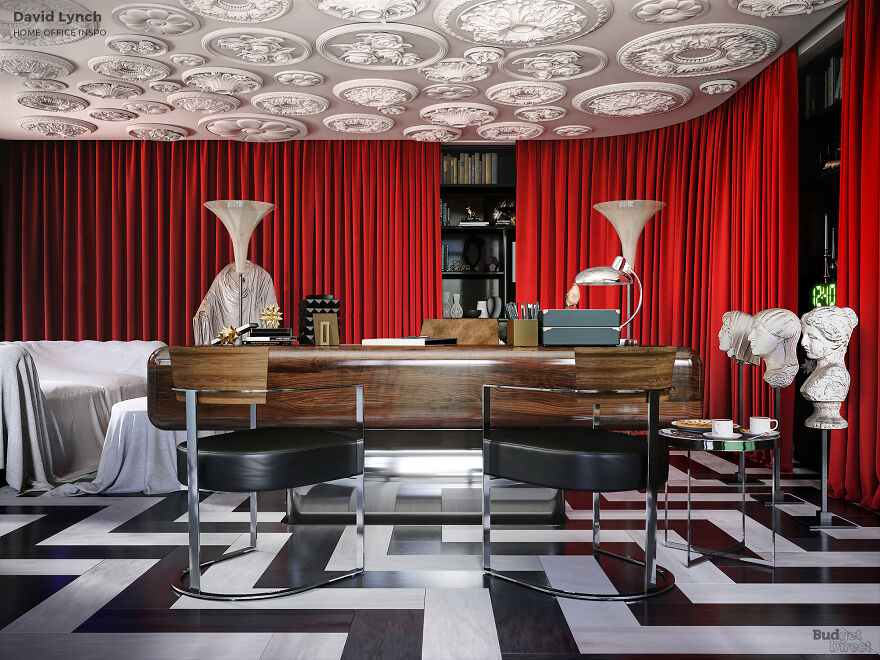
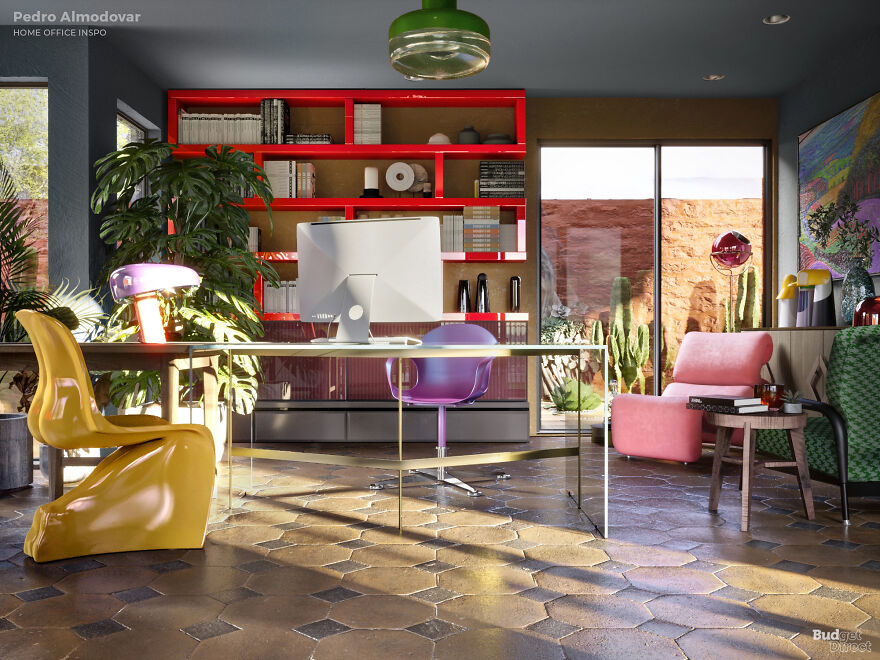
As the second wave of lockdown seems imminent, or already is taking place, work from home resumes for many office workers across the world. Therefore, thinking about one’s own work from home (in short, WFH) becomes increasingly more important. The first wave taught us a lot about how to improvise a workspace, but for the second wave, we can look and search how to step up our home office workspace. Out of ideas? Don’t worry, because Budget Direct has got you covered. Like most of us, you’ve probably had a chance to watch loads of movies by famous directors over the course of this tumultuous year. You may have noticed how distinct each and every one of their styles is. Sometimes it’s even easy to tell whose work it is just by looking at the scene. And here we get to the crux of the story. Budget Direct did the research, and their talented digital artists have made some impressive 3D renders of home workspaces inspired by some of the most known directors’ signature scenes. If you’ve been looking for a little something-something to refresh your home office, look no further. With online shopping habits on the upswing, you probably won’t have that much of an issue getting the items that you need to nudge it in the desired direction without leaving your workspace, er… I mean home.
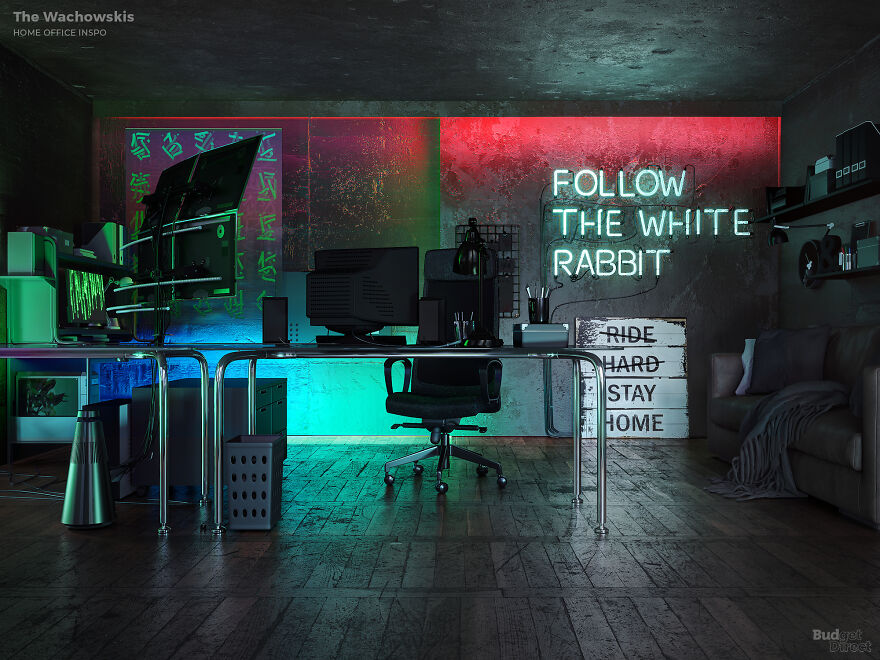
The Wachowskis shot to success and helped define our image of the 1990s with The Matrix, their second film. The movie and its sequels share a cyberpunk aesthetic that has become fun and iconic “just because—as it turns out—the internet age doesn’t really look like that. Well, it can if you want a Wachowskis-themed study. Our Wachowskis office represents the collapse of everything. Spot the post-industrial fixtures and fittings, abandoned 1980s office furniture, and repurposed wood and signage. The Matrix home office makes a cool DIY project for an upcycle with imagination.”
“Interior-wise, Sofia Coppola is best known for the dark, deluxe modernism of the hotel suites in Lost In Translation. But picture-for-picture, Coppola has developed a soft-focus vintage look populated with pastel colors and an eye for exquisite bling. Sure enough, Coppola’s own home look is pale and fey. “My apartment is pretty calm and restrained,” says the filmmaker. ‘I like a clean white backdrop set off by masses and masses of pink peonies.’ We’ve erred towards Coppola’s professional aesthetic: a vintage dressing table desk, baroque curves, and plenty of baby blue and gold.”
“Wes Anderson becomes less of a filmmaker and more of a designer with every film he makes. Today, the Rushmore director is the ultimate architectural filmmaker. Anderson shapes his film sets’ space with symmetry and flat composition to present his characters in a world that is part theatre stage and part expressionist dream world. Our Wes Anderson home office dials it back to The Royal Tenenbaums era. We’ve combined organic colors and curated clutter with meticulously angled furniture. The back wall says, ‘this is where I’ve been.’ The books and records say, ‘this is who I am.’ And that vintage desk, aimed squarely at visitors, says, ‘looks like I’m here to stay.’”
“Korean director Bong Joon-** achieved international fame in 2019 when Parasite became the first non-English-language film to win an Oscar. But cultured film-lovers were already familiar with his work, from the cool, satirical Memories of m****r to the Kubrick-tinged sci-fi of Snowpiercer. Joon-**’s diverse filmography has not prevented him from developing a consistent visual style. Glassy modernism with a hint of the wild is the way to go, with careful attention to light sources: large windows with natural light, glowing screens, and statement fittings. “Accidental” geometry and textured surfaces add a touch of class.”
“Of course, we know exactly what David Lynch’s home office looks like, thanks to the Twin Peaks creator’s daily Weather Reports. And it sure looks Lynchian. However, if you’re after something with a bit more space and color, you’re better off taking a cue from his films. Yes, Lynch’s first features were black and white, and Dune—although a color movie—was obsessed with black. But since Blue Velvet, the filmmaker has shown us how to make basic prime colors equally stylish and creepy. To get that extra-dimensional look, start with the Twin Peaks red room, add a little 1950s Americana, and record your voicemail greeting backward.”
“’I wanted a pop-art kind of set, with pastel colors,’ says Spanish film director Pedro Almodovar of his 1988 breakthrough, Women on the Verge of a Nervous Breakdown. “If I’d had the money and the contacts, I would have asked David Hockney to design it.” But in the three decades and 14 features since then, Almodovar’s aesthetic has become unattributable to any artist but himself. The pop-art element is still there, but Almodovar’s looks both swarthy and slick, raw, and pushed to the excesses of sophistication. The interior design in his latest, Pain and Glory, demonstrates the filmmaker’s over-the-top philosophy: if every element sticks out, no element sticks out. For our Almodovarian home office, that means the unifying principle is “anything goes”—as long as it’s fabulous.”
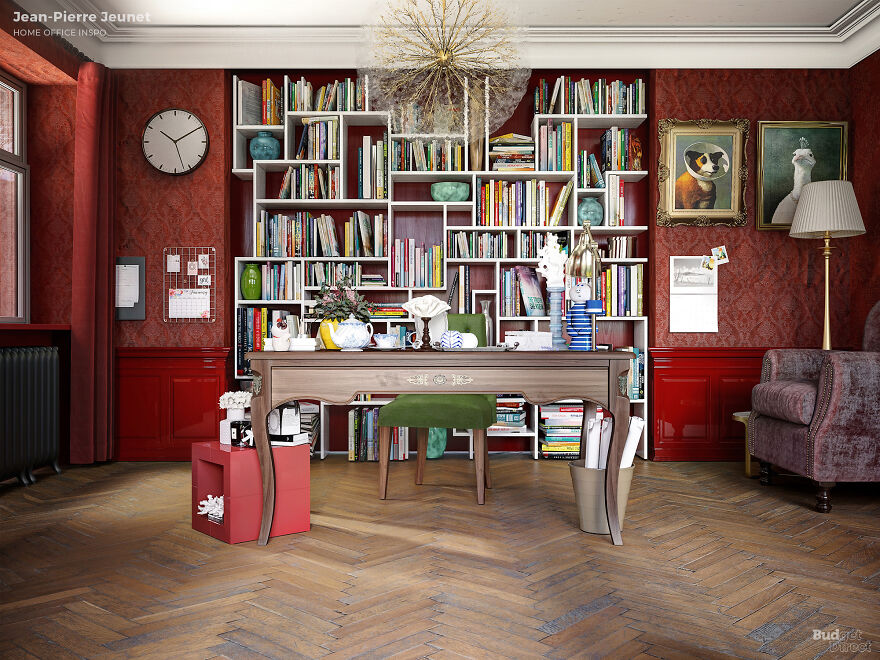
“Jean-Pierre Jeunet’s worlds aren’t always places you’d want to live and work. But his bitter bubble-gum sci-fi City of Lost Children and post-apocalyptic odd-house comedy Delicatessen are as inventive as they are gloomy. With Amélie, Jeunet finally had homeowners reaching for the paint rollers. Amélie took the grim visual motifs that made Jeunet’s films stand out, made them lovely, and applied them to a Paris coated in sepia. To design your own Amélie-style home office, start with a strict Christmas tree color scheme for the fixtures and fittings, and then trawl op shops, Etsy, and eBay to find objets d’art with a life of their own.”
Think about all the companies that have stores in your local area. When you start to count them all, the odds are that you’ll suddenly come to the realization that the world’s a very busy place with a lot of big-name companies having chains seemingly everywhere. From fast food places like Subway (aka Pete’s Subway) to stores like Walmart and more.
However, like all things, even the best and biggest conglomerates had humble beginnings. And the vintage pictures from these companies’ early days are incredible to look at. For all of you history and photography buffs out there, Bored Panda has collected this list of rare vintage photos of some of the world’s most iconic photos for you to enjoy.
Upvote your fave pics and let us know which early designs you enjoyed the most and why, as well as which companies you personally believe changed for the better over time.
Click here & follow us for more lists, facts, and stories.
#1 Coca-Cola, 1886
The company produces Coca-Cola, invented in 1886 by pharmacist John Stith Pemberton. In 1889, the formula and brand were sold for $2,300 to Asa Griggs Candler, who incorporated The Coca-Cola Company in Atlanta in 1892.
At first, Coca-Cola was advertised as a drink that relieves headaches and was at first meant to be on sale in drugstores as a medicinal beverage. It was actually Pemberton’s bookkeeper, Frank M. Robinson, who came up with the name of the drink and created its logo. The name, Coca-Cola, was chosen because of its two main ingredients at the time (coca leaves and kola nuts) and because of the pleasant-sounding alliteration of the words.
It’s very first ad read, “Delicious! Refreshing! Exhilarating! Invigorating!” By 1895, Coca-Cola was so popular, it was being sold in every state in the US. And that’s in large part due to Candler mailing out thousands of coupons for a free glass of Coca-Cola. The marketing stunt worked and Coca-Cola forever cemented itself as a global brand.
#2 Harley-Davidson, 1903
The Harley-Davidson company was founded in 1903 in Milwaukee, Wisconsin. It was one of only two American motorcycle manufacturing companies to survive the Great Depression, the other being Indian.
The roots of the company go back to 1901 when William S. Harley drew up plans for a small engine that could be used in a regular pedal-bicycle frame. Together with his childhood friend Arthur Davidson, they spent the next 2 years working on their motor-bicycle. Arthur’s brother, Walter, later joined the team.
The very first Harley-Davidson motorbike was built in a 10 by 15-foot shed (pictured) in the Davidson family backyard. By 1904, their racer prototype was functional and competed in a Milwaukee motorcycle race where driver Edward Hildebrand rode it to fourth place.
Harley and the Davidson brothers built their first factory in 1906. It was 40 by 60 feet big and made of wood. The company made around 50 motorcycles that year.
When the US entered World War One in 1917, Harley-Davidson motorbikes were adopted for military use. The US military bought more than 20k Harleys during this time.
The original formula for Dairy Queen’s soft-serve was developed in 1938. Dairy Queen owns Orange Julius. Dairy Queen itself is owned by Berkshire Hathaway
Going from corporate zero to megabillion hero is no easy feat. It involves years (and decades) of hard work, excellent employees, an uncanny ability to predict people’s future needs, and a big dollop of luck. Not to mention having a clear mission and a godly ability to communicate your goals clearly to customers and investors alike.
With so many resources, books, and videos out there explaining how to turn your company into a global icon, it can be easy to get lost in the noise. However, there are some lessons that seem to ring true in a lot of sources.
No matter which way you look at things, there are no shortcuts for creating quality products or providing services that people actually need. That also means getting to know your customers very well and being sincere in how you communicate with them and treat them.
#4 Subway, 1965
The first store was opened in Bridgeport, Connecticut in August, 1965 by Fred DeLuca and Peter Buck. Then, they set a goal of having 32 stores opened in 10 years. By 1974, the duo owned and operated 16 submarine sandwich shops throughout Connecticut. Realizing they would not reach their 32 store goal in time, they began franchising, launching the Subway brand into a period of remarkable growth which continues to this day.
Subway is one of the fastest-growing franchises in the world and boasts a whopping 41,512 locations around the world as of October 2019. The restaurant has stores in over a hundred countries, however, over half of its restaurants are in the United States. Subway is both the largest single-brand restaurant chain and the largest restaurant operator on Planet Earth.
And it all started with DeLuca borrowing 1k dollars from Buck to start ‘Pete’s Super Submarines’ back in 55 years ago. Just a year after opening their first restaurant, they formed Doctor’s Associates Inc. because it was DeLuca’s goal to earn enough money to pay for his tuition for medical school and because Buck had a doctorate in physics. It was in 1968 that the restaurant was officially renamed Subway.
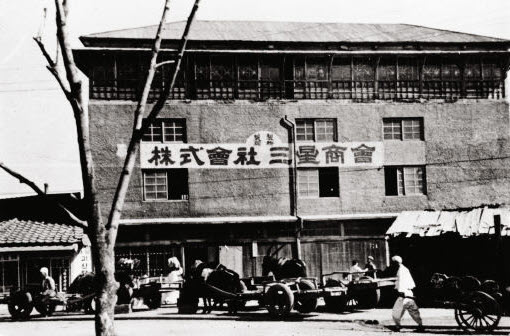
Samsung initially sold noodles and other produce. In 1969 Samsung-Sanyo Electronics, which later becomes Samsung Electronics, was established.
The South Korean company Samsung Sanghoe, was first founded by Lee Byung-chul in 1938 as a trading company. Over the next few decades, the group diversified into lots of different areas, including food processing, textiles, insurance, securities, and retail. By the 1960s, Samsung entered the electronics industry and went into construction and shipbuilding in the 1970s.
Samsung Electronics, one of the group’s most notable industrial affiliates, was the world’s largest information technology company, consumer electronics maker, and chipmaker in 2017.
Samsung’s affiliate companies produce around a fifth of South Korea’s total exports which goes to show the importance the conglomerate has in the country.
Keith G Cramer, who owned Keith’s Drive-In Restaurant in Daytona Beach, FL, partnered with his father-in-law to start the company. It was originally called Insta-Burger King.
When Insta-Burger King ran into financial difficulties in 1954, its two Miami-based franchisees David Edgerton and James McLamore purchased the company and renamed it Burger King. In the five decades that followed, the company changed hands a whopping four times.
The 1970s were considered to be BK’s ‘golden age.’
Due to copyright laws that protect the Burger King name with another Australian company, BK had to go with Hungry Jack’s in the country. Australia is the only country to have a BK franchise with a different name.
Creating customer loyalty means offering exceptional (and maybe even personalized) service and nurturing the relationships you create by maintaining genuine communication. In the digital age, it’s both easier and harder to do this than before.
On the one hand, you have access to all the social media that you could ever want. On the other hand, every business worth their salt is on social media, so your challenge becomes figuring out how to stand out from the crowd and prevent your voice from being drowned out by the noise from your competitors. Easier said than done, but it’s an important step on your way to becoming a famous company.
#7 Amazon, 1999
Amazon founder, Jeff Bezos, left his job as vice-president of D. E. Shaw & Co., a Wall Street firm to try and make a mark for himself in the Internet business boom. Bezos went on to start a company in his home garage that he called “Cadaver”. But a few months later when he heard a lawyer mispronounce the name, he decided to change it. The new name was Amazon, which he chose because it was a place that was “exotic and different”
Nintendo was founded in 1889 by craftsman Fusajiro Yamauchi. Originally, the company produced handmade hanafuda playing cards. After venturing into various lines of business in the 1960s, it distributed its first video game console, the Color TV-Game, in 1977. Nintendo gained renown all over the globe for its Nintendo Entertainment System that it released in 1985.
The rest, as they say, is history. Nintendo focused on producing consoles like the Game Boy, the Super Nintendo Entertainment System, the Nintendo DS, the Wii, and the Switch, as well as releasing internationally-recognized video games. Among the video game franchises are characters we know and love, like Donkey Kong and Mario.
The first Starbucks was opened by University of San Francisco grads Jerry Baldwin, Gordon Bowker and Zev Siegl in 1971 in Seattle, and just sold coffee beans. This all changed when Howard Schultz came on board who, inspired by Italian coffee culture, turned Starbucks’ coffee shops into the social meeting places we know today when he bought the chain in 1987
The first-ever Whole Foods opened up in 1980 in Austin, Texas with 19 employees. An old joke about Whole Foods’ first store was that it could be confused for a Volkswagen car dealership because of the abundance of VW Beetles in the parking lot.
Nokia traces its history to 1865, when engineer Fredrik Idestam opened a paper mill in Tammerkoski Rapids, Finland. Six years later, Idestam opened another paper mill on the banks of Finland’s Nokianvirta river, which inspired him to name his company Nokia Ab
#12 Mcdonald’s, 1940
The first McDonald’s restaurant opens in 1940 Siblings Richard and Maurice McDonald opened the first McDonald’s at 1398 North E Street at West 14th Street in San Bernardino, California, USA on 15 May, 1940
Wendy’s is named after Dave Thomas’ daughter, Melinda. As a child, she had the same issue pronouncing Rs and Ls that many kids do, and she referred to herself as “Wendy” or “Wenda.” Her likeness was also used for the famous pigtailed logo
Founded in 1837 by Charles Lewis Tiffany and John B. Young in Brooklyn, Connecticut, as a “stationery and fancy goods emporium”, with the help of Charles Tiffany’s father who financed the store for only $1,000 with profits from a cotton mill. The store initially sold a wide variety of stationery items, and operated as “Tiffany, Young and Ellis” as of 1838 at 259 Broadway in Lower Manhattan.bThe name was shortened to Tiffany & Company in 1853, when Charles Tiffany took control and established the firm’s emphasis on jewelry.
In 1946, Erling Persson opens a women’s clothing store in Sweden called Hennes, which is Swedish for “hers.” About two years later, Persson bought a hunting apparel and fishing store, called Mauritz Widforss. When he combined that brand with Hennes, the store began to sell women’s and men’s clothing. That new store was called Hennes and Mauritz—more commonly known as H&M
The multinational clothing-retail company operated in 74 countries where it had over 5k stores as of November 2019. It had also employed 126k people in full-time positions at that time. H&M is the second-largest global retailer, just behind Inditex which is the parent company of Zara.
#17 Zara, 1975
After 12 years of making textiles, Amancio Ortega, founder of Inditex, opens the business’ first store in A Coruña, in Spain, in 1975.
Initially, Ortega wanted to name the store Zorba. But when he found out there was a bar by that name just two blocks away, he rearranged all the letters (plus a few extras) he had received for the sign of his store to make Zara.
The very first Zara store had low-priced lookalike products of much more popular, higher-end, and fashionable clothes.
Zara started its world conquest in 1988 by going international. It’s first leap abroad was to Porto in Portugal. Just a year later, it already entered the United States’ market, then France in 1990. Since then, it expanded internationally with each passing year.
Suzuki was started by Michio Suzuki in 1909. Like Toyota, it focused on making weaving machines and was called Suzuki Loom Works. It was renamed Suzuki Loom Manufacturing Company in 1920, which, due to the success of its weaving machines, started the side gig of making automobiles.
The name is a play on the letters ‘R’ and ‘B.’ And despite some claims that it’s an ode to their classic sandwich, it doesn’t stand for “roast beef.” Rather, RB stands for Raffel Brothers, a nod to founders Leroy and Forrest Raffel, who opened the first Arby’s in Boardman, Ohio, on July 23, 1964. Arby’s was the first fast-food chain to ban smoking in all its restaurants.
In an Albuquerque garage, in 1975, friends Bill Gates and Paul Allen started Microsoft—originally named Micro-Soft, for microprocessors and software—to develop software for the Altair 8800, an early personal computer.
Microsoft dominated the personal computer operating system market with MS-DOS in the 1980s, followed by the success of Microsoft Windows. After the company’s 1986 initial public offering (aka IPO) and the rise in tis share price, around 12k millionaires and 3 billionaires were created among Microsoft employees.
Steve Ballmer replaced Gates as CEO of the company in 2000. Satya Nadella took over in 2014 who continues to rule the tech empire to this very day.
Among the well-known acquisitions that Microsoft has made are Skype (bought for 8.5 billion dollars in 2011) and LinkedIn (bought for 26.2 billion dollars in 2016).
The very first Ford sold was to Dr. Pfennig in 1903, for a grand total of $850. The “Model A” had a 2-cylinder engine, and could reach a max speed of 30 mph. In 1914 Ford offered its employees double the current market average, creating Henry Ford’s “$5-a-day.” The new salary, accompanied by a shorter working day and company profit sharing, minimized employee turnover, and was significant in growing the middle class and fair wages movement. Henry Ford was quoted saying he wanted to help his workers to a “life” not just a “living.”
The first Dunkin’ Donuts opened in 1948 in Quincy, MA and on Tuesday, January 16th, we’re opening our store of the future concept right down the street!
In 1893, American pharmacist, Caleb Bradham developed a drink at his drugstore that would aid in digestion. He named it “Brad’s Drink”. 5 years later, however, he changed the name to Pepsi-Cola after the Greek word for digestion that sounded like “Pepsi” and “cola” after the kola nut. By 1904, the sales of the drink had increased to 19,848 gallons a year.
Disneyland originally opened in Anaheim, California on Sunday, July 17th, 1955 with a total of 18 attractions. The park now has 51 attractions.
When the park opened, admission was just $1. It’s now $99. Over 84 million Mickey Mouse ears have been sold since Disneyland opened, making the ears the most popular Disneyland souvenir of all time.
As of December 2018, Disneyland had the largest cumulative attendance than any other theme park in the world. It has had more than 726 million visits since opening its doors.
In 2018 alone, the park had around 18.6 million visits (it was in second place for the most visited theme park that year, just behind Magic Kingdom, also owned by Walt Disney).
After working with his brothers in their dry goods wholesale business in New York City, Levi emigrates to Gold Rush San Francisco. He opens his own dry goods business to serve the small general stores of the American West
On August 18, 1949, Adi Dassler started over again at the age of 49, registered the “Adi Dassler adidas Sportschuhfabrik” and set to work with 47 employees in the small town of Herzogenaurach. In the same year, he registered a shoe that included the registration of the soon-to-become-famous adidas 3-Stripes. From humble beginnings to a global success story – which was accelerated by a miracle …
When Xerox got off the ground in 1906, it was as a maker of photographic paper and photography equipment called the Haloid Company. The company didn’t introduce what we would think of as a copier until the Xerox 914 made its debut in 1959.
#28 J.c. Penney, 1902
The store was originally named “The Golden Rule.” Today, JCPenney says the original name set the standard for which the company has operated on for more than a century, treating others the way it, too, would like to be treated. The name JCPenney was incorporated in 1913.
The Walmart Museum is currently located in Bentonville, Arkansas, and has a variety of exhibits on display about the history of the firm. One thing that visitors see is that the museum is in the same location as the Walton 5 & 10 – another Ben Franklin franchise opened up by Sam Walton in 1950. This was also the first business that ever held the Walton name
#2 Dog Category / Overall Winner: ‘Guard Dog On Duty’ By Elke Vogelsang
“What is it about dogs that makes us love them so much? Let’s admit it, they please us. They are great fun. They are gorgeous to look at, charming and cuddly. Their loveable, adoring nature appeals to us. They are loyal, protective, cheerful and altogether great company. Dogs give you all their attention. They can make the shiest people feel better about themselves. A recent study found that dog owners tend to be less lonely, less fearful and more extrovert than people without dogs.”
Overall winner Elke explained that 10 years ago Noodles and her other dog Scout alerted her to the fact that her husband was unconscious in the bath. “The diagnosis was a severe brain hemorrhage due to a ruptured aneurysm. If it hadn’t been for the dogs, I would have found him too late. Thanks to them and great doctors he survived, but during the stressful months that followed, I found photography as a creative outlet,” she shared.
With 3k pounds up for grabs, there was a lot of interest in the competition. And it really was a win-win kind of situation for everyone: all of us get a good laugh looking at the photos, the photographers get the attention that they deserve, and the limelight’s shining full force on how to best help pets in need.
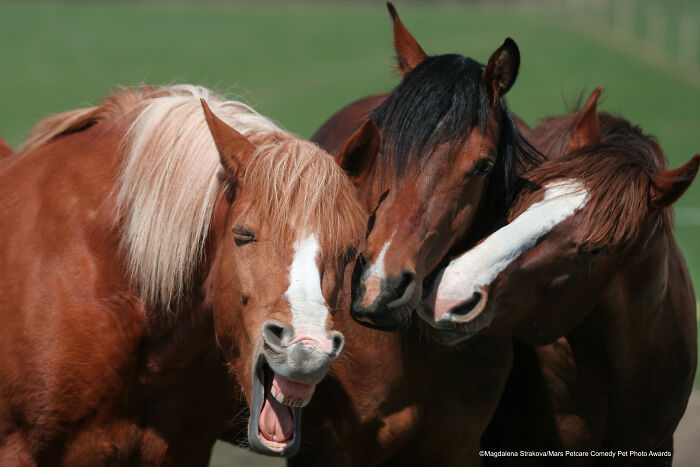
Some of the other winners include Malgorzata Russell who won the Cat Category award, Magdalena Strakova who was the winner of the Mighty Horse Category, and Anne Linder who got the award for All Other Creatures. Meanwhile, Hannah Seeger won the Pets Who Look Like Their Owners award while Ayden Brooks became the winner of the Junior Category. There were also 10 photographers who were Highly Commended for their entries.
#4 Highly Commended Winner: ‘The Dancing Cat’ By Iain Mcconnell
#6 Cat Category Winner: ‘Why Are You Upside Down Mum?’ By Malgorzata (Gosia) Russell
“This our one year old still kitten cat Basil. He is very playful, agile and loves our garden we used a lot during lockdown. It is our daily, morning routine to chase each other around the garden. Picture is not photoshopped.”
So many winners! And if you’ve got an itch to share your own funny photos of your pets, then you’ll have the chance in Spring of 2021! Next year’s competition starts (very fittingly) on April 1st, so don’t miss it—we know we won’t!
The photography competition was created by the founders of the world-famous Comedy Wildlife Photography Awards, Paul Joynson-Hicks and Tom Sullam. They’re donating 10 percent of the sponsorship fee and 10 percent of all entry fees to national pet charity Blue Cross, to help with its work rehoming pets and providing veterinary treatment and care. Bored Panda got in touch with founder Tom, as well as with team member Michelle Wood. Tom revealed that this year the atmosphere leading up to the announcement of the winners was… peculiar.
“This year the atmosphere is very odd, as we are very much Zoom-driven in terms of our interactions! But we are always excited because we know the pictures can only bring a smile to people’s faces, so there is no pressure on that front,” Tom said.
#7 ‘There Goes Dinner’ By Beth Noble
“Five tonkinese cats watching their “dinner” walk past the kitchen window.”
“I’ve always been keen on architectural photography, on leading lines, on creative perspectives. I had a walk around London with Kyte and his owners. Kyte is a lovely 9 year old weimaraner. I had been eying up this spot for a while and just waiting for the right face to wear Saint Paul’s cupola.”
“Sadly, there will be disappointment from individual photographers, but each and every image that makes the finalists is worthy and we are always keen to get that message across. General excitement, some over-excitement, and a whole lot of smiling (if we could all be in the same room at the same time!)” he shared, pointing out that being a finalist is a huge thing, even if your photo didn’t win.
Tom shared his hopes for next year’s competition as well, aiming for bigger and better awards. “The response this year has overwhelmed us, and the number of direct messages describing the general joy of seeing these images has really given us a boost for next year’s competition. We want more pets entered, as much as we love our cats and dogs, we want to see all the pets that people have—their importance to our mental health is so crucial currently and we just want to keep supporting these wonderful animals through a happy and positive vibe!”
#10 Highly Commended Winner: ‘That Moment You Realise You’ve Gone Through Half A Jar Of Snacks’ By Candice Sedighan
“Bear’s expression looking into his jar of dog food is far too relatable. I simply cut a hole into the food container, taped my iPhone camera to it, and snapped a shot before he dug in to his tasty meal.”
Meanwhile, Michelle told us that the team was incredibly excited in the hours leading up to the official announcement of the winners. “It’s been such a tonic to have this to look forward to, especially this year,” she said. Michelle also revealed that next year they’re hoping for some interactive pet events and exhibitions. “But fingers crossed the world gets to a more stable place first. The next competition kicks off on April Fools’ Day in the UK—the first of April, so we will probably need a good laugh by then.”
Tom told Bored Panda that he and Paul came up with the idea for the Comedy Pet Photo Awards after 4 years of successful Comedy Wildlife competitions. “It seemed like an obvious step to reach out to all those who do not necessarily have the equipment or time to do wildlife photography—but who have an active interest in photography, and animals,” he said.
“We wanted to continue the animal conservation message, but on this occasion focusing on pets and how we should look after and care for them. Many pets, such as exotic animals, are often kept in poor conditions and we wanted to address the poor treatment of these animals that give so much back to us.”
#13 Highly Commended Winner: ‘The Dancing Kitten’ By Iain Mcconnell
#15 Highly Commended Winner: ‘Friends Don’t Let Friends Do Silly Things Alone’ By Kerstin Ordelt
“This photo is an outtake. Actually, the dogs tried to hug and thats what happend 🙂 The picture was taken in Linz (Austria) in a pedestrian zone early in the morning.”
Tom explained that partnering up with Mars Petcare allows them to increase the competition’s reach and spread their message better. “We have also joined up with Blue Cross, a UK based pet charity that works to reduce pet suffering. The partnership will be raising much needed funds for sick, injured, abandoned and homeless pets across the country to assist with its work on rehoming pets and providing veterinary treatment and care.”
According to Tom, 2020 showed all of us just how vital having pets in our lives really is: they help us focus on the positives in life, even though they’re sometimes taken for granted.
#16 Highly Commended Winner: ‘Hold On Tight! We’re Running Late’ By Karen Hoglund
“Dani, the puppy, hangs on for her life when Gabby is at the wheel. (The car wasn’t actually moving so it wasn’t really scary.) We intended to take a photo of the dogs looking at the camera but both pups looked forward instead which was much funnier! Just to be on the safe side, we kept both dogs on leashes. What you can’t see in these photos is my husband crouched down in the back seat, holding both dogs leashes. He is such a good sport!”
“2016 at the greek Island Amorgos. We hiked from Aegiali to Langada and I made some Pics with my Mobile of a Donkey Group. In the last Picture it looks like that the Donkey was friendly and smiling to us. So I realise that I have to make more of this. In 2019 we meet the Donkey Owners, they have a nice Tavern in Langada TAVERNA LOUDAROS and they told us the name of the Donkeys. From righti to left: Sister Nefeli, Mother Floredia and SOSO!”
“We have a goat in our house, she lives in the garden. One day we saw that she was playing with the hammock, she put put the front paws on top , it was very funny. A few days later, we got home and we realized she was completely inside the hammock! we gave her some leaves to take the photo better.”
“My Noodles again. As said, she’s is the funniest dog you could possibly imagine. Always with her humans, always ready for some mischief and adventures. Noodles likes: chasing a ball (or any activity that involves running, jumping, catching) rolling in waste oil and petrol (yes, our little pit babe is a special girl) any kind of entertaining interaction with humans (she is more like a shepherd or collie, always asking for brain work or physical challenges) emptying the trash can and spreading the contents on the kitchen floor (there might be a drop of yoghurt or a bread crumb left somewhere) exploring (she is always on a mission. Sometimes I have to rescue her. She squeezes her clumsy body into every cave or hole, every sewer tunnel, etc.) Noodles dislikes: rain (she once lay flat on the ground under a projecting roof, refusing to go any further, because it was raining. Well, the surrounding people had a good laugh. Glad to make people happy.) having to stay home (when we would like to take one of the two others for a walk she tries to push past us to get outside before us and lie down flat on the ground to protest against being left at home. She also showed this kind of passive resistance when she was new and young and didn’t want to go by car. She just lay flat on the ground refusing to move at all.) having to be patient.”
“This is Ted the Poodle. Ted loves his ball more than anything. You can probably tell by his expression in this photo that Ted’s ball is the most exciting thing in the world to him. This image was taken in Jesmond Dene, Newcastle upon Tyne. I used a hand held flash to light Ted as he scrambled through the leaves to get his ball.”
#32 Highly Commended Winner: ‘Living Trophy’ By Antonio Peregrino
“This border collie lives on a farm and his name is FOFO. Always cheerful and playful, FOFO also likes to watch the movement on the farm and in this particular photo he is inside the stall of the horses with his head placed in a hole in the wall that gives access to the outside to see me and my cousins walking. I took advantage that I had my camera at the time and took the photo. I called this photo a living trophy because it reminded me of a sad culture that we humans have in killing animals and putting their heads on walls. FOFO proves how much more beautiful, healthy and happy it is for us humans to appreciate free and living animals.”
“Bruc was found as a puppy on the street in Spain with his mother and sister. Now he is my canine friend and model and goes where we go. Catching cookies in my home studio.”
#37 Junior Category Winner: ‘Good Morning, Fox Mulder!’ By Ayden Brooks
“Our cat, Fox Mulder, AKA Squishy, Little Squishy Guy, Squishface, Squish, Foxy, loves to spread himself out on his back when he sleeps. He likes to sleep anywhere including in the middle of a room on a rug or even on the wood floor. I love to take photos of him because he is so cute and funny. I caught him as he was waking up from a nap and yawning.”
Jenny, who goes by the name of Jennyudee on her social media, is an extremely talented artist. Her main specialty is doing her own renditions of famous characters and private commissions, reimagining them in her own style.
Her style is reminiscent of manhwa, a term that describes South Korean comics and cartoons, but she kicks it up a notch by making them even more perfect and detailed. Despite her own added elements, the influence still clearly shows; the artist does her own reimaginings of K-pop idols in her style as well. But she doesn’t stop there, and extends beyond the traditional topics of Korean culture.
She applies her art skills to many characters that we’ve all come to recognize. Take, for example, Disney characters, of whom she does very unique illustrations of her own. Same goes with anime that we all must’ve seen a bunch of times, popular video games, and cartoons like Monster High, Adventure Time, and many more. Over the years, she has gained a followership of 340k fans on her Instagram, not counting her deviantArt platforms and her own Patreon page. She admits that she never expected to gain such traction with an audience, and is very thankful for it.
Artificial intelligence has become very easy to access to the public, which has made it very popular. Artists all over are combining their skills and AI to create all kinds of edits. Even most apps have filters that use AI to make you look older, younger, or even a different gender.
This San Francisco-based graphics artist uses this new technology to see how famous paintings and cartoon characters would look if they were realistic, and how artificial intelligence recreates historical figures from paintings or portraits on money bills.
On his website, Nathan says: “I am a technical director, creative technologist, visual effects supervisor, and motion graphics artist with over a decade of experience. Currently exploring the intersection of art and AI.”
Nathan Shipley answered some questions for us. He told us what inspired him to create these edits: “On one side, I love to create impossible images and explore new technology. I’ve got a background in animation and visual effects and once I saw what is possible using AI and machine learning tools, I realized there are so many things that could be done with them that would otherwise be impossible. Even some things that may be technically possible with VFX and CG could still be very time-consuming or expensive, whereas AI enables entirely new possibilities.
On the other side, it’s fascinating to explore how an AI model built on a particular dataset with a particular framework can ‘see’ the world and then transform images. The AI ‘knows’ only what it has already seen and filters the world through this lens. Each little tweak to the dataset, the training parameters, the model, and the input imagery all have the possibility to change the output. This is a space to explore how artificial neural networks interpret the world in a way that can be similar to our own minds. I’m not saying that an image I created is what Mona Lisa actually looked like, but it is how the machine sees her based on this particular arrangement of variables. That, to me, is fascinating.
I also want to add that these are definitely just experiments and that there are some pretty obvious limitations of the AI and the datasets that it’s trained on. Frida loses her unibrow, Miles’ hair gets mangled, Lil Miquela’s freckles disappear, hats turn to hair, and Ben Franklin even gets an earring! These are just some examples of how this particular combination of variables recreates a face that comes with a lot of randomness and inconsistencies. Keeping diversity in AI is an area of active research.”
#2 Miles Morales From Spider-Man: Into The Spider-Verse
“I have always loved to draw, take photos, and paint. I’ve also always had a computer around since I was in elementary school using a 286 with MS-DOS and no hard drive. The combination of traditional art and technology has been a natural step for me and led to my career in VFX and animation.
My current interest in exploring face manipulation and generative art using AI and machine learning started with a project for the Salvador Dali museum called Dali Lives in 2018. I used early deepfake code to bring Dali back to the museum to talk to visitors about his art. From here, I moved into working with GANs and realized how powerful neural networks can be for image processing and generation! For me, creating art is both an expression of curiosity and an act of exploration through process.”
“My favorite part about creating art is the process of actually making it; the journey and all the exploration that goes with it. I love having a problem and no idea how I’m going to solve it, putting my headphones on, losing track of time, and just trying things until it works.
It’s great to see a finished image, but it’s even more exciting to try new code, use code in ways it wasn’t meant to be, combine different tools together, and create entirely new art through new processes.”
Nathan has a 4-year-old son and he loves to explore the world with him: “We fish, go to the beach, paint, draw, read, play baseball, and pretend. Otherwise, I love running—it calms me down and focuses my mind.”
The artist tells us more about himself: “I’m just a guy from the Midwest of the United States. I grew up in Indiana, went to Indiana University, and then worked doing animation for TV at the Indianapolis Motor Speedway. Eventually, I was ready to leave Indiana and go to California.
I was very fortunate to first have the opportunity to travel around the world for a year with no plan before moving to San Francisco. I flew to Lima, Peru on a one-way ticket and spent the next 12 months staying in a handful of cities in South America, Eastern Europe, Turkey, India, and Thailand. If I got to a place I liked, I got an apartment and stayed for a month.
Traveling, being curious about the world, and meeting many different people goes quite well with creating art and just living life in general.
I did eventually land in San Francisco, where I’ve spent the last 10 years working on animation, VFX, and creative technology projects at Google, Intel, and currently the ad agency Goodby, Silverstein & Partners.”
Nathan explains how he creates these edits: “It’s a very iterative and explorative process. In the most simple terms, a face is used as input for the software and the software generates new faces based on the input. I have examples where I am creating ‘real’ versions of painted or cartoon people and also cartoon versions of real people.
More specifically, to create real people, the central part of the process uses machine learning to find a human who has a similar shape to the faces in an AI network created by Nvidia. This network is created with a GAN (a kind of machine learning framework, this GAN is called StyleGAN) and trained on a dataset of 70,000 human faces (called FFHQ). The AI learns how to generalize what a human face looks like and can then generate new human faces that don’t actually exist but look very realistic.
Because the network is trained on images of real people, it’s very good at creating more real people, even when you give it an input that is just a drawing or painting.
I have other examples using the same tool (StyleGAN) to create new images based on 400-year-old woodcuts of Aesop’s Fables illustrations, Beeple’s library of everydays, and even custom datasets to make music videos for musicians like Qrion and Hiatus. A lot of these are on my site here.”
“I have a core set of tools that I use from my background in animation and VFX (Photoshop, After Effects, C4D, Maya, Nuke) but the most interesting tools usually come from Github repos released by academics and machine learning researchers. These are often run by editing Python code on a Linux machine which controls a machine learning library like Tensorflow or PyTorch.
In fact, almost everything about these face images comes directly as output from the Python code. I’ve been particularly interested in exploring Nvidia’s StyleGAN and a StyleGAN encoder called pixel2style2pixel.”
Nathan says that the actual images take minutes to create; however, he had to go a long way to learn everything: “All of the learning and background I needed to get to this point has been a couple years of exploration and trial and error. I even attended a conference at MIT called GANocracy back in 2019.
I’ve built an art player, for example, that can generate completely new, never-ending, totally novel art in real time. Frames are made on the fly! However, training the model and writing the code for the player was weeks of work and processing time.”
The artist shared how he chooses which people or characters to recreate: “I pick characters that I love (Miguel from Coco, for example) or historic people that we don’t actually have photographs of. Some faces don’t work as well as others, but it’s really exciting when there is a compelling result! A lot of this is trial and error and me just publicly sharing the tests that I make as I go.
For example, I would love to see what Mona Lisa might look like and now I’ve got a realistic face that might be like her. I’m not saying that it is Mona Lisa, but it’s a possibility.
When people see my edits, they say everything from ‘amazing!’ to ‘creepy!’ to ‘that looks like my cousin!’ They seem to be getting a good amount of attention, so at the very least, they’re interesting!”
“Overall, I think the space of generative and AI art is a fascinating and very deep well to explore. I’d certainly encourage readers that are interested to try it out! The technical hurdles can seem daunting, but with a little bit of background, you can really Google your way through a lot of this.
It’s also the sort of thing where academics and researchers present these technologies in a very academic or complicated-sounding way. Understanding a paper called ‘A Style-Based Generator Architecture for Generative Adversarial Networks’ can seem daunting. However, seeing imagery created by artists with the same technology can be very inspiring!
I’d highly encourage readers to check out the work of Memo Akten, Scott Eaton, Mario Klingemann, Refik Anandol, Helena Sarin, and Ben Snell to name just a few. These are the artists that have been foundational in my own interest in exploring AI and machine learning.”
What do you think of these edits? Tell us in the comments and vote for your favorite ones! Don’t forget to go show some love to the artist on his social media accounts.
If you want to see more posts similar to this one, click here or here!


















_(14780798494).jpg)