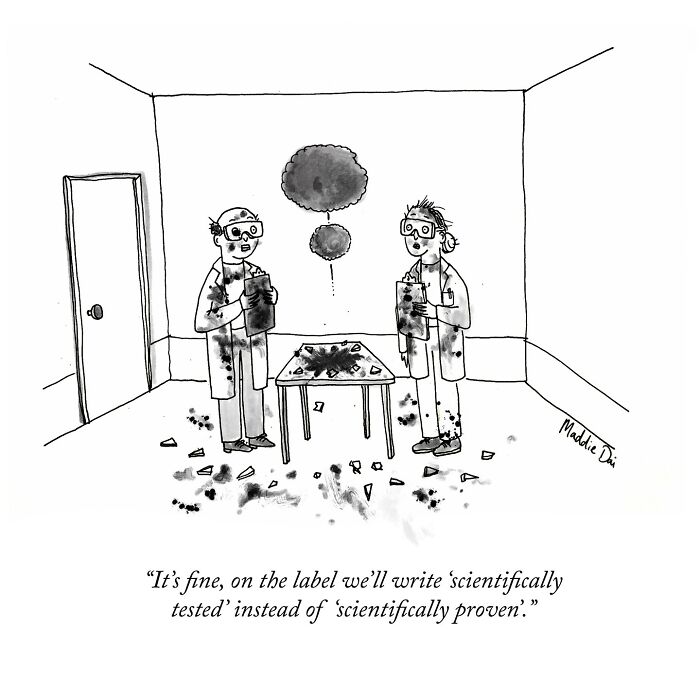
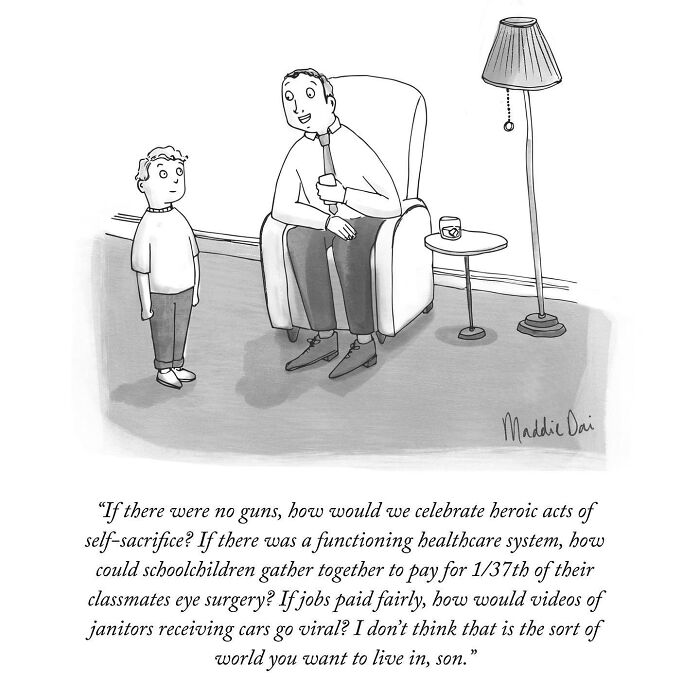
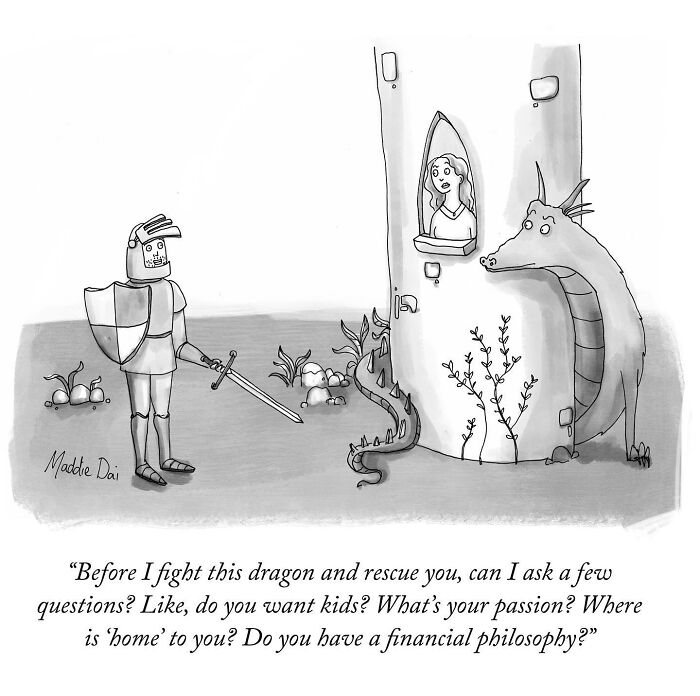
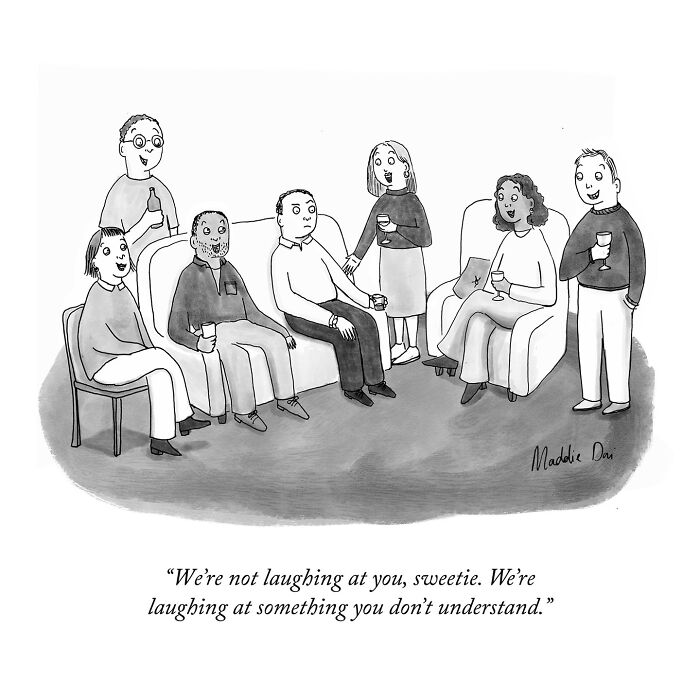
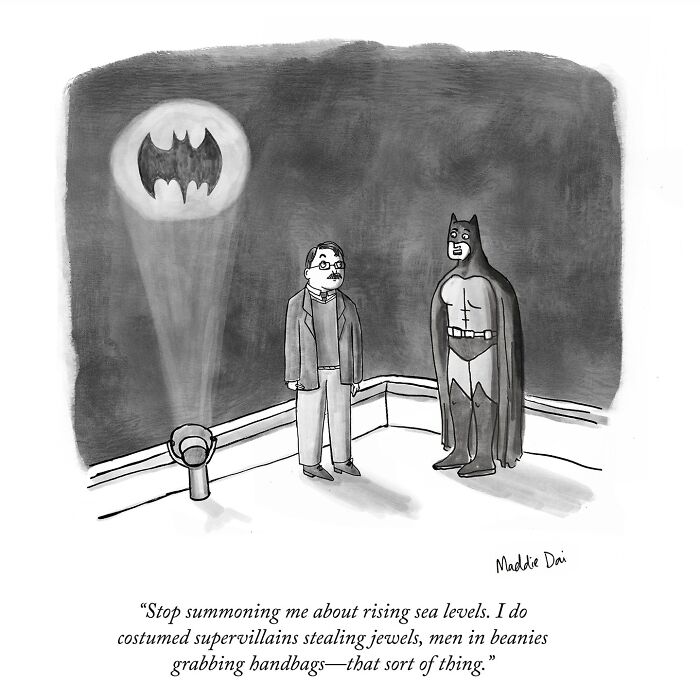
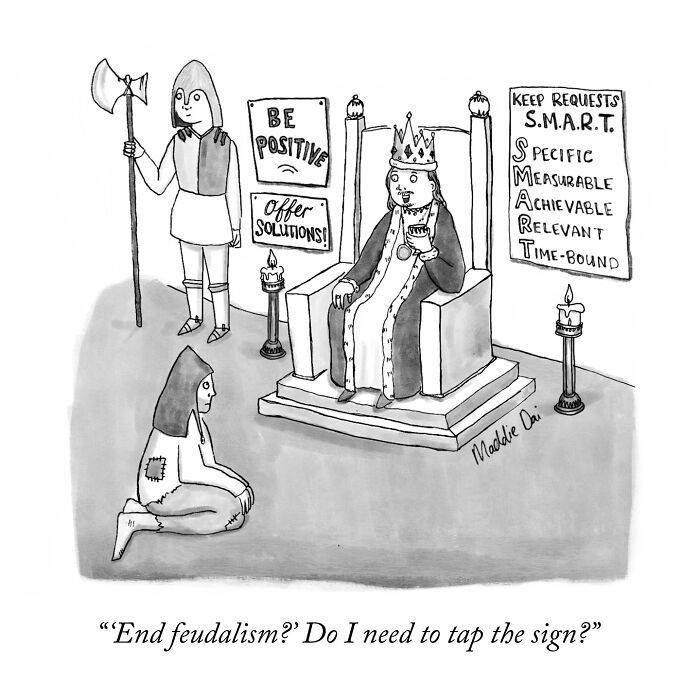
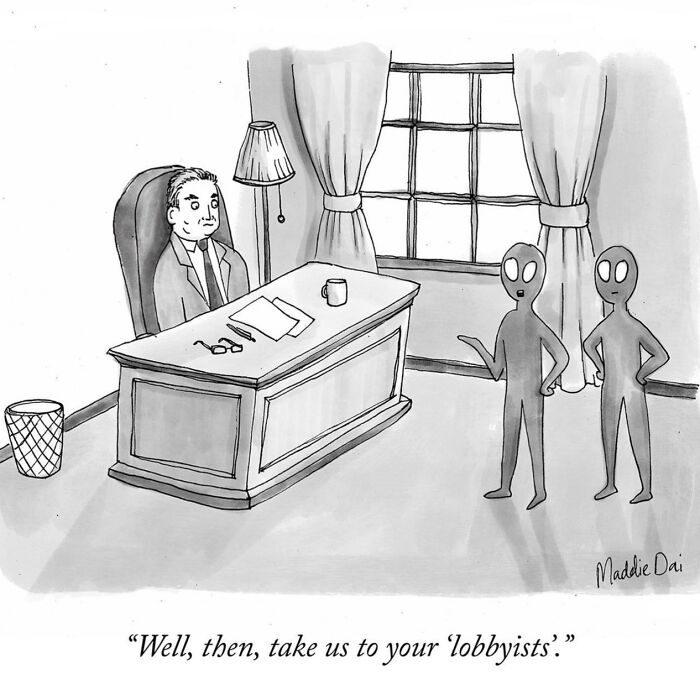
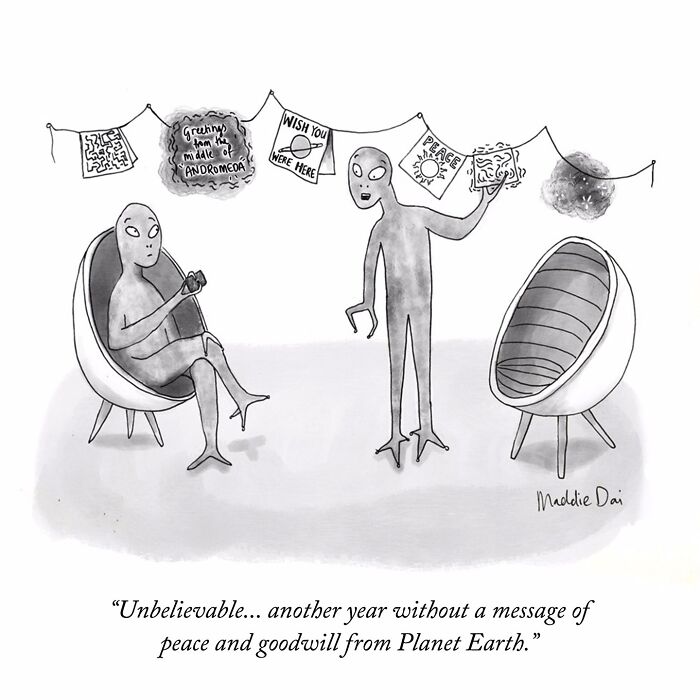
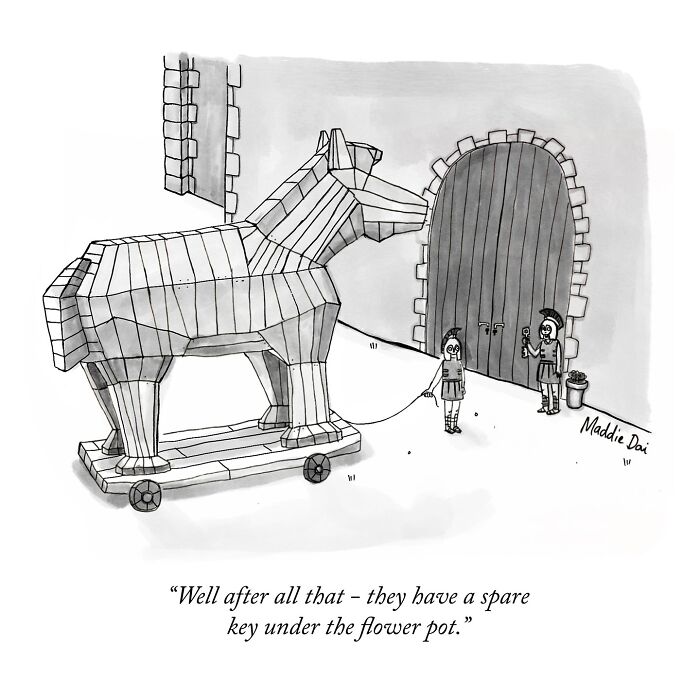
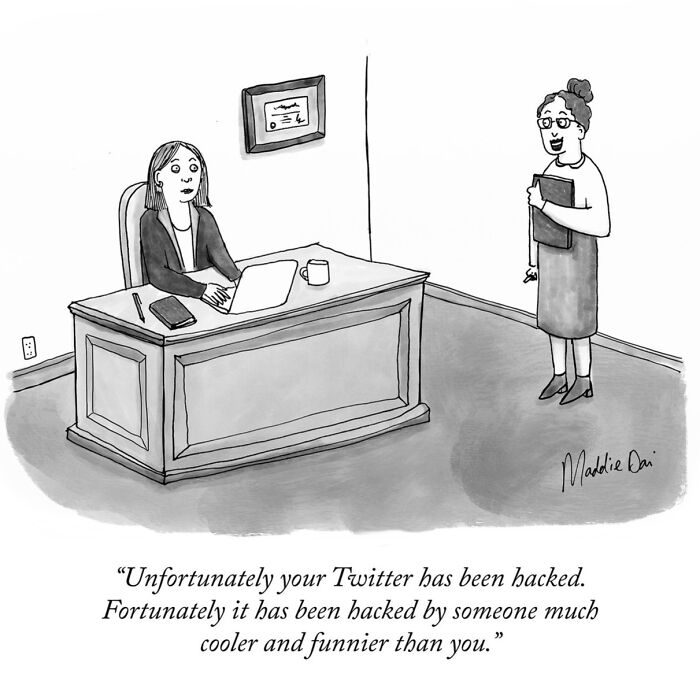
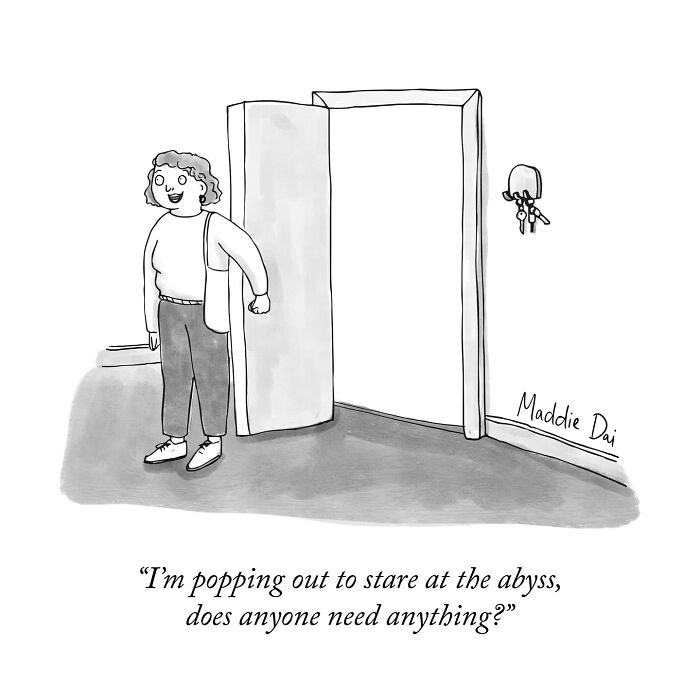
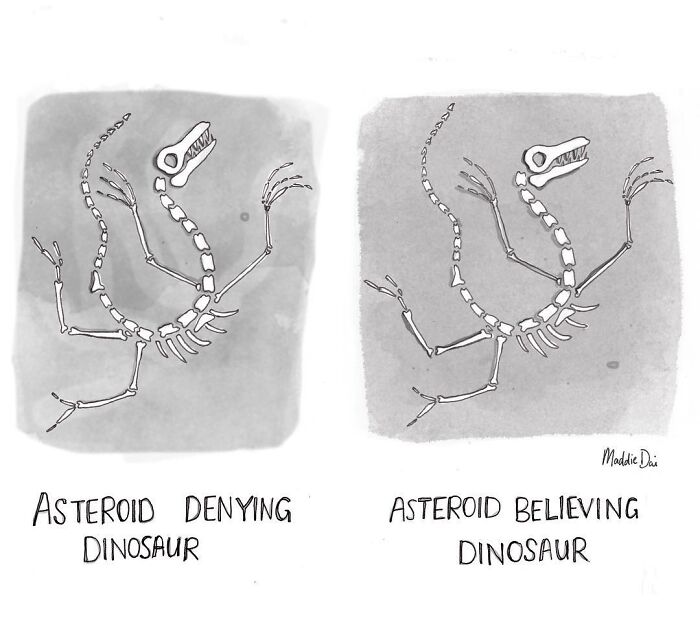
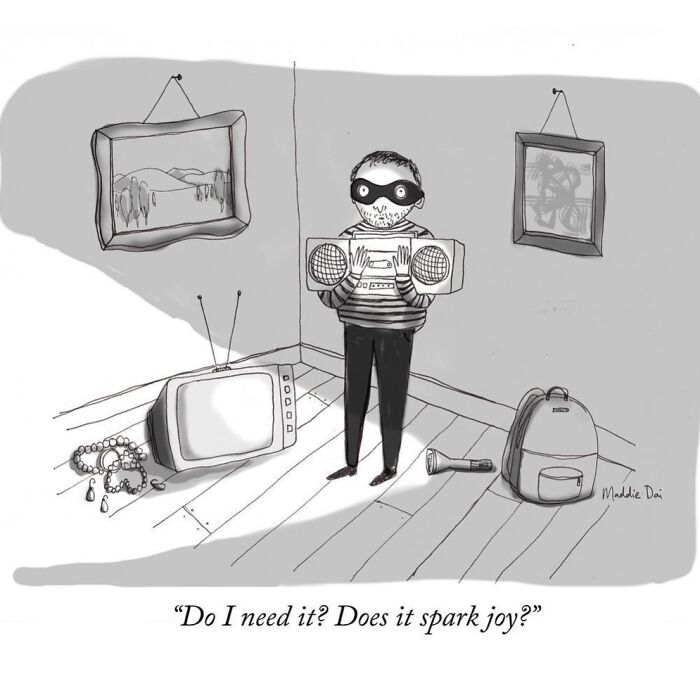
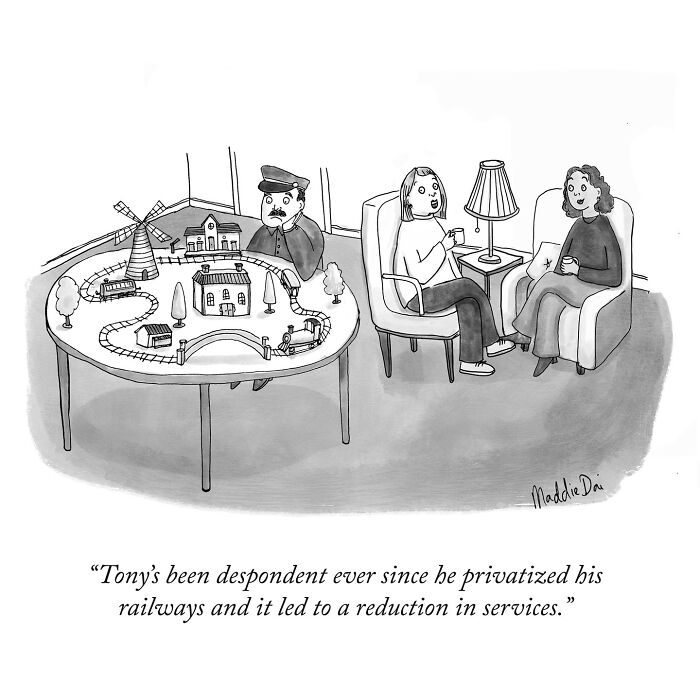
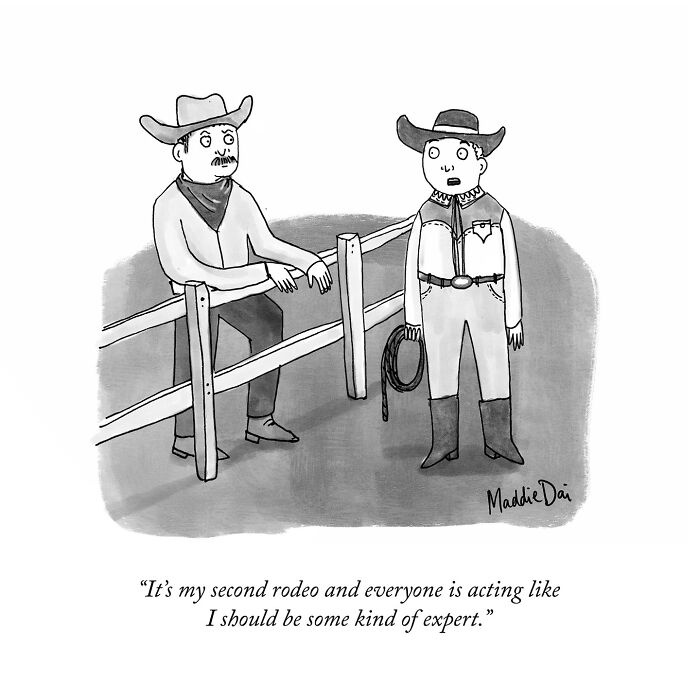
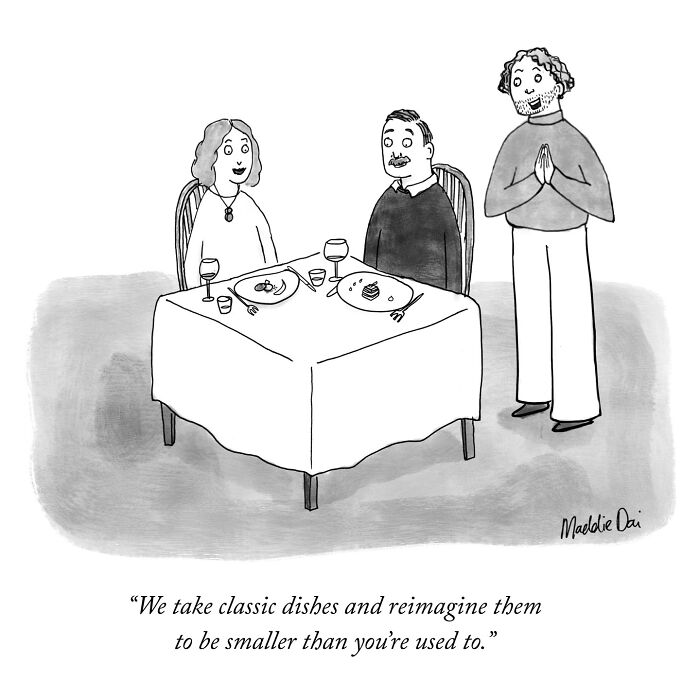
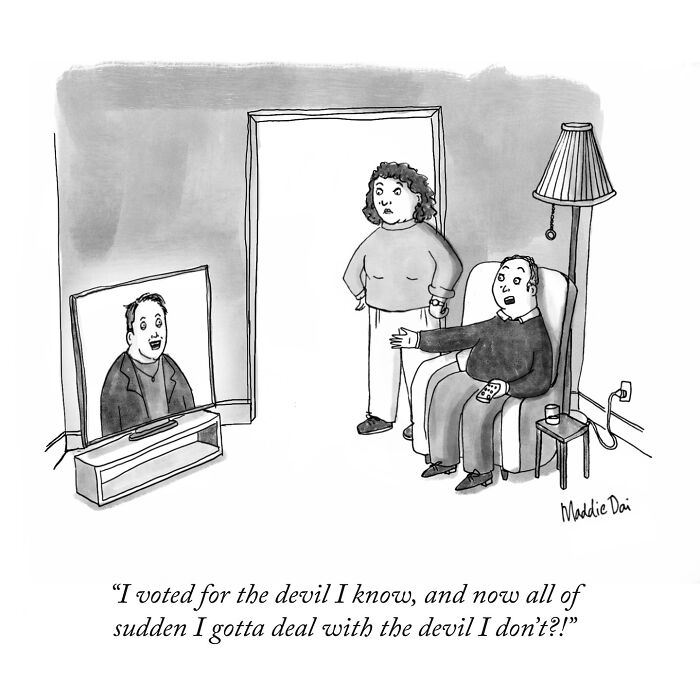
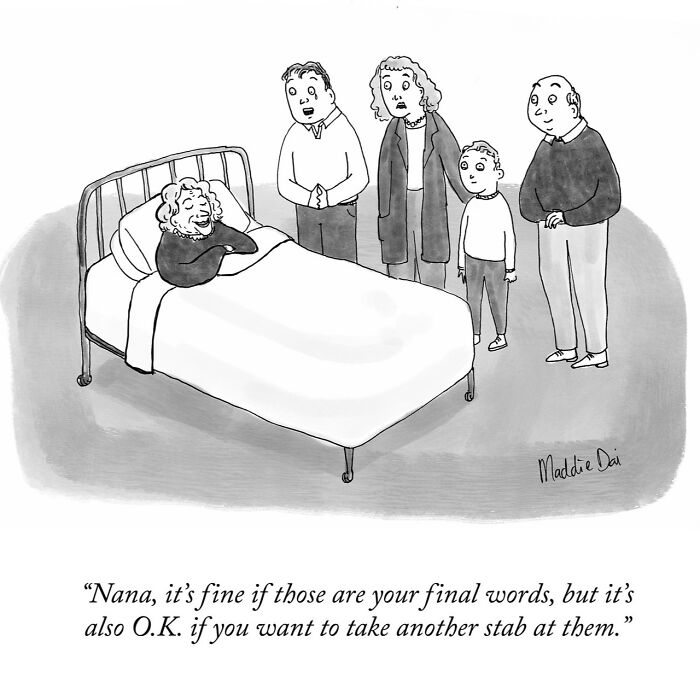
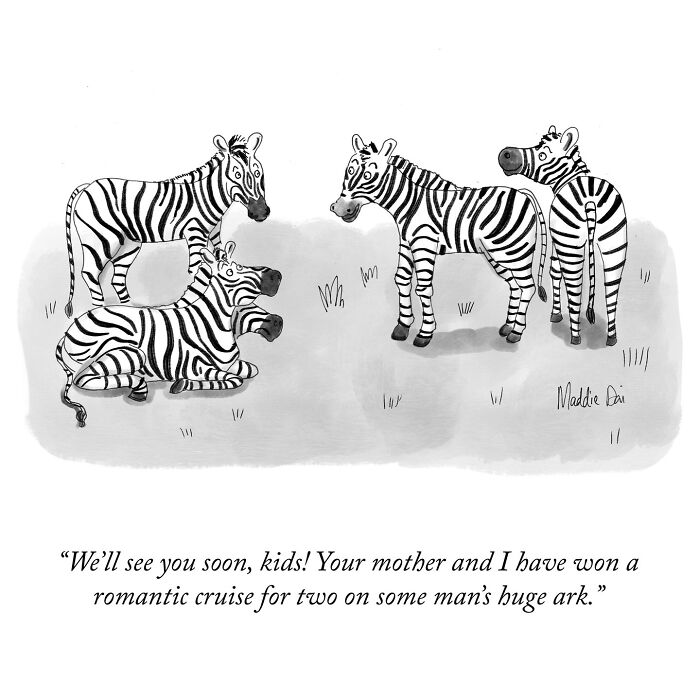
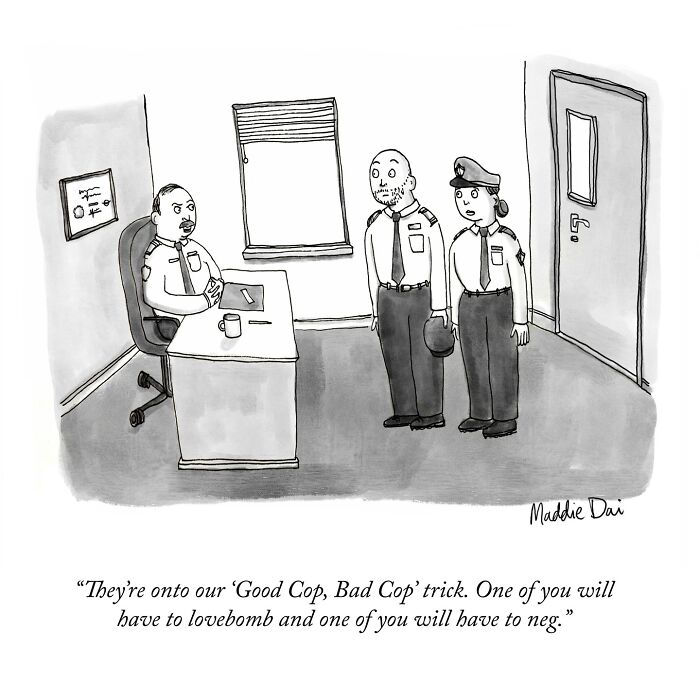
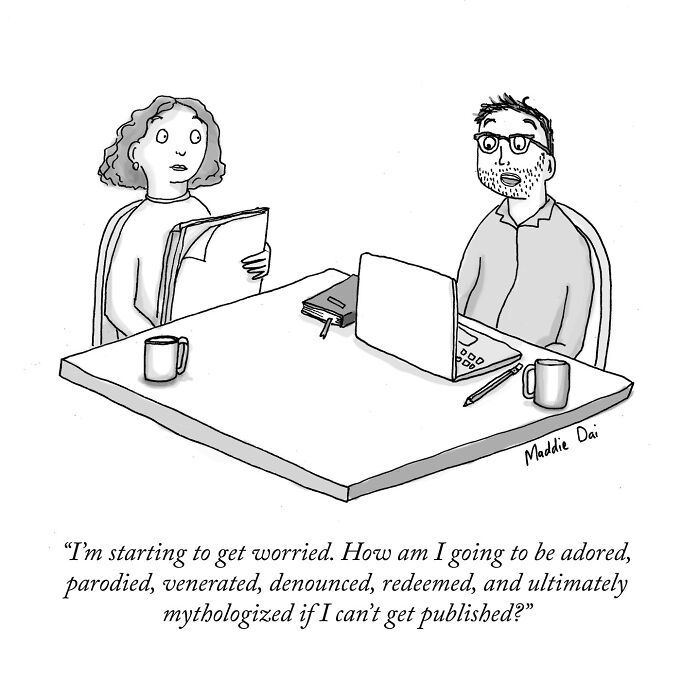
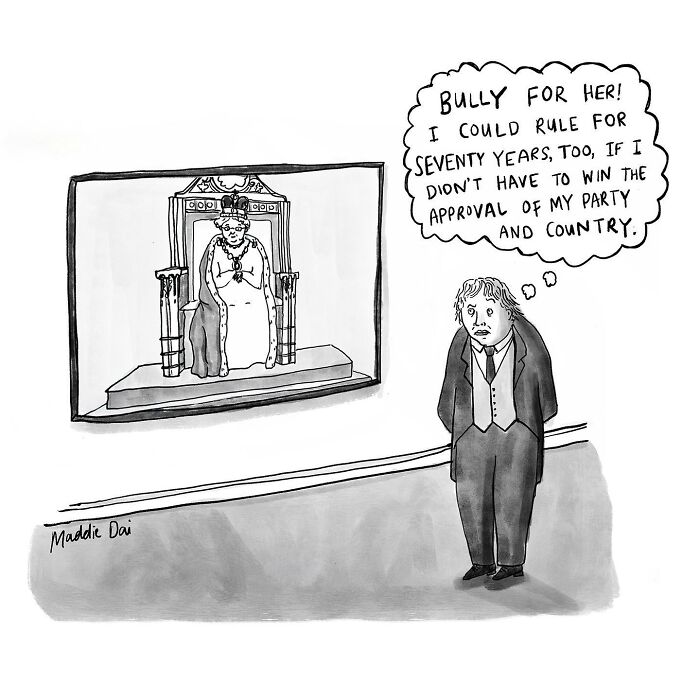
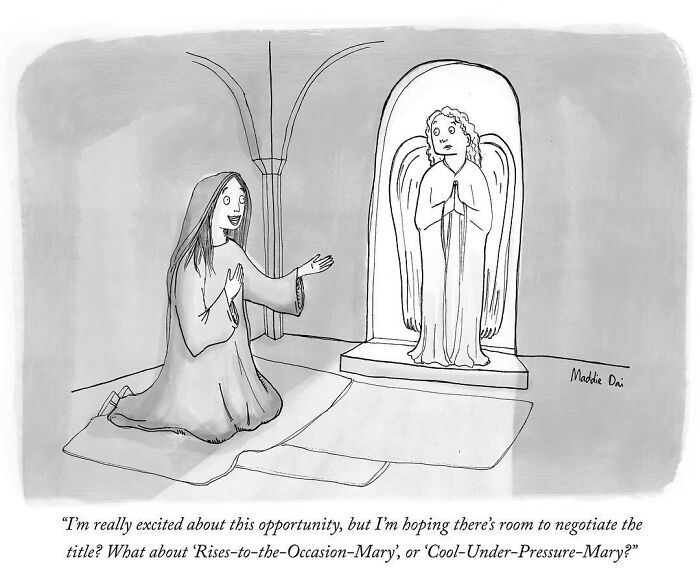
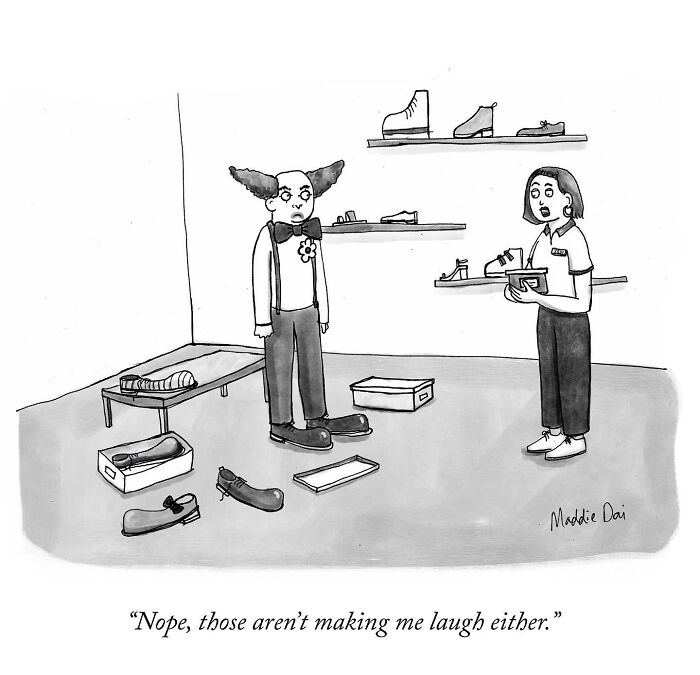
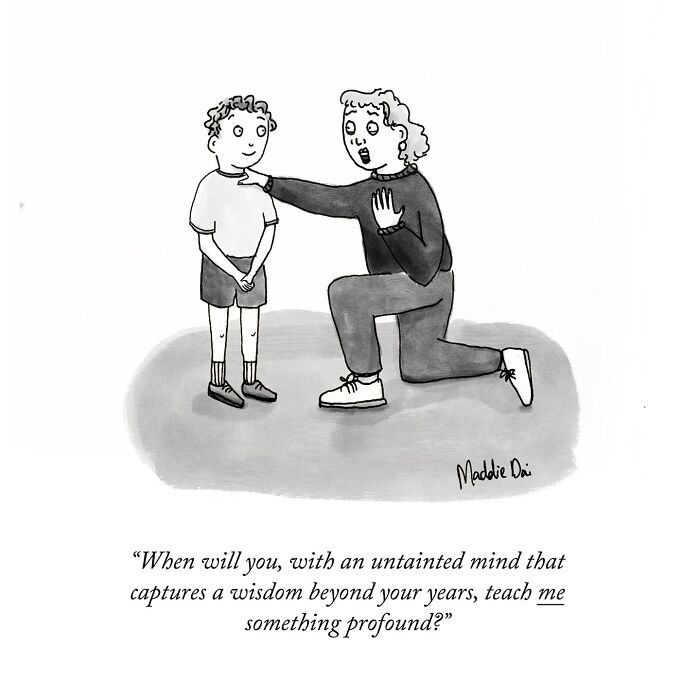
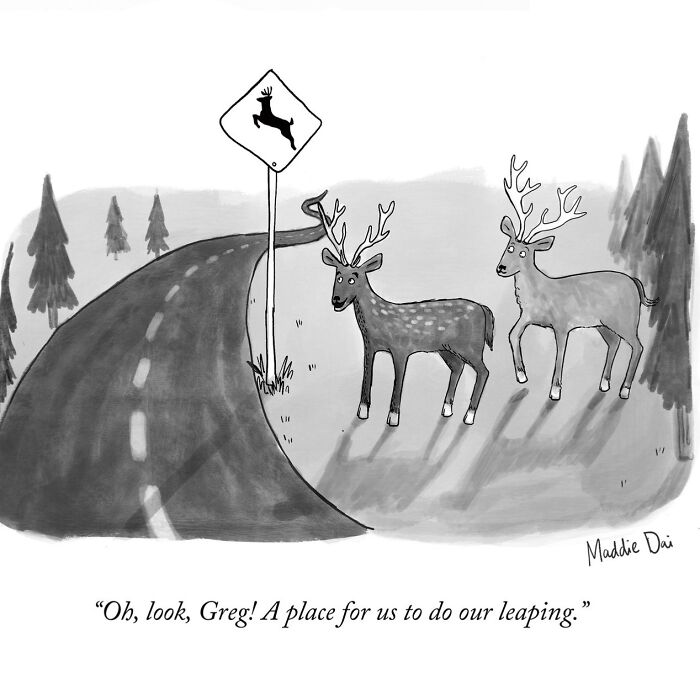
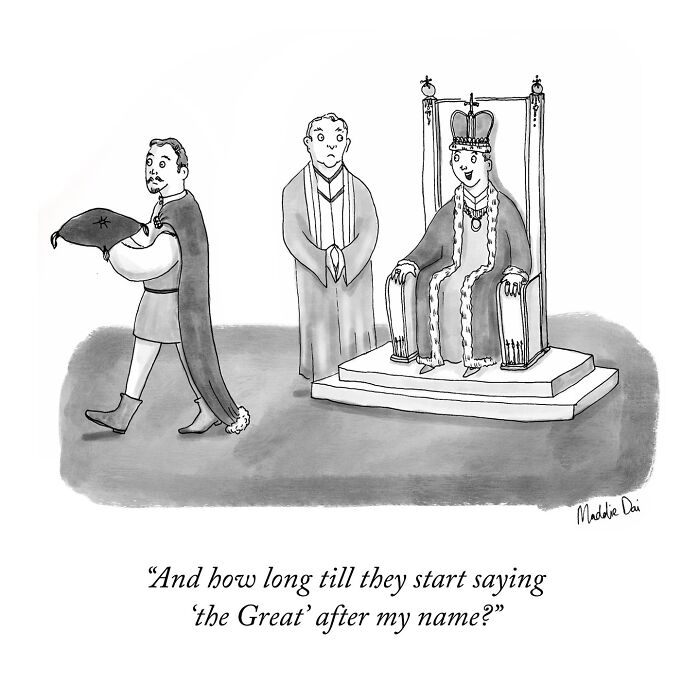
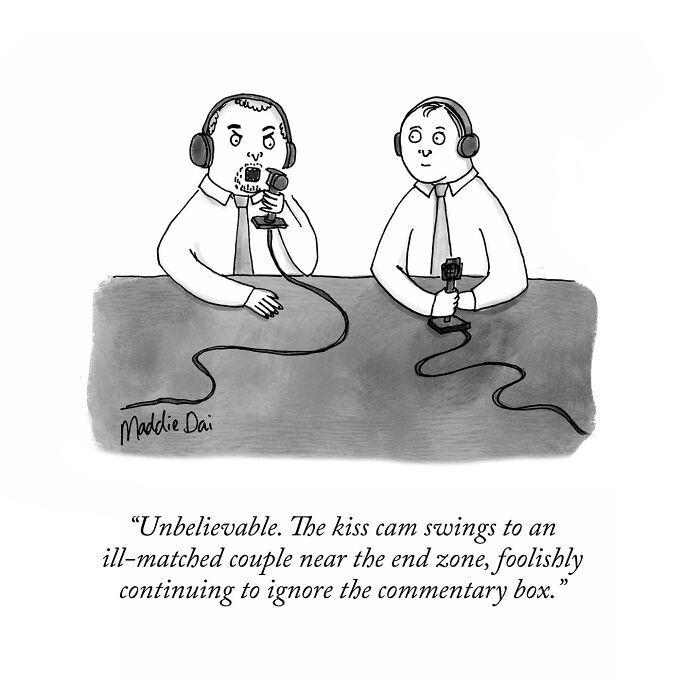
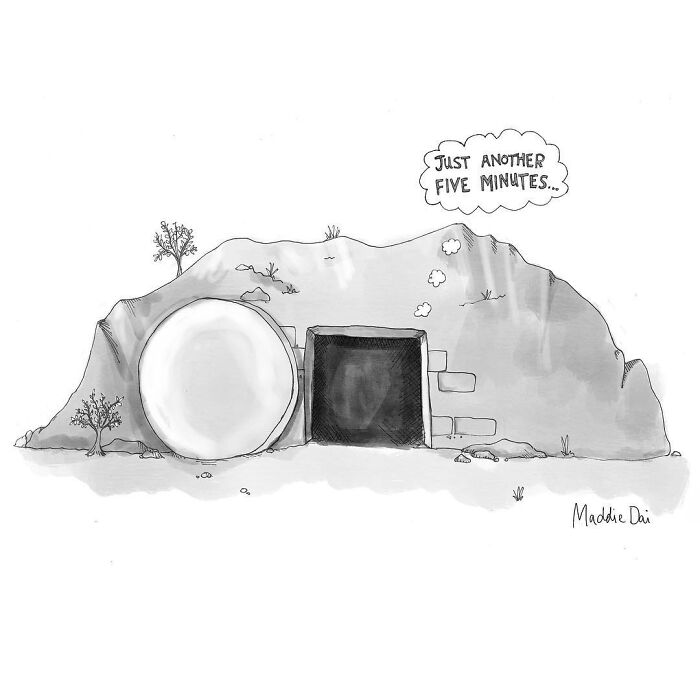
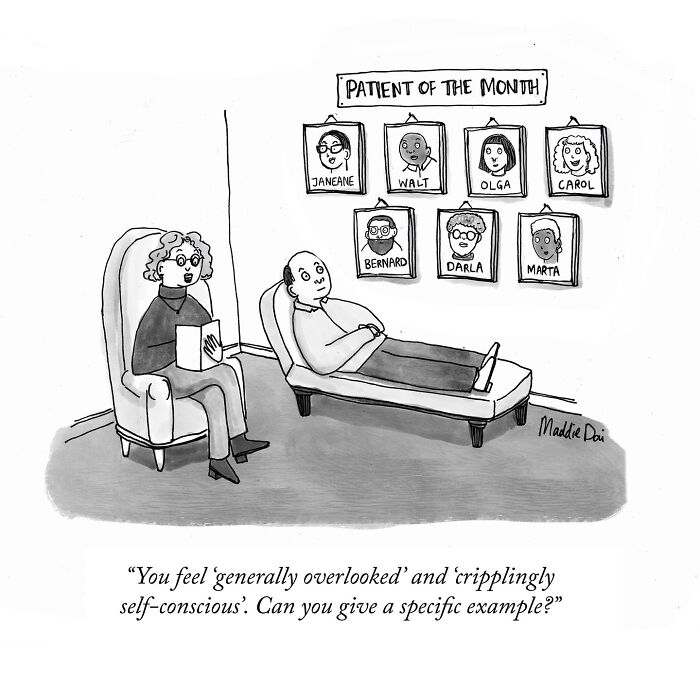
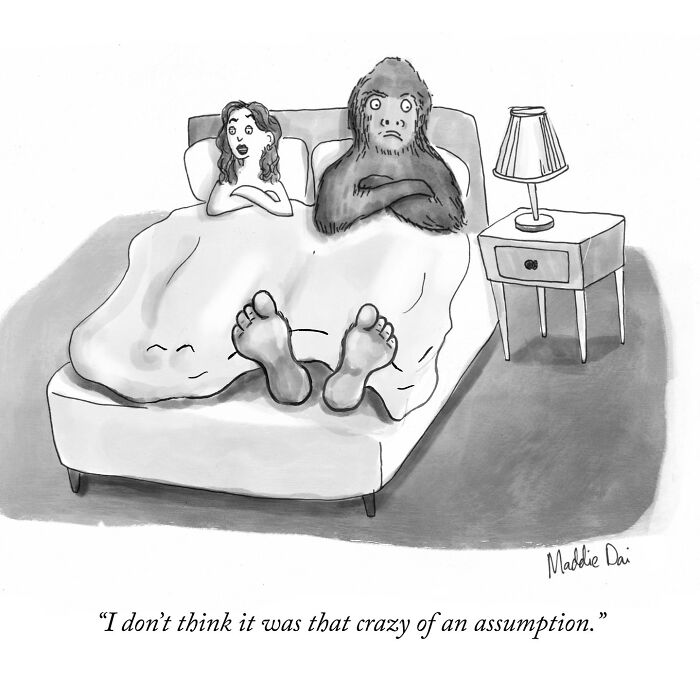
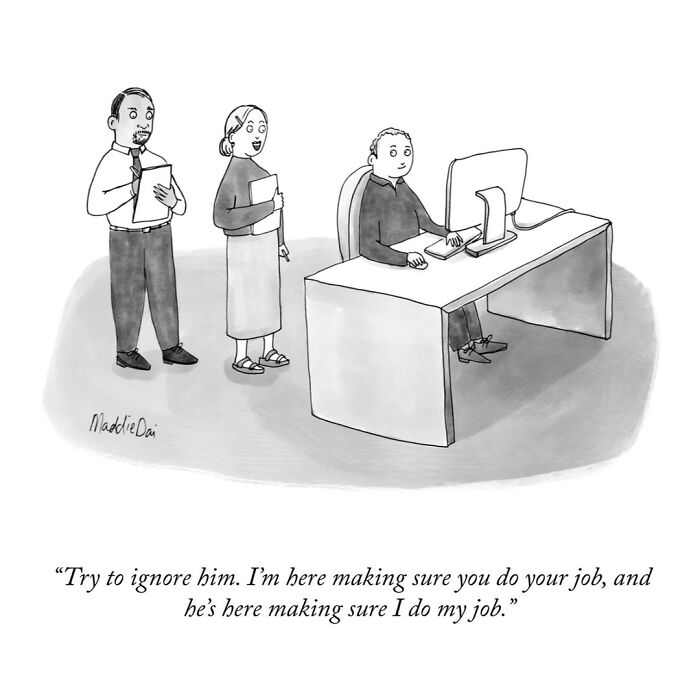
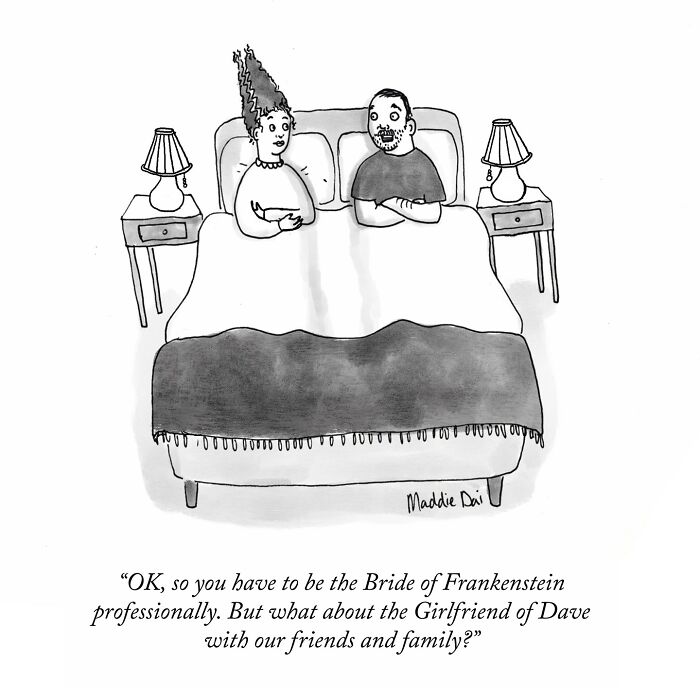
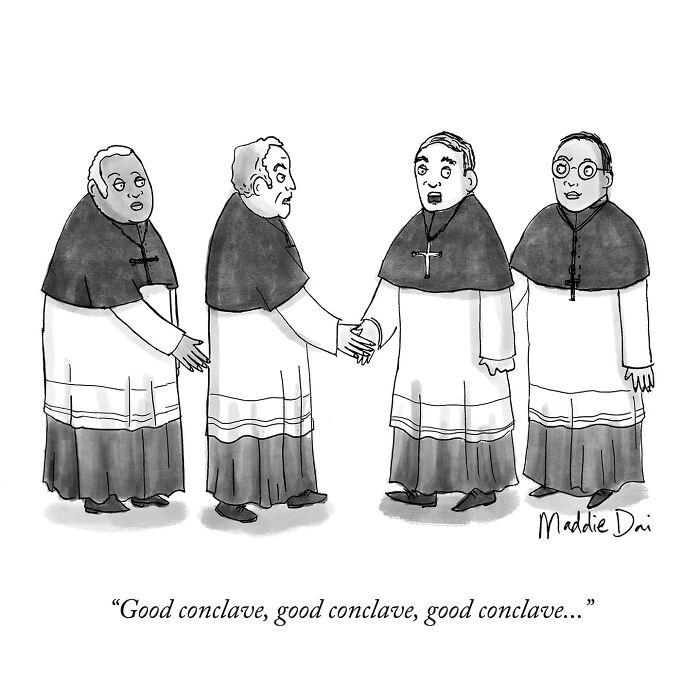
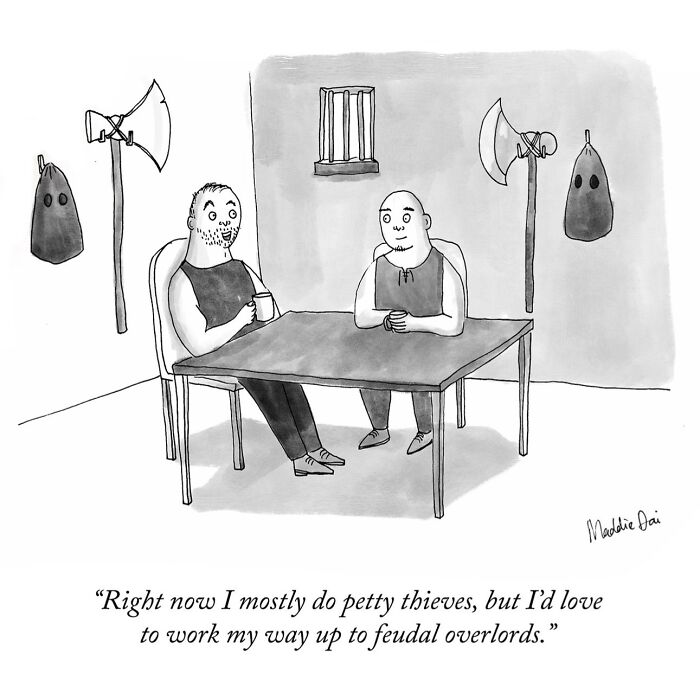
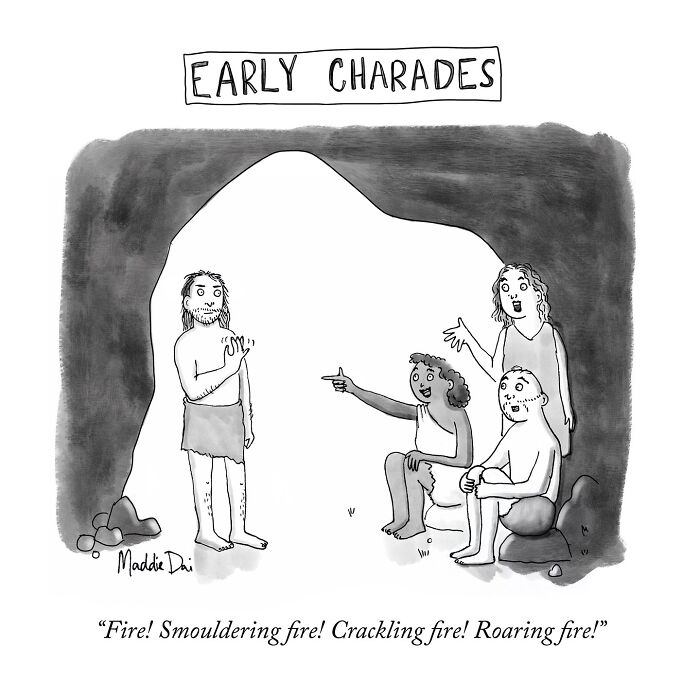
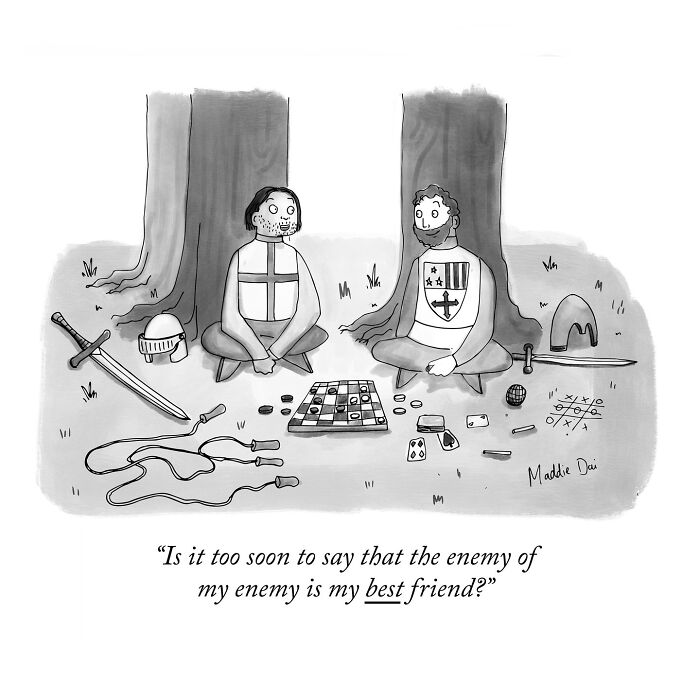
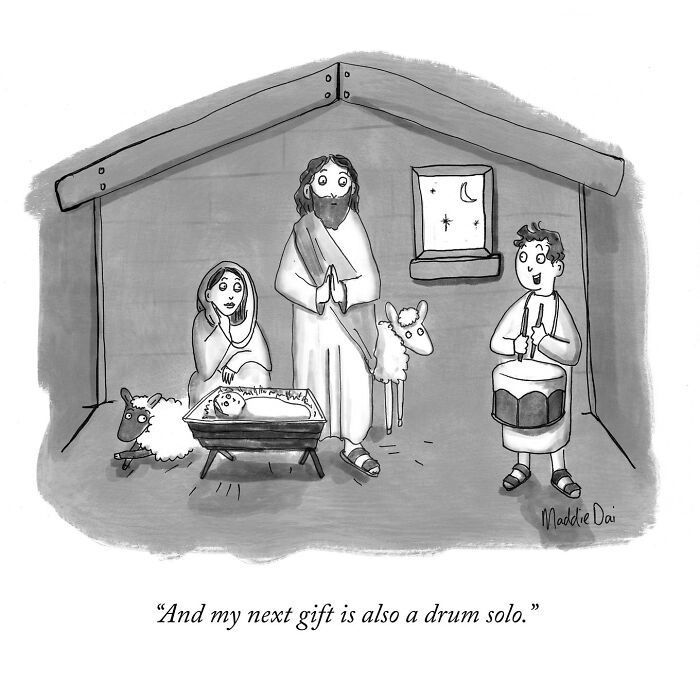
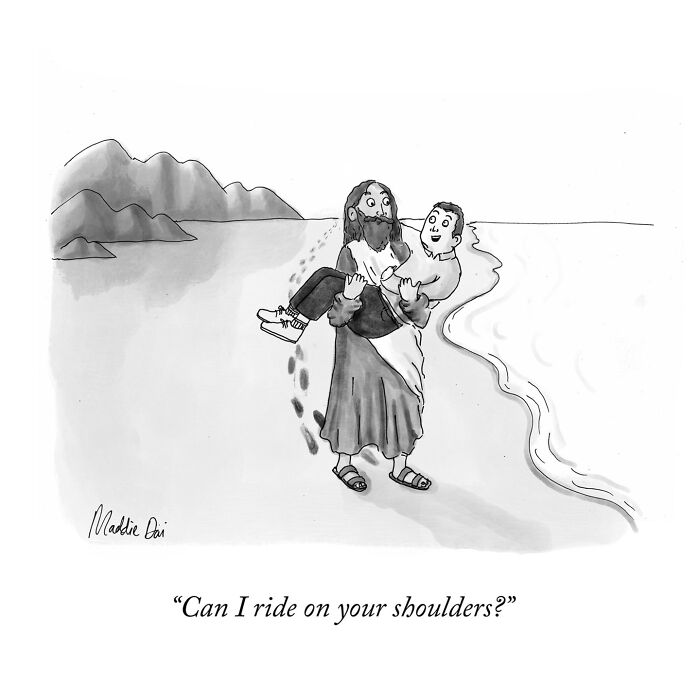
Today, we’re delighted to introduce you to Maddie Dai, making her debut on Bored Panda. Having lived everywhere from Hong Kong to NYC, her sharp Kiwi humor has followed her across the globe. Now based in London, she’s a cartoonist and illustrator whose clever, relatable comics have earned her nearly 90 publications in The New Yorker since 2017. Her work blends everyday absurdities with gentle satire – and the results are irresistible.
Scroll down to explore a wide selection of cartoons by Maddie that we’ve handpicked for you.
Elizabeth Pich and Jonathan Kunz, also known as the artistic duo War and Peas, continue to create dark and twisted but hilarious comics about weird situations, a wicked witch, and many more fascinating characters. They have gained huge popularity and are known by many people. The artists have over 800k followers on Instagram.
The comics are fantasy-inspired, but some touch upon subjects relevant today, like fat-shaming or ecological issues. The illustrations give a new, fresh perspective on these problems, while also making you laugh. Most of them can be quite inappropriate and have unexpected endings, but that’s what makes them fun. You never know what you’re going to get!
War and Peas release comics every Sunday. They started posting comics on Instagram in 2016 and reached popularity quite quickly. They even signed an international book deal with the publisher Andrews McMeel: the same publisher as Peanuts, Calvin & Hobbes, and many other webcomics known all over the world.
War and Peas have a book called “Funny Comics for Dirty Lovers.” So you can have their stories in your home. They also have a store where they sell all sorts of merchandise. So if you want a pin, a shirt, or your favorite comics framed on your wall, click here.
This is how they describe themselves on their website: “War and Peas is an ongoing webcomic made by two individuals, Elizabeth Pich and Jonathan Kunz. Bounded by fate and an obsession for carrot cake and alien movies, they roam the streets of their notorious hometown Saarbrücken, Germany.”
We managed to get an interview with the creators of War and Peas. We asked them what other comics inspire them: “We rarely read webcomics since we’re not good at relaxing. When we do, we enjoy Extra Fabulous Comics and the works of Aminder Dhaliwal. Sometimes we stumble over our own comics and find them hilarious, too.”
The creators described the characters featured in their comics, which they mentioned are like children to them: “We love them all dearly, although they misbehave often and keep us from getting a good night’s sleep. All in all, they are good creatures of the dark realm.”
“We started making these comics in 2011. We’re happy to say we’ve changed quite a bit since then. We’ve had the privilege to be able to grow individually, but also become more professional as a team. It’s still hard sometimes, because we don’t always agree, but it’s good, honest work and we try our best,” shared War and Peas about their development throughout the years.
We asked them to tell us what makes their comics different from others out there: “Well, for one, we are a duo. In this sense, there are always two brains pushing ideas back and forth. It helps take jokes to the next level and allows for a reflective process which is not possible for individual artists. For years, we’ve been witnessing webcomic artists emerging and leaving the game. As a duo, we are extremely stubborn and might just never stop making comics.”
War and Peas share what the “amazing” year of 2020 has been like for them: “To be honest, dark humor weirdly feeds off of adversity, so when things are in turmoil, it’s sometimes easier for us to make jokes. But at the same time, we’re worried and sad and angry about the things that have happened, just like everyone else. So it sometimes takes a lot of energy to stay focused. At the end of the day, it is our job to make comics, and we try to get paid for it. Sure, the creative industry is really struggling and we’ve felt that too financially. But at the end of the day, we’re hopeful that people will always need to laugh.”
They described people’s reactions to their comics and some of the hate they receive: “Every time we get even slightly political, people seem to be upset. If people don’t agree with our values, they don’t have to follow us. We’re fine with fascist followers leaving our realm of laughter.”
“It will surely change as we are changing, but we don’t have any abrupt changes planned. Life flows and War and Peas flows with it,” said the creators when asked how they see War and Peas in the future.
“We’d like to share this quote from Monty Python’s Flying Circus: ‘There are a great many people in the country today, who, through no fault of their own, are sane.'”
There are many other posts from War and Peas here on Bored Panda—if you want to check them out, click here, here, and here. If your favorite character is The Slutty Witch, we have a post all about her! What do you think of War and Peas’ comics? Tell us in the comments and vote for your favorite ones!
Artificial intelligence has become very easy to access to the public, which has made it very popular. Artists all over are combining their skills and AI to create all kinds of edits. Even most apps have filters that use AI to make you look older, younger, or even a different gender.
This San Francisco-based graphics artist uses this new technology to see how famous paintings and cartoon characters would look if they were realistic, and how artificial intelligence recreates historical figures from paintings or portraits on money bills.
On his website, Nathan says: “I am a technical director, creative technologist, visual effects supervisor, and motion graphics artist with over a decade of experience. Currently exploring the intersection of art and AI.”
Nathan Shipley answered some questions for us. He told us what inspired him to create these edits: “On one side, I love to create impossible images and explore new technology. I’ve got a background in animation and visual effects and once I saw what is possible using AI and machine learning tools, I realized there are so many things that could be done with them that would otherwise be impossible. Even some things that may be technically possible with VFX and CG could still be very time-consuming or expensive, whereas AI enables entirely new possibilities.
On the other side, it’s fascinating to explore how an AI model built on a particular dataset with a particular framework can ‘see’ the world and then transform images. The AI ‘knows’ only what it has already seen and filters the world through this lens. Each little tweak to the dataset, the training parameters, the model, and the input imagery all have the possibility to change the output. This is a space to explore how artificial neural networks interpret the world in a way that can be similar to our own minds. I’m not saying that an image I created is what Mona Lisa actually looked like, but it is how the machine sees her based on this particular arrangement of variables. That, to me, is fascinating.
I also want to add that these are definitely just experiments and that there are some pretty obvious limitations of the AI and the datasets that it’s trained on. Frida loses her unibrow, Miles’ hair gets mangled, Lil Miquela’s freckles disappear, hats turn to hair, and Ben Franklin even gets an earring! These are just some examples of how this particular combination of variables recreates a face that comes with a lot of randomness and inconsistencies. Keeping diversity in AI is an area of active research.”
#2 Miles Morales From Spider-Man: Into The Spider-Verse
“I have always loved to draw, take photos, and paint. I’ve also always had a computer around since I was in elementary school using a 286 with MS-DOS and no hard drive. The combination of traditional art and technology has been a natural step for me and led to my career in VFX and animation.
My current interest in exploring face manipulation and generative art using AI and machine learning started with a project for the Salvador Dali museum called Dali Lives in 2018. I used early deepfake code to bring Dali back to the museum to talk to visitors about his art. From here, I moved into working with GANs and realized how powerful neural networks can be for image processing and generation! For me, creating art is both an expression of curiosity and an act of exploration through process.”
“My favorite part about creating art is the process of actually making it; the journey and all the exploration that goes with it. I love having a problem and no idea how I’m going to solve it, putting my headphones on, losing track of time, and just trying things until it works.
It’s great to see a finished image, but it’s even more exciting to try new code, use code in ways it wasn’t meant to be, combine different tools together, and create entirely new art through new processes.”
Nathan has a 4-year-old son and he loves to explore the world with him: “We fish, go to the beach, paint, draw, read, play baseball, and pretend. Otherwise, I love running—it calms me down and focuses my mind.”
The artist tells us more about himself: “I’m just a guy from the Midwest of the United States. I grew up in Indiana, went to Indiana University, and then worked doing animation for TV at the Indianapolis Motor Speedway. Eventually, I was ready to leave Indiana and go to California.
I was very fortunate to first have the opportunity to travel around the world for a year with no plan before moving to San Francisco. I flew to Lima, Peru on a one-way ticket and spent the next 12 months staying in a handful of cities in South America, Eastern Europe, Turkey, India, and Thailand. If I got to a place I liked, I got an apartment and stayed for a month.
Traveling, being curious about the world, and meeting many different people goes quite well with creating art and just living life in general.
I did eventually land in San Francisco, where I’ve spent the last 10 years working on animation, VFX, and creative technology projects at Google, Intel, and currently the ad agency Goodby, Silverstein & Partners.”
Nathan explains how he creates these edits: “It’s a very iterative and explorative process. In the most simple terms, a face is used as input for the software and the software generates new faces based on the input. I have examples where I am creating ‘real’ versions of painted or cartoon people and also cartoon versions of real people.
More specifically, to create real people, the central part of the process uses machine learning to find a human who has a similar shape to the faces in an AI network created by Nvidia. This network is created with a GAN (a kind of machine learning framework, this GAN is called StyleGAN) and trained on a dataset of 70,000 human faces (called FFHQ). The AI learns how to generalize what a human face looks like and can then generate new human faces that don’t actually exist but look very realistic.
Because the network is trained on images of real people, it’s very good at creating more real people, even when you give it an input that is just a drawing or painting.
I have other examples using the same tool (StyleGAN) to create new images based on 400-year-old woodcuts of Aesop’s Fables illustrations, Beeple’s library of everydays, and even custom datasets to make music videos for musicians like Qrion and Hiatus. A lot of these are on my site here.”
“I have a core set of tools that I use from my background in animation and VFX (Photoshop, After Effects, C4D, Maya, Nuke) but the most interesting tools usually come from Github repos released by academics and machine learning researchers. These are often run by editing Python code on a Linux machine which controls a machine learning library like Tensorflow or PyTorch.
In fact, almost everything about these face images comes directly as output from the Python code. I’ve been particularly interested in exploring Nvidia’s StyleGAN and a StyleGAN encoder called pixel2style2pixel.”
Nathan says that the actual images take minutes to create; however, he had to go a long way to learn everything: “All of the learning and background I needed to get to this point has been a couple years of exploration and trial and error. I even attended a conference at MIT called GANocracy back in 2019.
I’ve built an art player, for example, that can generate completely new, never-ending, totally novel art in real time. Frames are made on the fly! However, training the model and writing the code for the player was weeks of work and processing time.”
The artist shared how he chooses which people or characters to recreate: “I pick characters that I love (Miguel from Coco, for example) or historic people that we don’t actually have photographs of. Some faces don’t work as well as others, but it’s really exciting when there is a compelling result! A lot of this is trial and error and me just publicly sharing the tests that I make as I go.
For example, I would love to see what Mona Lisa might look like and now I’ve got a realistic face that might be like her. I’m not saying that it is Mona Lisa, but it’s a possibility.
When people see my edits, they say everything from ‘amazing!’ to ‘creepy!’ to ‘that looks like my cousin!’ They seem to be getting a good amount of attention, so at the very least, they’re interesting!”
“Overall, I think the space of generative and AI art is a fascinating and very deep well to explore. I’d certainly encourage readers that are interested to try it out! The technical hurdles can seem daunting, but with a little bit of background, you can really Google your way through a lot of this.
It’s also the sort of thing where academics and researchers present these technologies in a very academic or complicated-sounding way. Understanding a paper called ‘A Style-Based Generator Architecture for Generative Adversarial Networks’ can seem daunting. However, seeing imagery created by artists with the same technology can be very inspiring!
I’d highly encourage readers to check out the work of Memo Akten, Scott Eaton, Mario Klingemann, Refik Anandol, Helena Sarin, and Ben Snell to name just a few. These are the artists that have been foundational in my own interest in exploring AI and machine learning.”
What do you think of these edits? Tell us in the comments and vote for your favorite ones! Don’t forget to go show some love to the artist on his social media accounts.
If you want to see more posts similar to this one, click here or here!