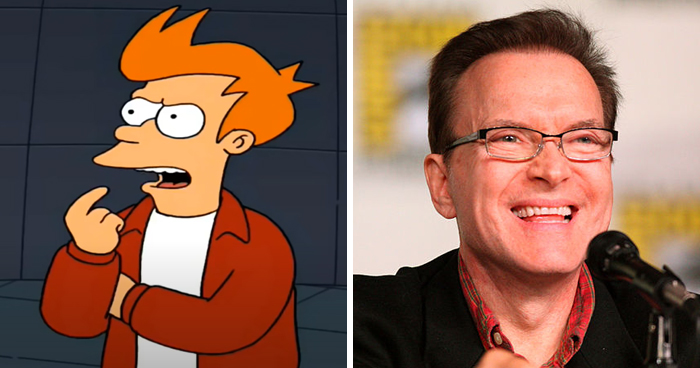
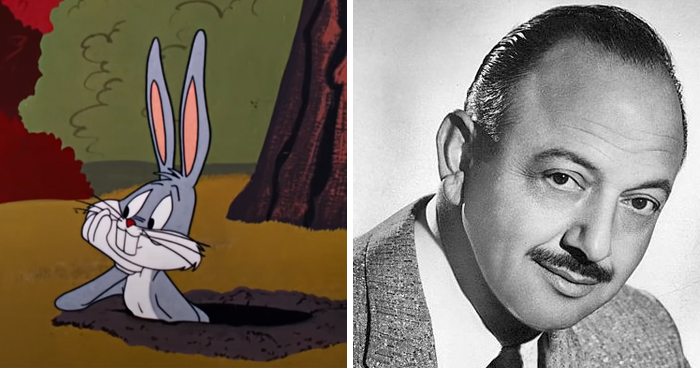
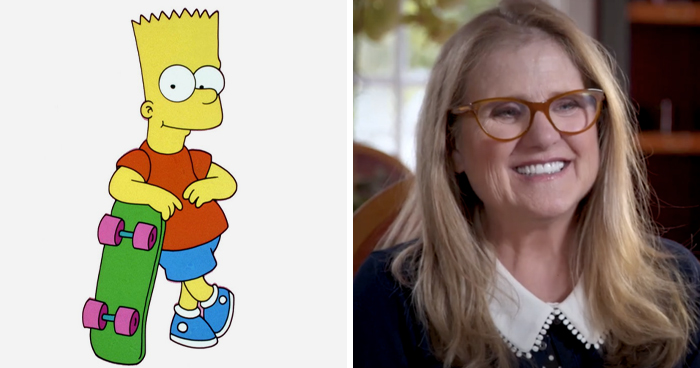
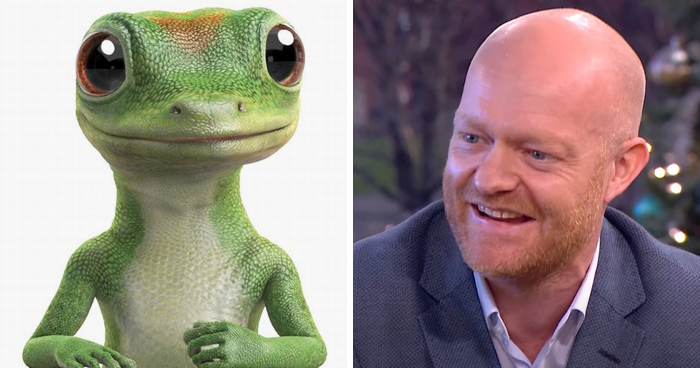
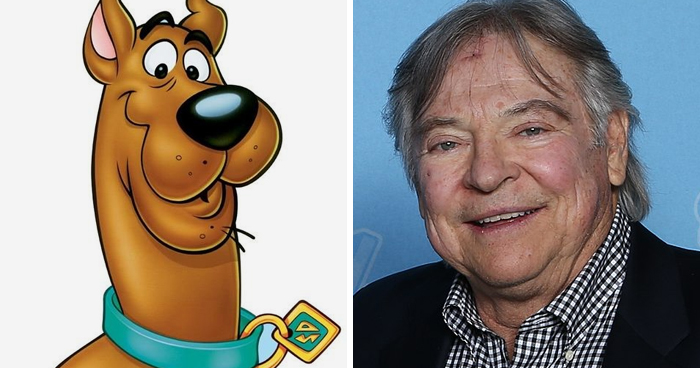
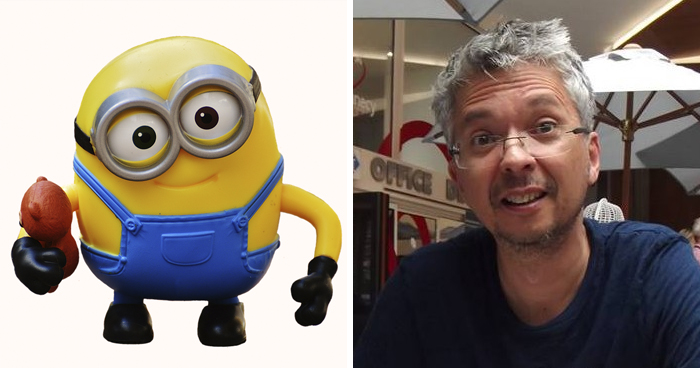
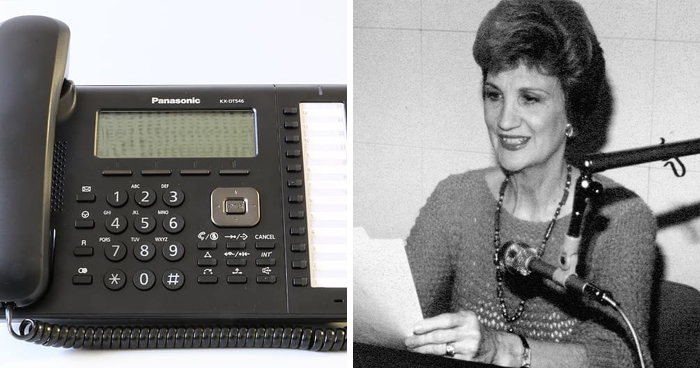
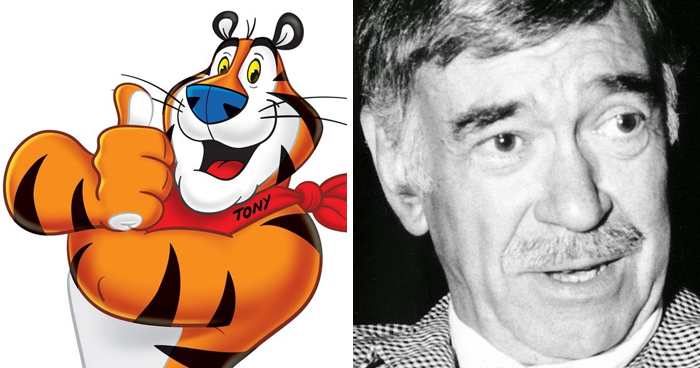
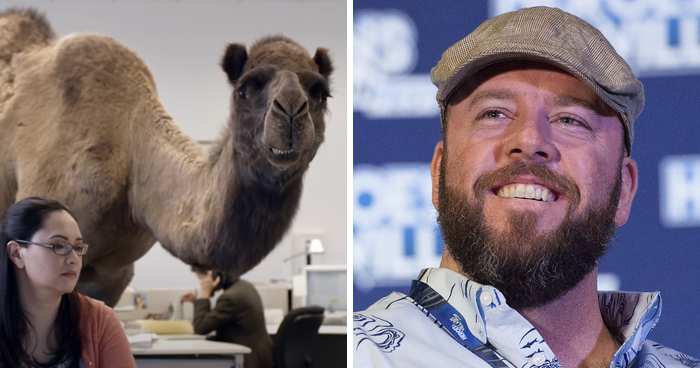
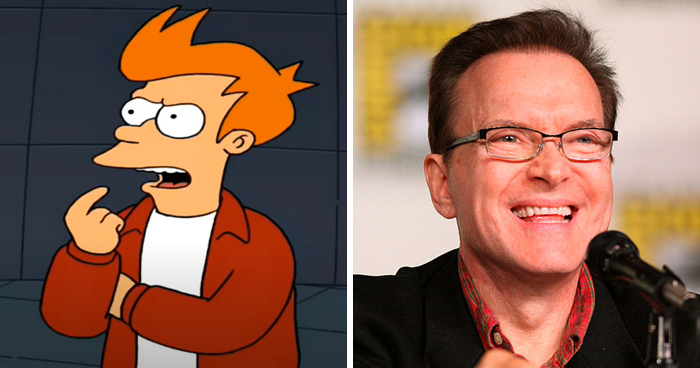
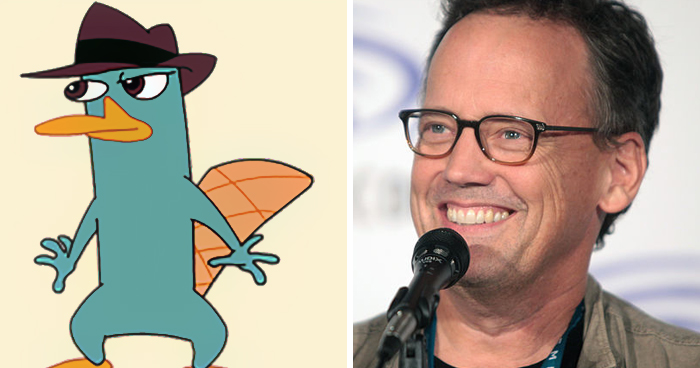
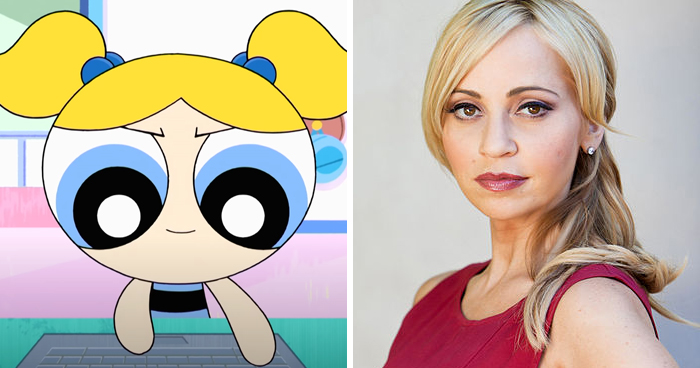
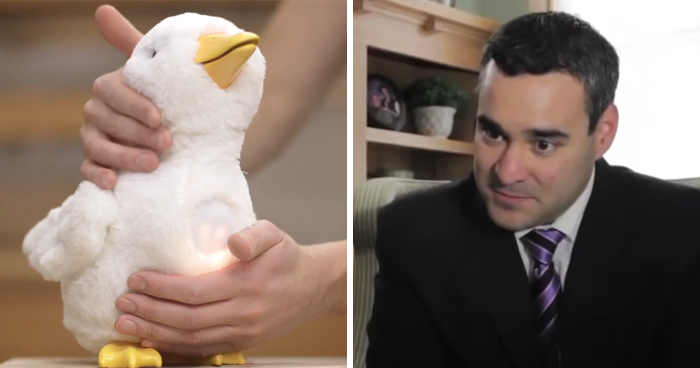
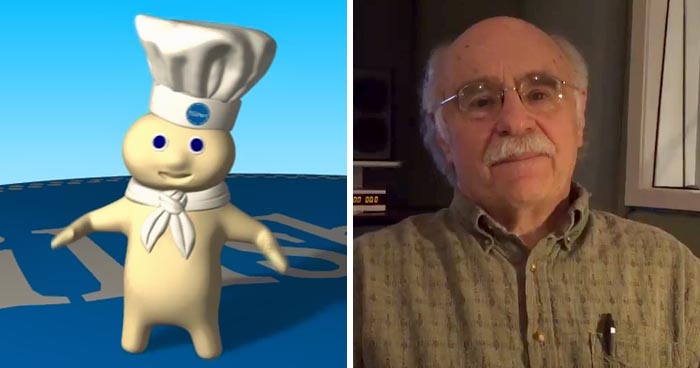
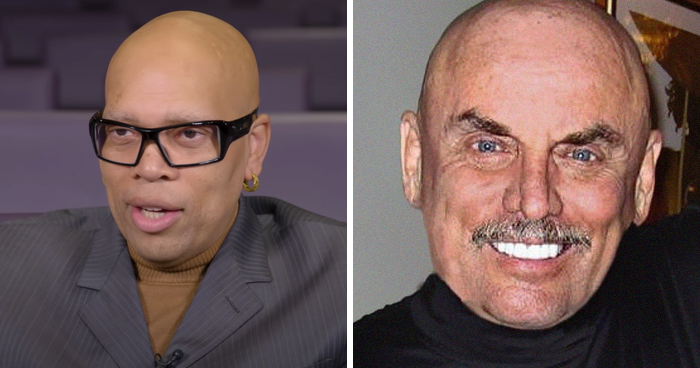
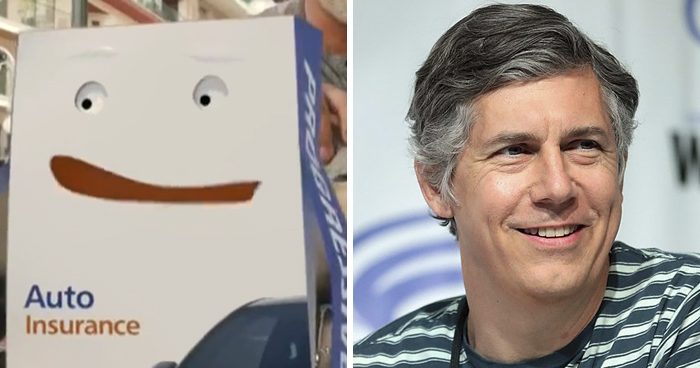
Do you ever catch yourself wondering who the people behind various commercial, animated TV show, and service voice-overs are? When you think about it, there are tons of different voices we know so well, yet we have no idea what these people look like or who they are. The more you think about it, the weirder it starts to seem.
Do you know who is behind the famous voice of Apple’s Siri? Or who gave their voice to minions from Despicable Me? Bored Panda invites you to scroll down and find out who the people behind some of the most well-known voices from commercials, TV shows, and services are.
Being famous seems great and all, but it comes at a price. It gets tiring to always be in the public eye, minding what you say and what you do, representing your own brand and doing business. Besides this, it’s also all of the ceaseless attention from fans and whatnot, so it’s no surprise why some decide to be more subtle and discreet about it.
Hence, we have a number of famous people who seem like they “refuse to be famous”, whether it’s deliberate or not. Twitter user Skoog pointed out how Patrick Wilson, who starred in Aquaman (2018), Watchmen (2009), and Insidious (2010), said he’ll be starring in millions of movies, but ends up absolutely refusing to be famous.
The thread soon began booming, gaining quite a bit of attention from the internet. It got over 315,000 likes with 27,000 retweets and a bunch of comments. While some tweeted about how Patrick Wilson looks like Will Arnett and a bunch of other similar looking actors, others began suggesting what other famous people are also avoiding fame.
While these actors are not believed to be famous in comparison to a number of other celebrities, everyone in the thread do agree that they are underrated and do deserve more credit than they are actually given.
Bored Panda has compiled a list of the celebrities that this thread deemed “absolutely refusing to be famous,” so check it out below and be sure to vote and comment on the entries you love the most.
Click here & follow us for more lists, facts, and stories.
#1 William Fichtner
William Fichtner began his acting career as Josh Snyder in As the World Turns in 1987. The start was a bit slow, but in several years, Fichtner quickly became a common occurrence in movies, starring in at least a handful of movies annually ever since 1995. He is best known for his work in Armageddon (1998), Black Hawk Down (2001), and Crash (2004).
David Morse is an American actor, singer, director and writer. Morse kicked off his career back in the early 1980s and has since then been featured in films like The Negotiator (1998), The Green Mile (1999), and 12 Monkeys, among many others.
American-born actress Judy Greer has been very active in the movie scene ever since her debut in the movie Stricken in 1997. Her best known work is in movies like Jurassic World (2015), 13 going on 30 (2004, and Ant Man (2015), among many others.
According to the New York Post, Greer doesn’t want more stardom, but she does want the attention that opens doors professionally. As a director she said asked herself why should she play the role when she can get someone else, like Jennifer Garner to do it.
Besides that, she wouldn’t want to see herself in the editing room all the time: “I don’t have that kind of self-esteem. I could not ever watch a performance of my own while doing it and be like: ‘Oh, that was an awesome take. We can move on, I really nailed that.’”
While these actors are not believed to be famous in comparison to a number of other celebrities, everyone in the thread do agree that they are underrated and do deserve more credit than they are actually given.
While it is unknown why many of these actors don’t get the love they truly deserve, with many it is speculated that they are simply focused on other things—not trying to be famous but rather enjoying the art of acting, or wanting to spend more time with their families and deliberately not going to interview and not dancing the “celebrity dance”. It might also have something to do with Hollywood politics, but that is a story for another time.
#4 Vera Farmiga
Vera Farmiga is an American movie and TV actress, director, and producer, who began her professional acting career on stage in the original Broadway production of Taking Sides (1996). She is best known for her work in The Conjuring series, Bates Motel, and Orphan.
Rose Byrne is an Australian-born actress debuting her career in the comedy movie Dallas Doll (1994) She is best known for her roles in Spy (2015), Insidious (2010), and Bridesmaids (2011).
Rachel McAdams is a Canadian actress who is best known for being in that “It’s never gonna happen” meme ripped straight out of Mean Girls (2004). Besides that, she also starred in the Notebook (2004), Red Eye (2005), and Sherlock Holmes (2009), just to name a few.
In an interview with LA Times, she was asked whether McAdams herself even wants to be a movie star, to which she responded: “I think it was sort of a vague idea in my mind when I was a kid, when you think, ‘What would that be like?’ But it wasn’t something I really meditated on or planned for in any way. I really thought I’d be doing theater in Canada. I’d grown up doing children’s theater there, and I always imagined myself being artistic director of a children’s theater company.”
George Wyner is a Boston-born actor who started off in television in the early 1970s but later also started appearing in a number of movies, including Spaceballs (1987, A Serious Man (2009), and The Postman (1997).
Actor and producer Aaron Eckhart was born in Cupertino, California, but has lived in a number of other places around the globe, including the UK and Australia. He has been acting since the early 1990s with his most notable work being in The Dark Knight (2008), Thank You for Smoking (2005) and In the Company of Men (1997).
People are speculating that he is underrated only because she just chooses to do more films in the vein of “Battle For Los Angeles,” which is an action war film, rather than “Thank You For Smoking” and “The Black Dahlia,” which are dramas.
Jason Clarke is an Australian-born actor known for often being cast as an antagonist in a number of feature films. He is best known for his work in movies like Terminator Genisys (2015), Mudhound (2017), and Zero Dark Thirty (2012)
Clark himself explained in this interview that he enjoys the craft, and not the celebrity—he never really wanted to be a big Marvel movie actor as he wants a life outside of the acting business, which might explain things.
Josh Lucas is an American actor who has been credited for various roles in over 80 movies and TV shows. He is best known for his work in Glory Road (2006), A Beautiful Mind (2001), American Psycho (2000), Sweet Home Alabama (2002) and the recent Ford v Ferrari (2019).
James Marsden is an American actor, singer, and former model. If you think you’ve seen him somewhere but can’t recall where, he’s Cyclops from Marvel’s X-Men series. Besides that, he also starred in Superman Returns (2006), The Notebook (2004), 10th & Wolf (2006), and The Alibi (2006).
It is speculated that Marsden is not that famous because of supposed Hollywood politics, while others think he just made bad choices in where he wanted to go, which pushed him away from stardom.
Kyle Chandler is an American actor who’s made his screen acting debut back in 1988 after being signed up for ABC and starting off as a supporting actor in Quiet Victory: The Charlie Wedemeyer Story, but he is best known for his work in Super 8 (2011), Argo (2012), Manchester by the Sea (2016), and Friday Night Lights (2006-2011).
Maggie Gyllenhaal is an American actress and film producer, who has starred in a number of films, most notably in Secretary (2002), The Dark Knight (2008), Crazy Heart (2009), and Frank (2014).
Artificial intelligence has become very easy to access to the public, which has made it very popular. Artists all over are combining their skills and AI to create all kinds of edits. Even most apps have filters that use AI to make you look older, younger, or even a different gender.
This San Francisco-based graphics artist uses this new technology to see how famous paintings and cartoon characters would look if they were realistic, and how artificial intelligence recreates historical figures from paintings or portraits on money bills.
On his website, Nathan says: “I am a technical director, creative technologist, visual effects supervisor, and motion graphics artist with over a decade of experience. Currently exploring the intersection of art and AI.”
Nathan Shipley answered some questions for us. He told us what inspired him to create these edits: “On one side, I love to create impossible images and explore new technology. I’ve got a background in animation and visual effects and once I saw what is possible using AI and machine learning tools, I realized there are so many things that could be done with them that would otherwise be impossible. Even some things that may be technically possible with VFX and CG could still be very time-consuming or expensive, whereas AI enables entirely new possibilities.
On the other side, it’s fascinating to explore how an AI model built on a particular dataset with a particular framework can ‘see’ the world and then transform images. The AI ‘knows’ only what it has already seen and filters the world through this lens. Each little tweak to the dataset, the training parameters, the model, and the input imagery all have the possibility to change the output. This is a space to explore how artificial neural networks interpret the world in a way that can be similar to our own minds. I’m not saying that an image I created is what Mona Lisa actually looked like, but it is how the machine sees her based on this particular arrangement of variables. That, to me, is fascinating.
I also want to add that these are definitely just experiments and that there are some pretty obvious limitations of the AI and the datasets that it’s trained on. Frida loses her unibrow, Miles’ hair gets mangled, Lil Miquela’s freckles disappear, hats turn to hair, and Ben Franklin even gets an earring! These are just some examples of how this particular combination of variables recreates a face that comes with a lot of randomness and inconsistencies. Keeping diversity in AI is an area of active research.”
#2 Miles Morales From Spider-Man: Into The Spider-Verse
“I have always loved to draw, take photos, and paint. I’ve also always had a computer around since I was in elementary school using a 286 with MS-DOS and no hard drive. The combination of traditional art and technology has been a natural step for me and led to my career in VFX and animation.
My current interest in exploring face manipulation and generative art using AI and machine learning started with a project for the Salvador Dali museum called Dali Lives in 2018. I used early deepfake code to bring Dali back to the museum to talk to visitors about his art. From here, I moved into working with GANs and realized how powerful neural networks can be for image processing and generation! For me, creating art is both an expression of curiosity and an act of exploration through process.”
“My favorite part about creating art is the process of actually making it; the journey and all the exploration that goes with it. I love having a problem and no idea how I’m going to solve it, putting my headphones on, losing track of time, and just trying things until it works.
It’s great to see a finished image, but it’s even more exciting to try new code, use code in ways it wasn’t meant to be, combine different tools together, and create entirely new art through new processes.”
Nathan has a 4-year-old son and he loves to explore the world with him: “We fish, go to the beach, paint, draw, read, play baseball, and pretend. Otherwise, I love running—it calms me down and focuses my mind.”
The artist tells us more about himself: “I’m just a guy from the Midwest of the United States. I grew up in Indiana, went to Indiana University, and then worked doing animation for TV at the Indianapolis Motor Speedway. Eventually, I was ready to leave Indiana and go to California.
I was very fortunate to first have the opportunity to travel around the world for a year with no plan before moving to San Francisco. I flew to Lima, Peru on a one-way ticket and spent the next 12 months staying in a handful of cities in South America, Eastern Europe, Turkey, India, and Thailand. If I got to a place I liked, I got an apartment and stayed for a month.
Traveling, being curious about the world, and meeting many different people goes quite well with creating art and just living life in general.
I did eventually land in San Francisco, where I’ve spent the last 10 years working on animation, VFX, and creative technology projects at Google, Intel, and currently the ad agency Goodby, Silverstein & Partners.”
Nathan explains how he creates these edits: “It’s a very iterative and explorative process. In the most simple terms, a face is used as input for the software and the software generates new faces based on the input. I have examples where I am creating ‘real’ versions of painted or cartoon people and also cartoon versions of real people.
More specifically, to create real people, the central part of the process uses machine learning to find a human who has a similar shape to the faces in an AI network created by Nvidia. This network is created with a GAN (a kind of machine learning framework, this GAN is called StyleGAN) and trained on a dataset of 70,000 human faces (called FFHQ). The AI learns how to generalize what a human face looks like and can then generate new human faces that don’t actually exist but look very realistic.
Because the network is trained on images of real people, it’s very good at creating more real people, even when you give it an input that is just a drawing or painting.
I have other examples using the same tool (StyleGAN) to create new images based on 400-year-old woodcuts of Aesop’s Fables illustrations, Beeple’s library of everydays, and even custom datasets to make music videos for musicians like Qrion and Hiatus. A lot of these are on my site here.”
“I have a core set of tools that I use from my background in animation and VFX (Photoshop, After Effects, C4D, Maya, Nuke) but the most interesting tools usually come from Github repos released by academics and machine learning researchers. These are often run by editing Python code on a Linux machine which controls a machine learning library like Tensorflow or PyTorch.
In fact, almost everything about these face images comes directly as output from the Python code. I’ve been particularly interested in exploring Nvidia’s StyleGAN and a StyleGAN encoder called pixel2style2pixel.”
Nathan says that the actual images take minutes to create; however, he had to go a long way to learn everything: “All of the learning and background I needed to get to this point has been a couple years of exploration and trial and error. I even attended a conference at MIT called GANocracy back in 2019.
I’ve built an art player, for example, that can generate completely new, never-ending, totally novel art in real time. Frames are made on the fly! However, training the model and writing the code for the player was weeks of work and processing time.”
The artist shared how he chooses which people or characters to recreate: “I pick characters that I love (Miguel from Coco, for example) or historic people that we don’t actually have photographs of. Some faces don’t work as well as others, but it’s really exciting when there is a compelling result! A lot of this is trial and error and me just publicly sharing the tests that I make as I go.
For example, I would love to see what Mona Lisa might look like and now I’ve got a realistic face that might be like her. I’m not saying that it is Mona Lisa, but it’s a possibility.
When people see my edits, they say everything from ‘amazing!’ to ‘creepy!’ to ‘that looks like my cousin!’ They seem to be getting a good amount of attention, so at the very least, they’re interesting!”
“Overall, I think the space of generative and AI art is a fascinating and very deep well to explore. I’d certainly encourage readers that are interested to try it out! The technical hurdles can seem daunting, but with a little bit of background, you can really Google your way through a lot of this.
It’s also the sort of thing where academics and researchers present these technologies in a very academic or complicated-sounding way. Understanding a paper called ‘A Style-Based Generator Architecture for Generative Adversarial Networks’ can seem daunting. However, seeing imagery created by artists with the same technology can be very inspiring!
I’d highly encourage readers to check out the work of Memo Akten, Scott Eaton, Mario Klingemann, Refik Anandol, Helena Sarin, and Ben Snell to name just a few. These are the artists that have been foundational in my own interest in exploring AI and machine learning.”
What do you think of these edits? Tell us in the comments and vote for your favorite ones! Don’t forget to go show some love to the artist on his social media accounts.
If you want to see more posts similar to this one, click here or here!