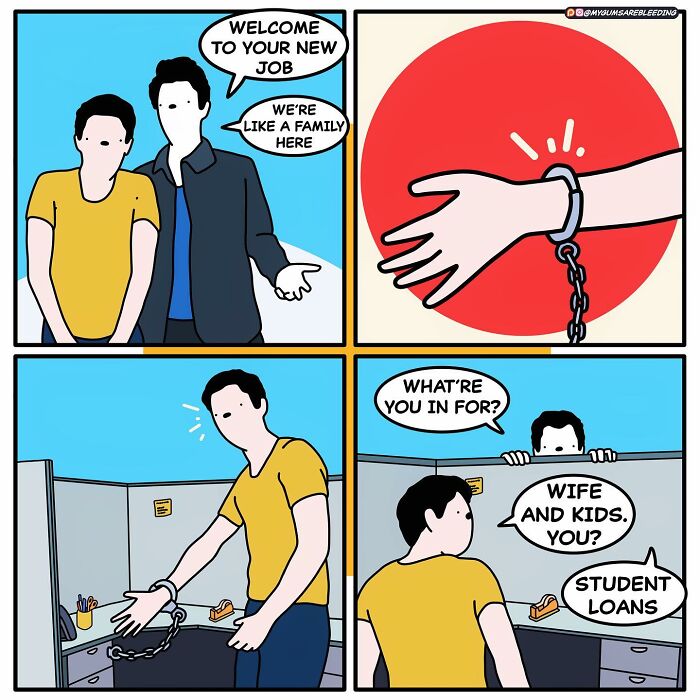
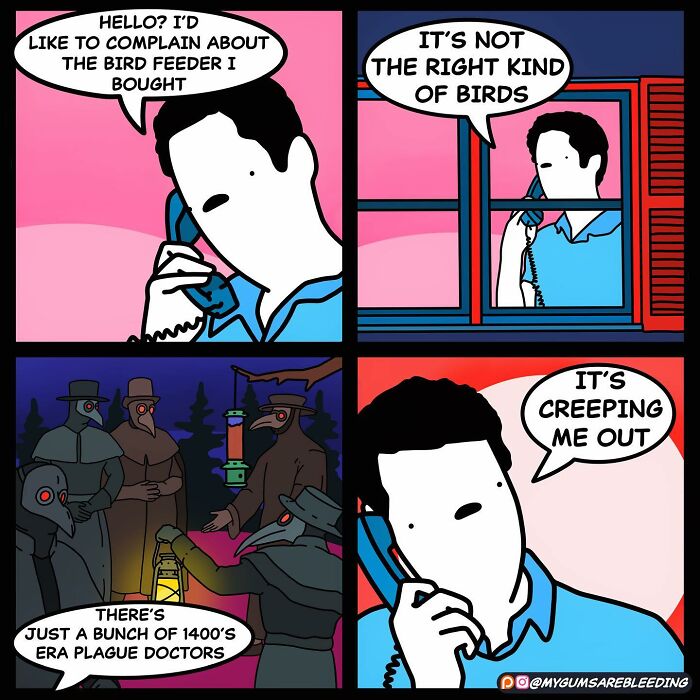
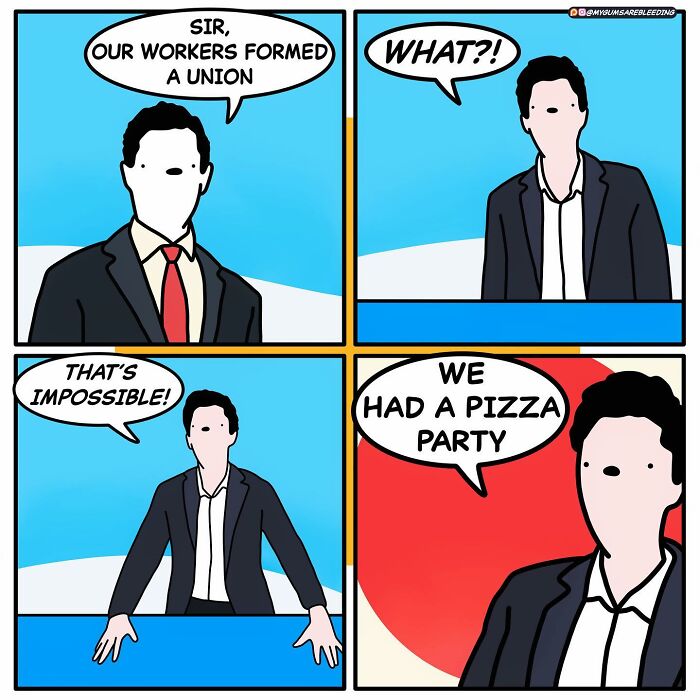
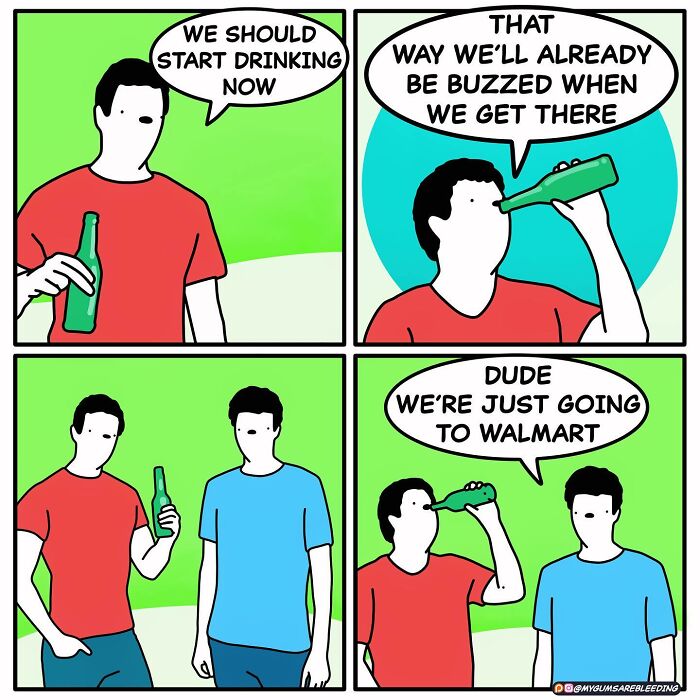
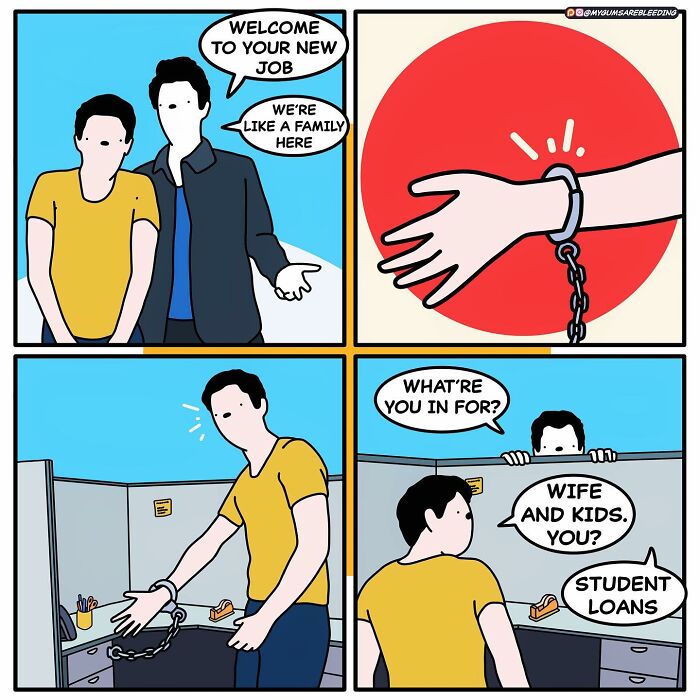
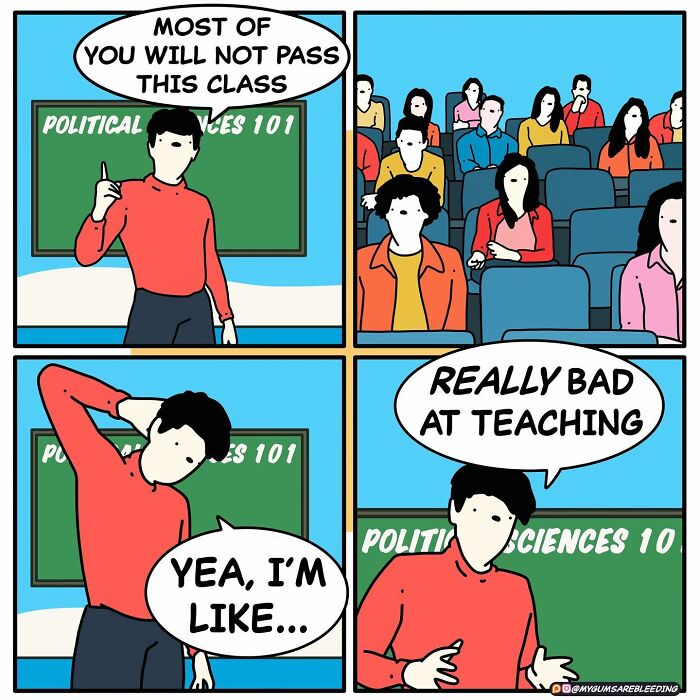
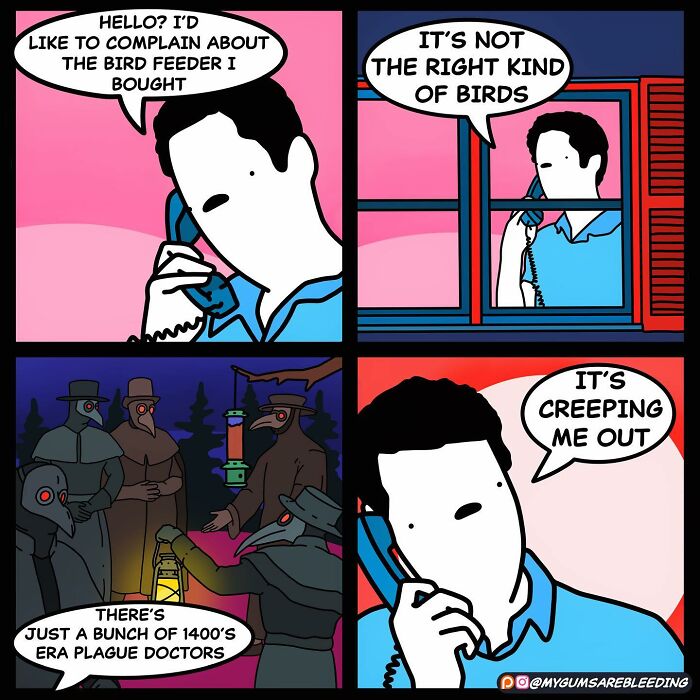
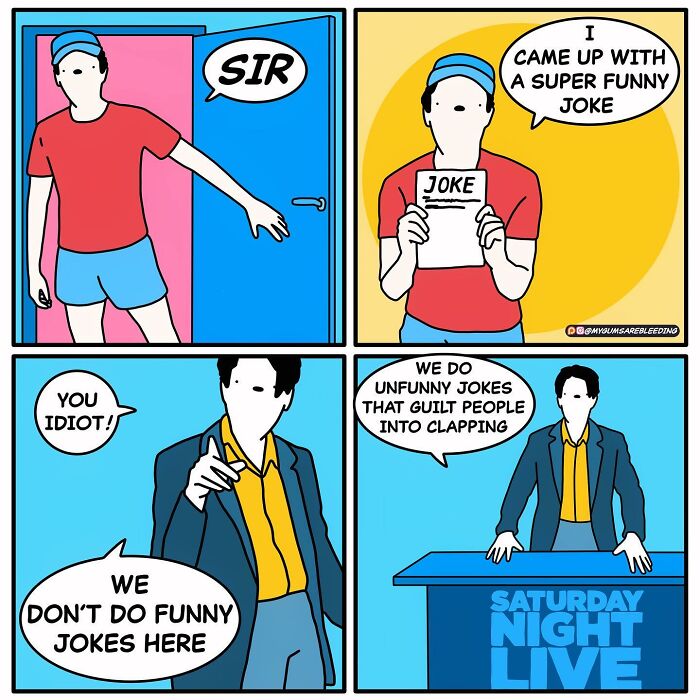
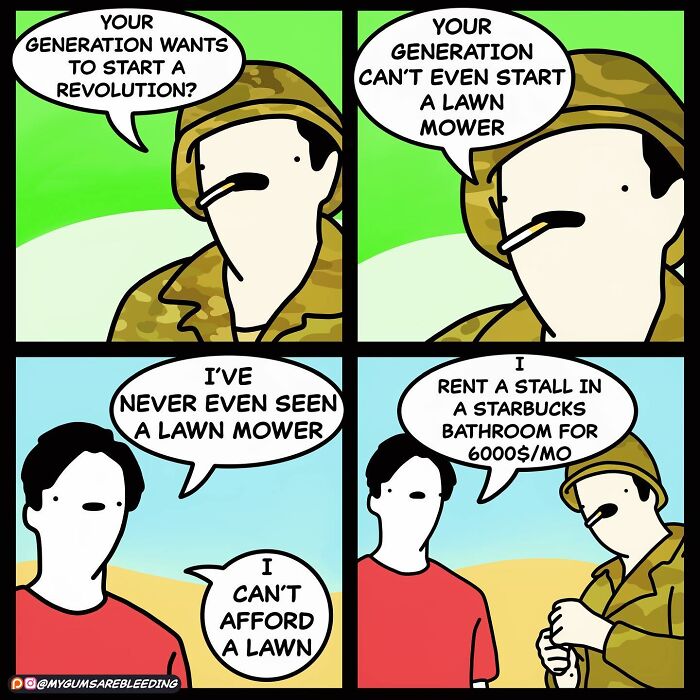
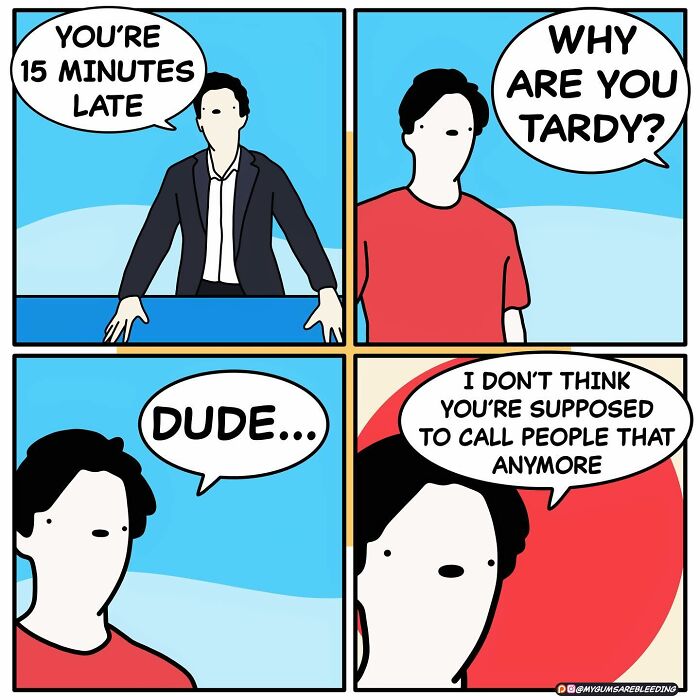
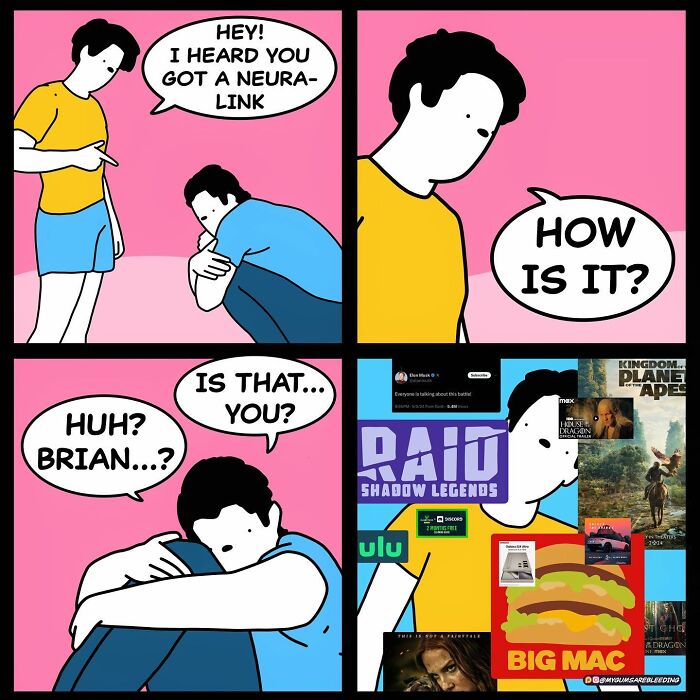
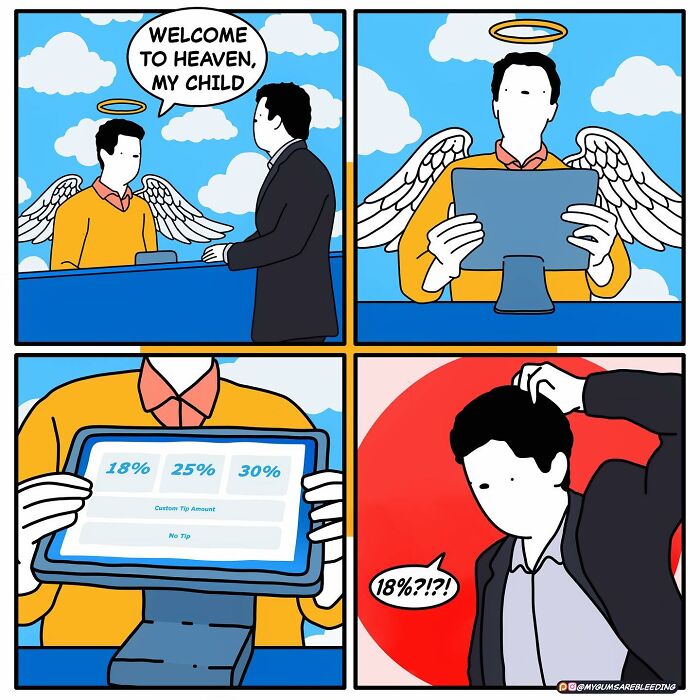
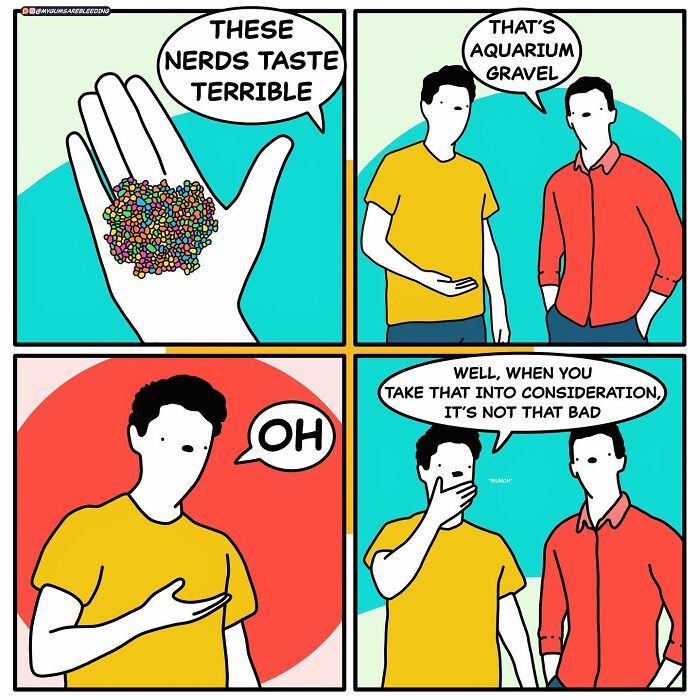
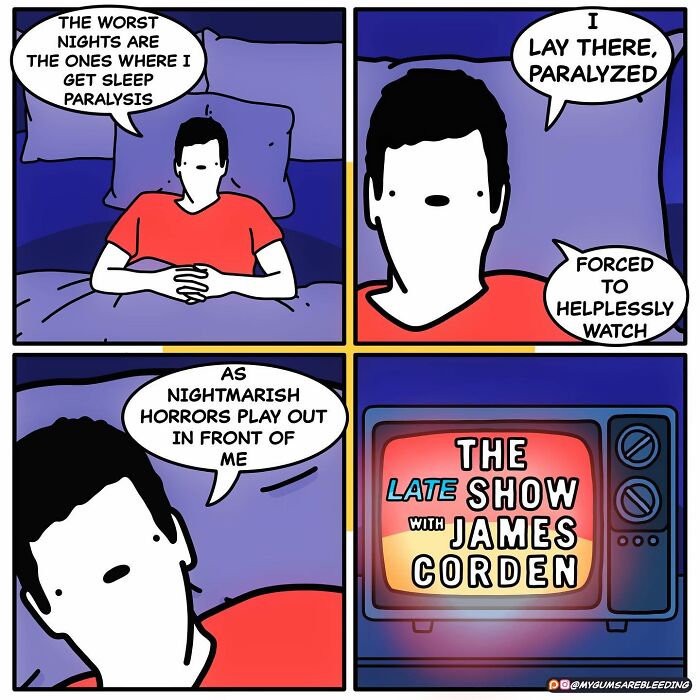
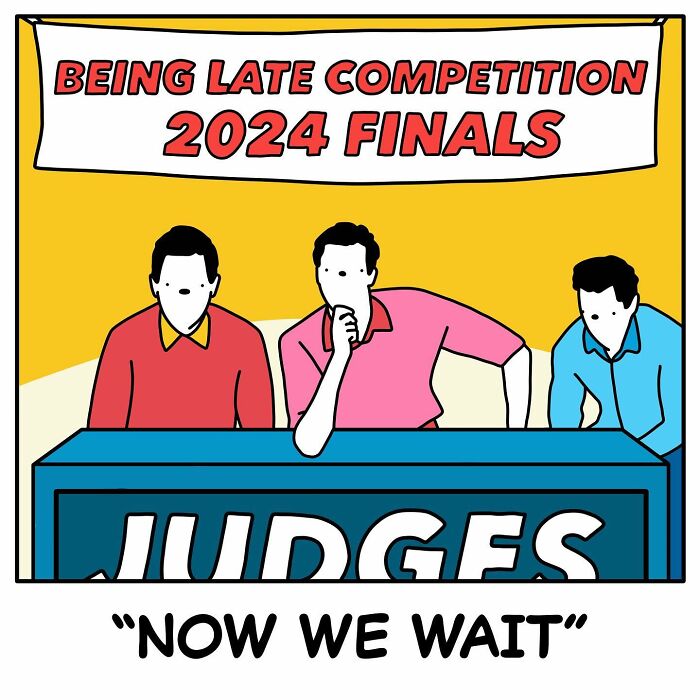
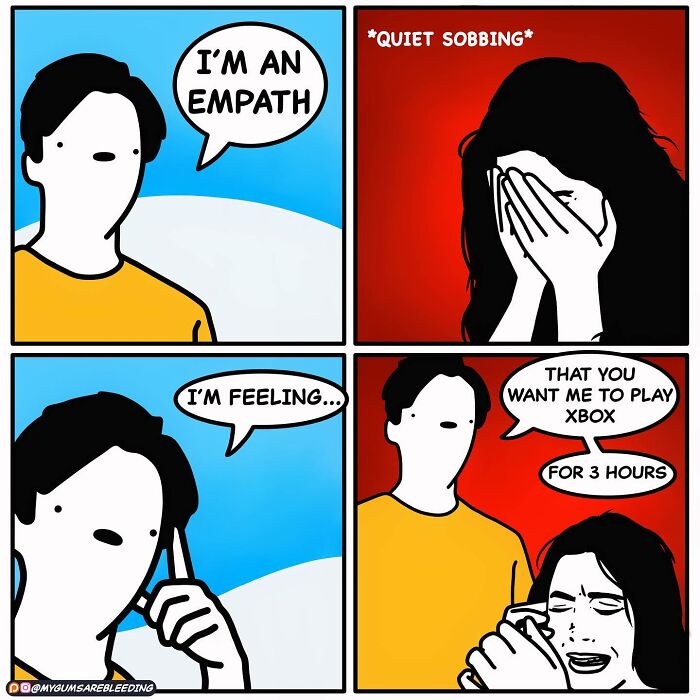
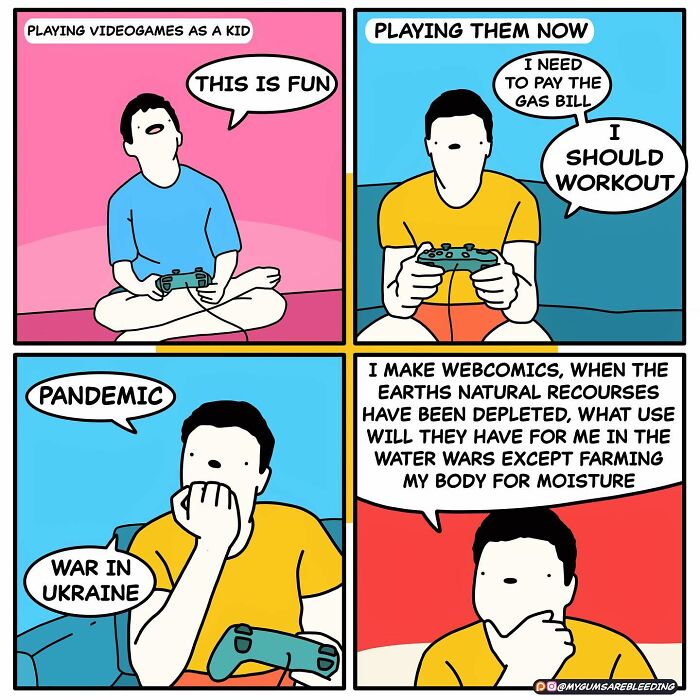
Artist Miles Erickson creates the most hilariously insane comics under the name “My Gums Are Bleeding.” His sense of humor is pretty dry, sardonic, and irreverent, making them stand out with bold joke choices that always hit hard.
Nowadays, “My Gums Are Bleeding” has over 48K followers, but that was not always the case. As the artist wrote in an interview with Bored Panda, his Instagram page was initially his personal profile, going all the way back to eighth grade. After gaining popularity on Reddit, people started flocking to his account, and soon, 90% of his followers were there for comics, and only 10% were his actual friends. Since then, Miles’s audience has been constantly growing, and we are sure you will want to become one of them as well.
So, if you’re ready for a fun time, scroll down below to see what Miles has created since his last post.
In the interview, Miles shared more about himself. He wrote: “Honestly, my artistic trajectory has kind of been all over the place. I got my degree in fine arts at Calarts, which is where I got into doing comics. I wanted to make movies, but movies are more of a communal art. You need to work with actors, costumers, producers, you need to schedule everyone, etc. With comics, there are no dissenting opinions, no bad actors, you just do what you want to do.
After college, I worked as a columnist at a newspaper for a while, which was the first place I got any of my comics published. Then I worked at an animation studio called Wild Canary, and then as a writer at another animation studio called Pencilmation. All my jobs have involved at least some facet of comic making, whether it be writing or drawing.”
When asked about the inspiration for the unique name of his comic series “My Gums Are Bleeding,” besides it at first being his personal account from 8th grade, Miles shared: “Honestly, you’d have to ask my high school self. But if I’d known the name was gonna stick, I probably would have picked a better one. Something like ‘____ webcomics’.”
Miles also shared that his comics “don’t really have any kind of agenda, political or otherwise. They’re really just there to make you laugh.”
We were wondering about Miles’s creative process, to which he responded: “It’s tough to pinpoint where exactly the jokes come from, they kind of just manifest. I rarely come up with any good ones when I sit around purposefully trying to think of them. There’s no lake or cliffside I go to where I sit and let inspiration wash over me.
Some of the time the comics are adapted from tweets or memes. Some of the time I’ll see a funny conversation in the comments of a Reddit post or something and I’ll think ‘How can I turn this into a 4-panel joke?’
As for the art style, I use a process called ‘rotoscoping’ where I take pictures of myself doing all the poses and then trace over myself, so that is actually me you’re seeing in most of those comics.”
In regards to audiences’ takeaway, Miles wrote: “I want my audience to laugh; I think if my goal were any more complicated than that, the comics would not hit the way they do, or they’d be something else entirely. I’m pretty comfortable in the fact that my content isn’t too deep and that people like it for what it is, a quick joke.”
Lastly, Miles added: “I have two books (My Gums are Bleeding, the Collection and Necromonica: Village of the Damned) both scheduled to release in 2025, please keep an eye out for both. I promise, if you follow me on Instagram, you’ll be absolutely inundated with information about both.”
Some photographers have a way of making ordinary moments feel special, and Shanth Kumar is one of them. This street photographer, based in Mumbai, India, often captures everyday candid scenes and small details that might normally go unnoticed, but once you see them, they stay with you.
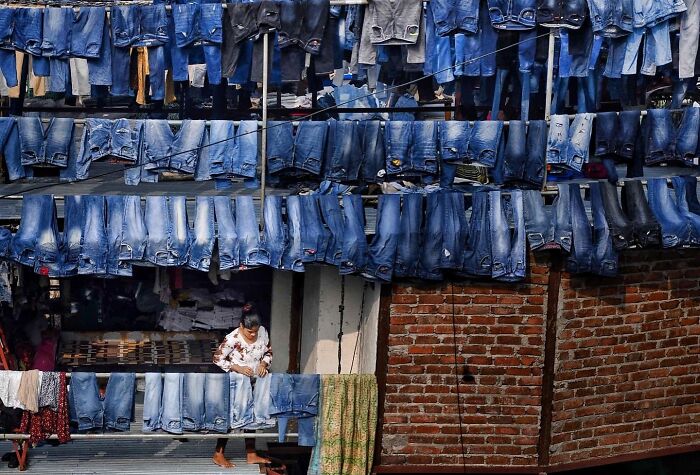
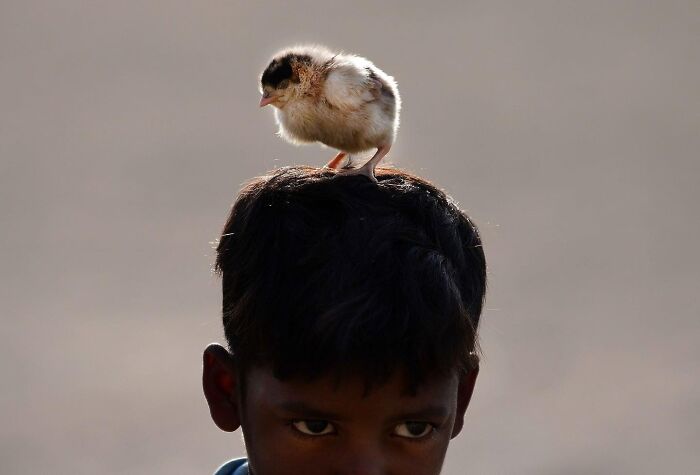
There’s something calm and honest about his work. In Shanth’s photography, nothing feels overdone or staged – just real moments, thoughtfully framed. Scroll down to explore a selection of his best images and take a closer look at the world through his lens.
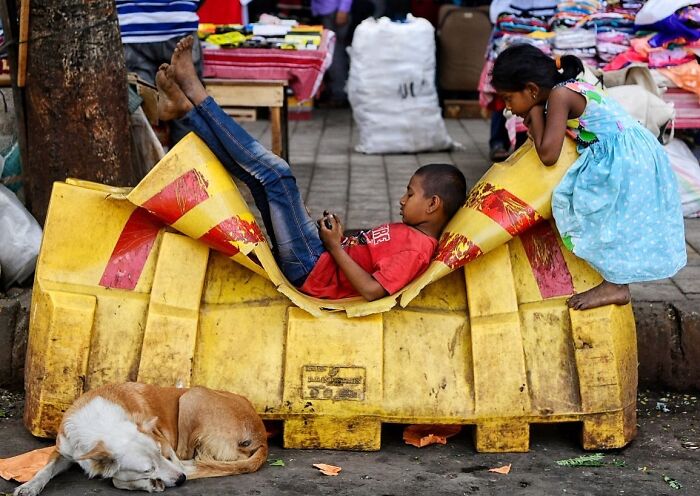
A boy attends school online while sleeping on a plastic traffic barricade on a street in Mumbai. Schools in Maharashtra are still shut as part of the Government’s fight against Covid-19.
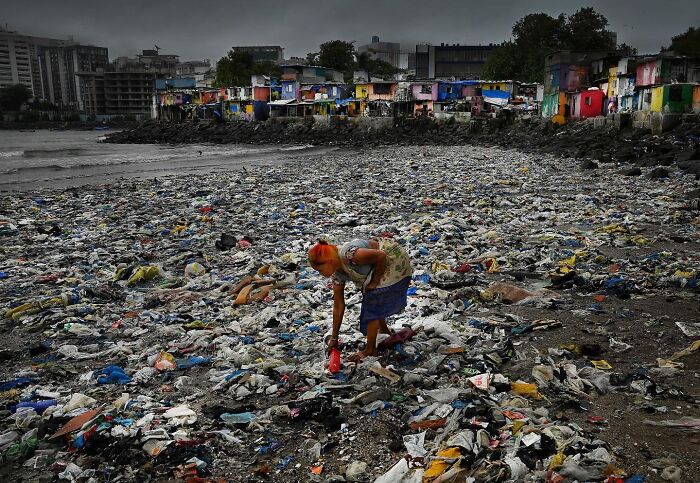
Badhwar Park beach is littered with mounds of plastic waste that has been washed ashore by the Arabian Sea on Wednesday, observed as world environment day . The sea throws back what you throw in.
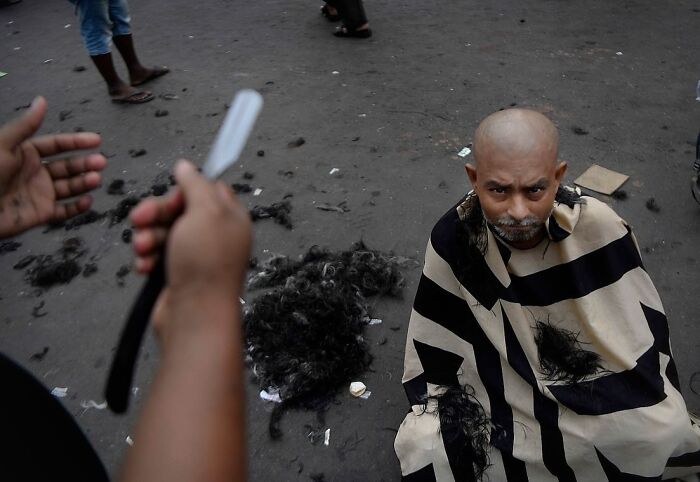
Vast throngs of people gathered to pay homage to their deceased ancestors through prayer and food offerings on the last day of Pitru Paksh at Walkeshwar, Banganga in Mumbai on Wednesday, October 2024. In Hinduism, hair is a symbol of purity and devotion. Many Hindus believe that hair represents one’s connection to the divine. It is common for Hindus to offer their hair as a form of sacrifice or penance during religious rituals.
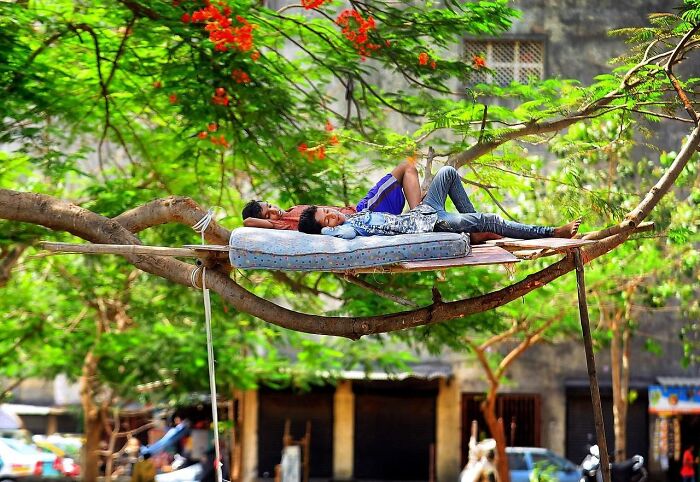
Escaping the Heat: In the heart of Mumbai’s scorching heat, resourceful young boys find solace in an unlikely sanctuary—a discarded mattress perched atop a tree. A moment of resilience and creativity amidst the challenges of urban life.
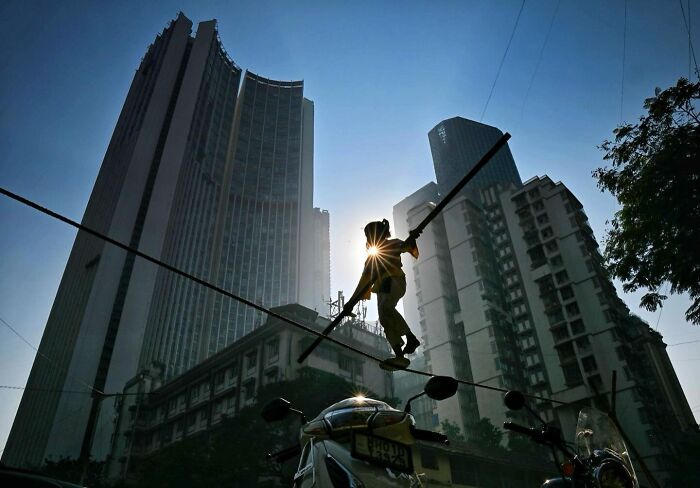
An 8-year-old street performer walks a tightrope against the afternoon skyline of Mumbai’s Worli, Parel, balancing high above traffic as the sun flares behind her—a stark glimpse into the realities of childhood labor in the city.
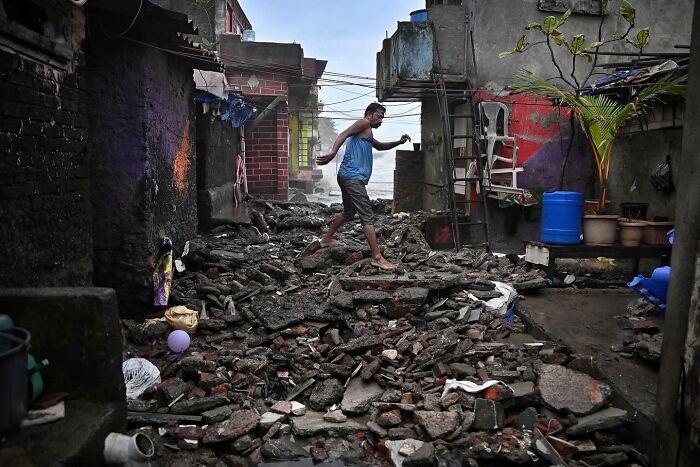
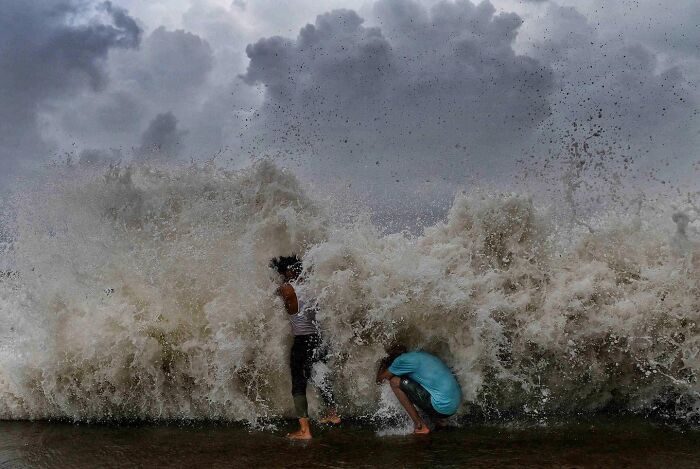
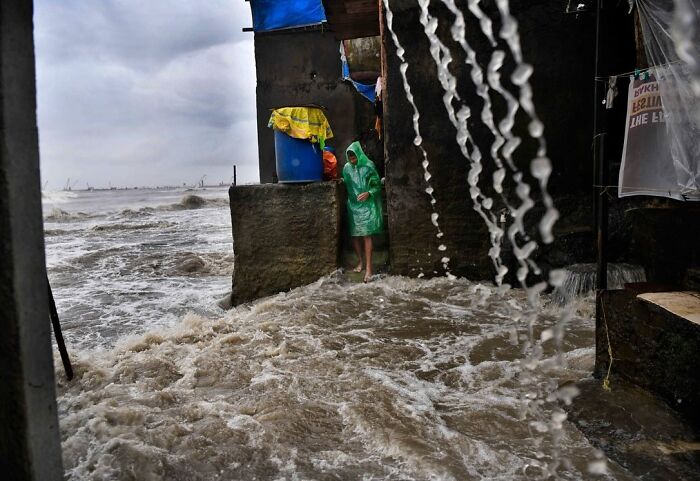
Bandra’s slums were hit by a brutal 4.78-meter high tide that didn’t just flood homes, it tore apart pavements, shattered any sense of safety, and left behind a trail of destruction.
What you see in these images isn’t just water damage; it’s a stark reminder of how exposed and forgotten our coastal communities are in the face of climate extremes. This isn’t just nature’s fury; it’s human neglect.
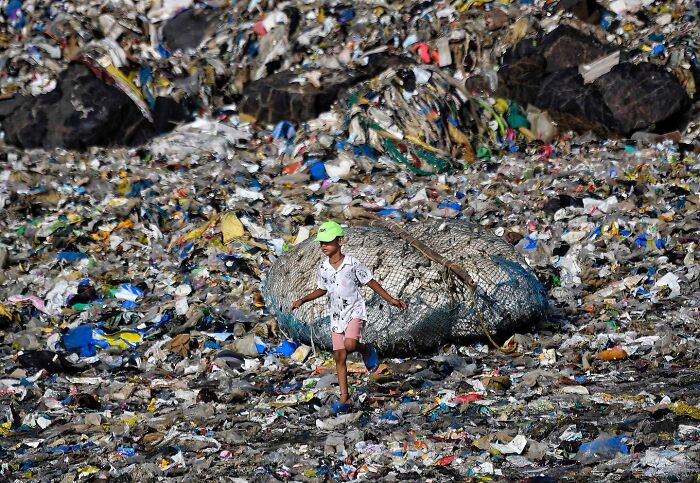
A ragpicker collects plastic bottles and other waste from heaps of litter washed ashore at Badhwar Park, Colaba, Mumbai. This growing accumulation of plastic pollution along the city’s coastline poses a serious threat to marine life, local ecosystems, and public health. Experts warn that if urgent waste management and cleanup measures are not implemented, the delicate coastal environment could face long-term damage, disrupting biodiversity and impacting livelihoods dependent on fishing and tourism. The scene underscores the urgent need for stronger environmental policies and community action to address Mumbai’s mounting plastic crisis.
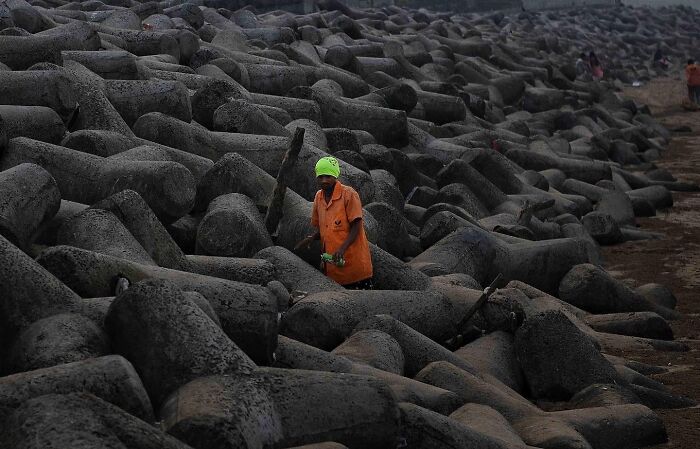
A BMC worker scavanges beer cans and bottles from the nooks inside the tetrapods that are used to prevent erosion by the sea on Versova beach. Sea pollution is a major concern around the world, endangering sea life.
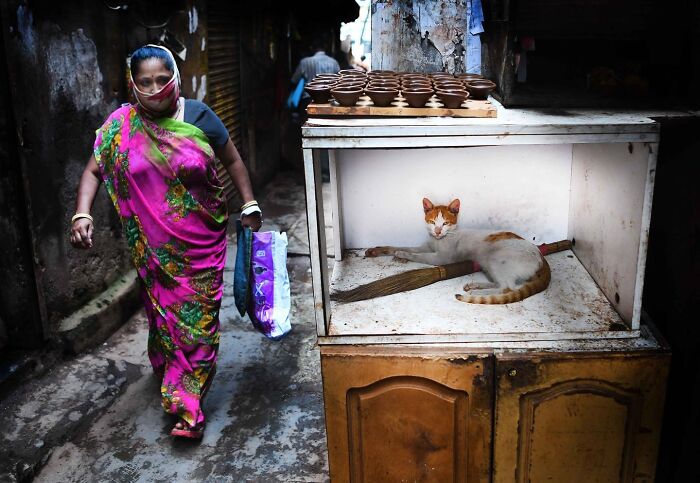
As Mumbai slowly escapes the grips of Covid-19, a low key Diwali celebration is expected this year. A stray cat finds shelter under a cupboard on the street in Kumbharwada, Dharavi.
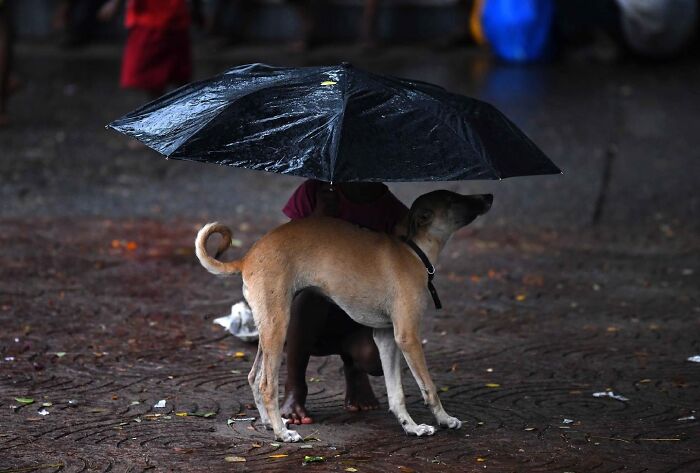
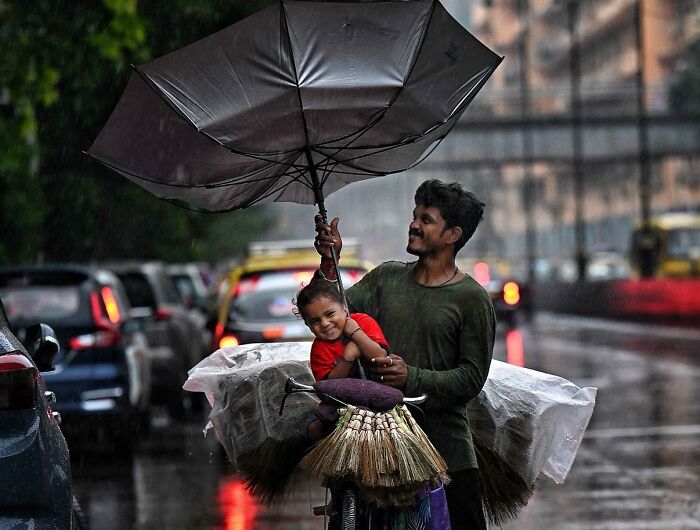
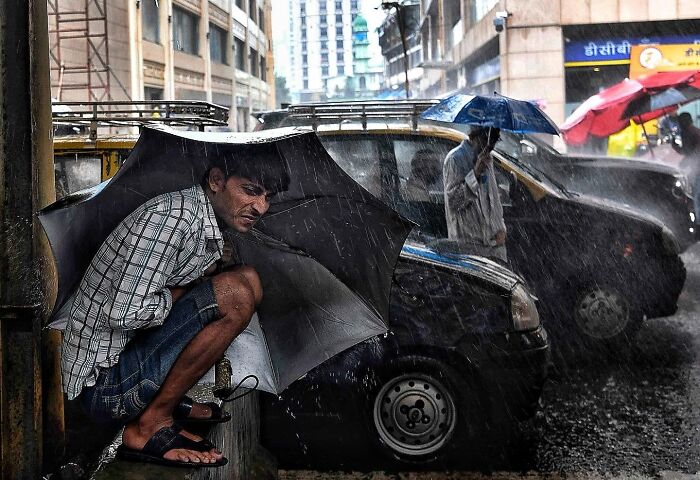
A broom stick seller and his young daughter share a moment under an umbrella turned upside down by strong winds near Chhatrapati Shivaji Maharaj Terminus (CSMT) in Mumbai on Monday. Despite the heavy rain, the man continued his day’s work as the city braced for more downpours under a developing low-pressure system along the Konkan coast.
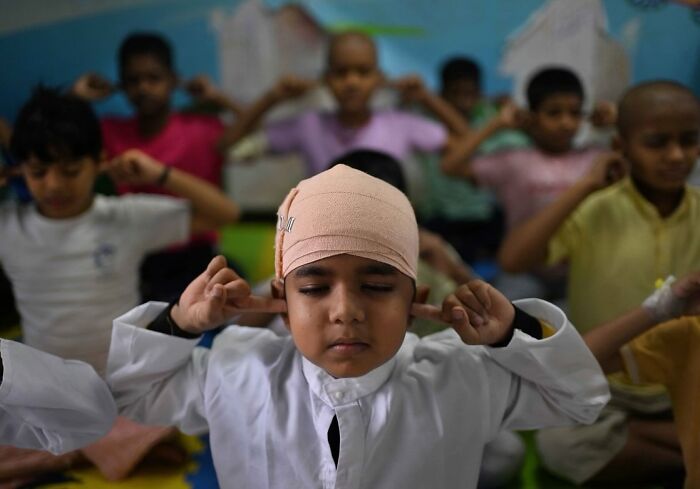
At Tata Memorial Hospital in Mumbai, children battling cancer find healing beyond medicine through daily yoga sessions. Held every morning at 9:30 AM, these hour-long classes, run by IMPaCCT Foundation in collaboration with Kaivalyadhama Yoga Institute, offer young patients emotional relief, improved sleep, and renewed strength. Guided by trained instructors, the program blends ancient tradition with modern science, giving families moments of peace amid intense treatment. For many, yoga is more than exercise, it’s hope, resilience, and joy. As music, dance, and play follow each session, these young warriors reclaim a piece of childhood, one breath at a time.
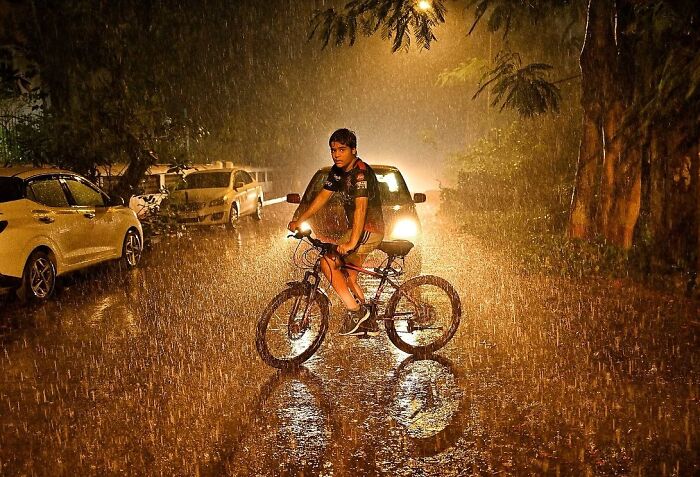
A sudden burst of pre-monsoon showers swept across Mumbai on Tuesday evening, drenching neighborhoods. Thunder growled in the distance, lightning cut across the sky, and streets shimmered under the heavy rain.
In Chembur, a lone tortoise made its slow journey across a rain-soaked road, unfazed by the storm around it in a quiet symbol of resilience. Meanwhile, a young boy stood gazing at the ominous sky, moments before the clouds broke open.
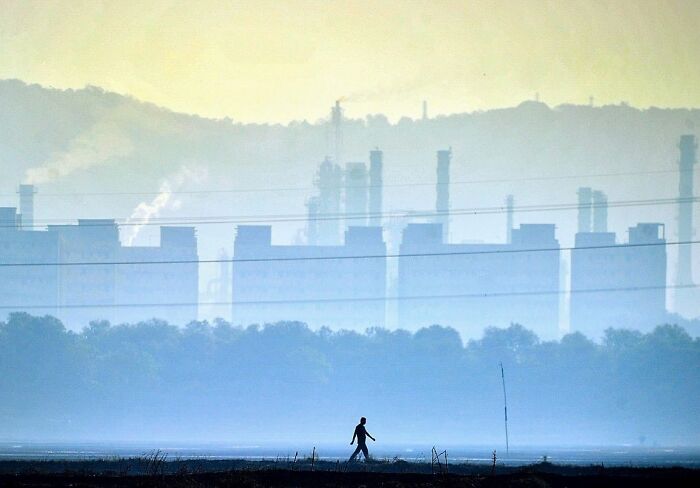
Over the years, air pollution in Mumbai has been on the rise. With levels reaching PM2.5 AQI 208 levels, if we do not start asking why we should breathe this air, now, it might be too late. With the pollution from vehicles and burning waste and energy, Mumbai’s lungs are choking.
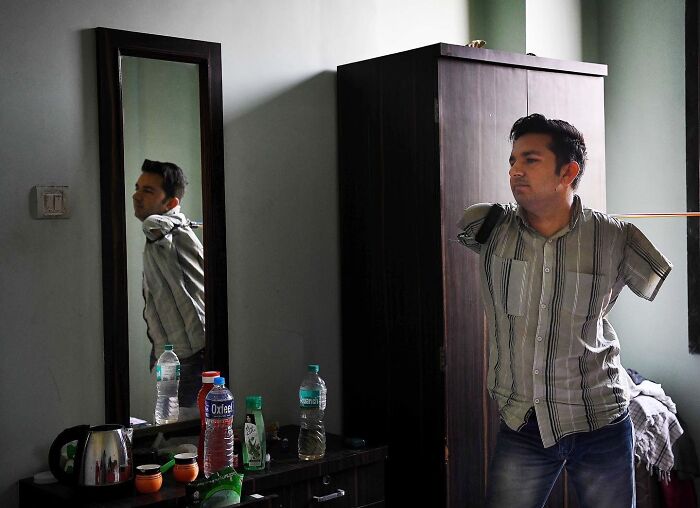
In an audacious attempt, India performed its first-ever total bilateral or double-arm transplant – a major achievement in the surgical history of India. This is a first person account of photojournalist SL Shanth Kumar narrated as he went through the journey of the patient.
Imagine having lost both your arms in an accident in your sophomore years on the verge of adulthood. Add to it the predicaments of a proletariat family, and it is the perfect recipe for a tragic saga. This is exactly what happened to the erstwhile 18-year-old Prema. In the middle of 2008, during his summer holidays, he decided to help his family by working at a power station in his village and make some extra money. During that stint, in an unfortunate accident on June 28, Prema ended up losing both his arms, at the shoulder level, as 11000 volts passed through his arms and upper body.
Luckily for Prema, his life could be saved, but both his arms had to be amputated at the shoulders. In India, the concept of limb replacement is still not widespread. Considering the cost involved, along with the risk to life, people who have lost a single limb usually make do with their situation. Also, the post-operative care is expensive and exhaustive. Another important factor is that there are not many organ donors. For a double-arm replacement, the risks and other factors are just twice as much.
For Prema, the above factors worked out, and he also gained Dr. Satbhai as his confidante. Dr. Satbhai is a Plastic Reconstruction Surgeon, and he has been exposed to limb replacement for quite some time now. But doing a bilateral or double arm transplant was still a daunting task, as it had hitherto never been attempted in India. He decided to rise up to the occasion nevertheless.
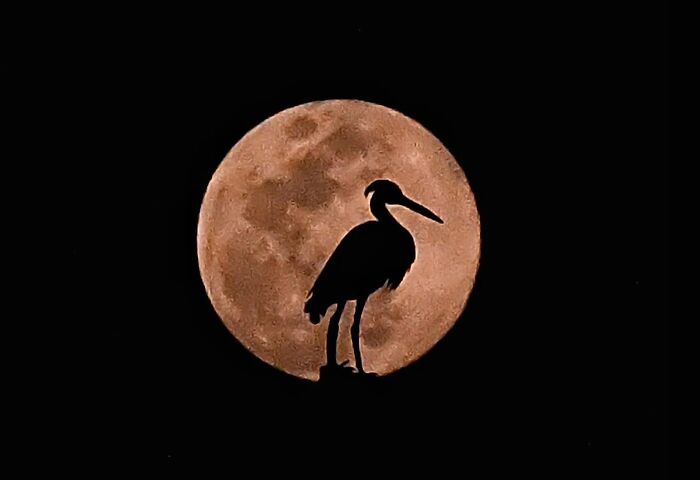
An artificial crane bird is silhouetted against the moon, the wolf moon, the first full moon of 2025, was visible in Mumbai on January 14, 2025 at around 3:57 AM. It was visible for a few nights, from Sunday evening into Wednesday morning.
Mumbai: Heavy rains continued to lash Mumbai between July 19-20. Rainfall data logged over three days (July 17-20) indicates that south Mumbai received 326mm of rains in a 72-hour span. In the 24 hours ending 8:30am on Saturday, July 20, rainfall recorded by the IMD Colaba observatory was 111mm, while the IMD Santa Cruz observatory recorded 93mm rainfall. Meanwhile, intense rain activity was reported on the morning of July 20, as per the IMD’s automatic weather stations.