Newfoundland and Labrador Premier Tony Wakeham is offering his tribute to the death of well-known neurosurgeon Dr. Falah Maroun who died Friday. Source Link N.L. premier pays tribute to pioneer neurosurgeon
Federal public servants are expected to learn about job cuts in their departments when they return from their holiday break when leaders share their plans. Source Link Public servants to learn about job cuts in January
A First Nation on Vancouver Island is all in on the casino business in B.C., announcing its fifth purchase in the province this year. Source Link B.C. First Nation buys Coquitlam, B.C., casino
As unpleasant as it can be at times, anger is a very human emotion that we’ve been talking about for a very long time. The Iliad famously opens with “Rage—Goddess, sing the rage of Peleus’ son Achilles” for good reason, but it can be interesting to see exactly what causes contemporary humans to feel it.
The laconically named “Rage” internet group is dedicated to just that, images that will make most people angry, showcasing inequality, entitled behavior or worse. So, armed with that knowledge, brace yourself as you scroll through, upvote the most relatable examples and be sure to share your thoughts in comments down below.
Click here & follow us for more lists, facts, and stories.
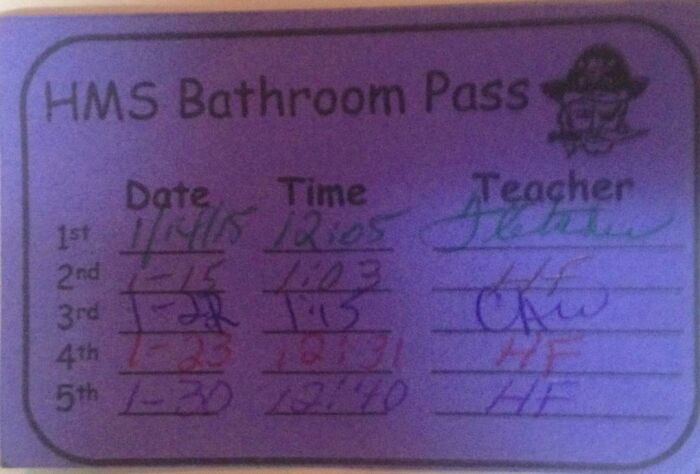
#1 This Is My Daughter’s Bathroom Pass. The Students Can Use The Bathroom (During Class) 5 Times During The 9 Weeks. After The 5th Time, The Student Gets Detention
So, my daughter is 12 and is in middle school. Today she came home and told me that she started her period and bled through her pants. When I asked why she didn’t go to the bathroom, she said she already used her five time limit for the nine weeks. I asked what happens after she used up the five times, she said that she would get detention. She said she asked the teacher but the teacher told her no unless she wanted to explain why she needed to go. IMO, a 12 year old girl shouldn’t have to stand up in front of her class and tell everyone she’s on her period. She was pretty upset and apologized, I’m more upset the school would allow this. There is nothing in the school policy about this five time bathroom limit, the kids only have 3 minutes in between classes, she’s not allowed to go during lunch, and if she gets too many detentions she’s off her softball team! When did schools agree that going to the bathroom is a privilege and not a right?!
Rage bait is one of those internet terms that perfectly captures something we’ve all experienced but might not have had a name for until recently. It refers to content deliberately designed to provoke anger, outrage, or strong negative reactions from viewers. The whole point is to get people so riled up that they can’t help but engage with it, whether that means commenting, sharing, or arguing with others in the comments section.
The term has exploded in popularity over the past few years as people have become more aware of how much of their online experience is shaped by content specifically engineered to push their buttons.
#4 Made An Appointment For 11:45. It’s 1:10 And I Haven’t Been Seen
I’ve had my 10 hour ER waits so I know this isn’t that bad. But what is the point of making an appointment if you have to wait to be seen hours later anyways.
You’ve probably seen rage bait even if you didn’t realize that’s what it was. It might be a video of someone doing something obviously wrong or inefficient in the kitchen, like cutting a cake with a spoon or washing dishes in the most backwards way imaginable. It could be a political take so extreme or poorly reasoned that it feels like it must be bait. Sometimes it’s relationship advice that’s so terrible it makes your blood boil, or a hot take about movies or music that seems designed to infuriate fans. The key characteristic is that it feels deliberately provocative in a way that makes you want to respond and correct whoever posted it.
#7 Went To An AJR Concert. This Was My View
They were the only people standing in our section. The people next to me left before the concert was half over because they couldn’t see
The term really took off around 2022 and 2023 as social media users became more sophisticated at recognizing manipulation tactics. People started calling out rage bait in comments, warning others not to engage, creating a whole meta conversation about how much of our online discourse is shaped by manufactured outrage.
#10 My Neighborhood Has A Soccer Field And A Baseball Field, Which We Pay To Maintain For The Kids In The Neighborhood. Some j**k Decided It Would Be Fun To Do Donuts In The Field With His Truck, And Destroy The Entire Field For Everyone
#11 I Work In A Hospital. We Use These Simple Metal Baskets To Process Tissue Specimens. Our Hospital-Mandated Supplier Charges Us $700 A Piece For These
SEVEN. HUNDRED. DOLLARS. This is why healthcare costs are so [messed up].
The phrase itself is catchy and memorable, which helped it spread quickly across platforms like TikTok, Twitter, and Reddit. What makes rage bait so effective ties into why rage content performs so well online in general. The algorithms that control what we see on social media platforms prioritize engagement above everything else.
A post that gets hundreds of angry comments and shares will be shown to far more people than a post that just gets a few likes and polite reactions. The algorithm doesn’t care whether people are engaging because they love something or because they’re furious about it. Engagement is engagement.
#16 This Was The “Sink” In A Restaurant
Nope, this isn’t a minimalist, avant-garde design. The water just spills off the edges onto the floor, which is why the mop is right there. There isn’t even a drain pipe below this counter.
From a psychological perspective, anger is one of the most powerful emotions for driving action. When we see something that violates our sense of how things should be, we feel compelled to do something about it. Online, that action usually means commenting to express our disagreement or sharing the content with our own commentary about how wrong it is. This is exactly what the content creator wants because every share and comment boosts the post’s visibility.
Rage content also benefits from something called moral outrage. When we see something we perceive as wrong or unjust, sharing our anger about it can feel like a form of social bonding and virtue signaling. We’re showing our community that we hold the right values by publicly denouncing the wrong ones. This makes rage content incredibly shareable because people aren’t just reacting emotionally, they’re also performing their identity and values for their social network.
There’s also a negativity bias built into human psychology. We’re wired to pay more attention to threats and negative information than to positive stimuli because this helped our ancestors survive. Content that makes us angry registers as a kind of threat or problem that needs our attention, so it cuts through the noise of everything else competing for our eyeballs online. The financial incentives make the situation even worse.
Content creators who figure out how to consistently generate rage bait can build huge followings and make serious money through ad revenue, sponsorships, and platform monetization programs. Some accounts exist solely to post provocative nonsense because the engagement numbers are too good to pass up.
#28 How My Weekend Went
I was going to work on Sunday and some guy plowed into my only car I got. It total my car and now I am with out a car or a way to get to work. the person had no insurance and I didn’t have gap. I’m only getting 13k for my car and I owe 24. I might be without a job for awhile cause of this. in desperate need of help.
The growing awareness of rage bait hasn’t really slowed its effectiveness though. Even when people recognize they’re being manipulated, the emotional response is often too strong to resist. You might know that a video is rage bait and still feel compelled to comment about how ridiculous it is. The term has given us a way to name and discuss this phenomenon, but breaking free from the cycle of engagement that keeps rage content thriving remains incredibly difficult as long as the underlying incentive structures of social media remain unchanged.
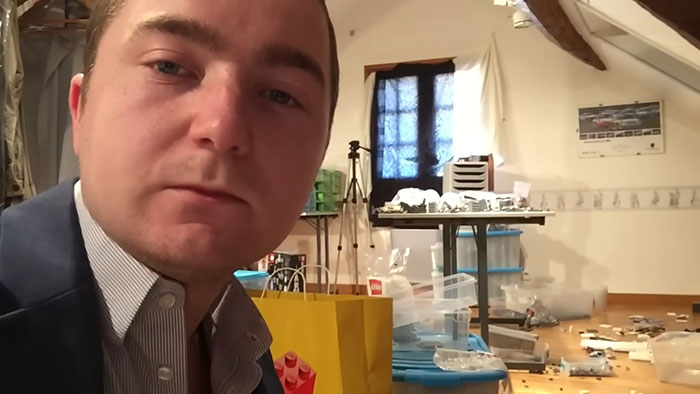
#31 Guy Has 14 Years Of LEGO Work Stolen Or Destroyed After A Burglary