To see Earth from space is to be forever changed by the view. Since Alan Shepard became the first American to lay eyes on our home planet from above, countless NASA astronauts have described feeling awed by the astonishing sight and a profound shift in perspective that followed.
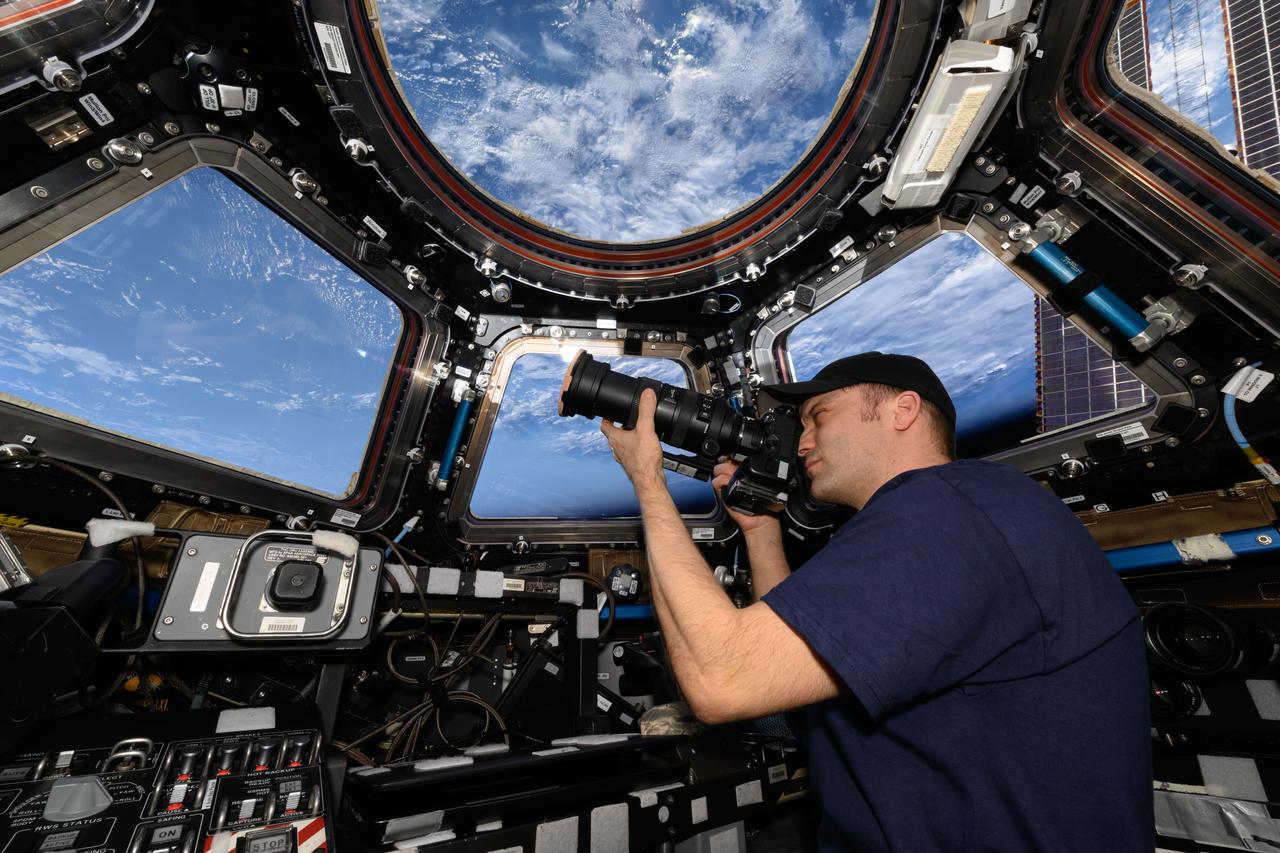
NASA astronaut Matthew Dominick points his camera through a cupola window as the International Space Station orbits 262 miles above the Atlantic Ocean off the coast of Africa.
NASA
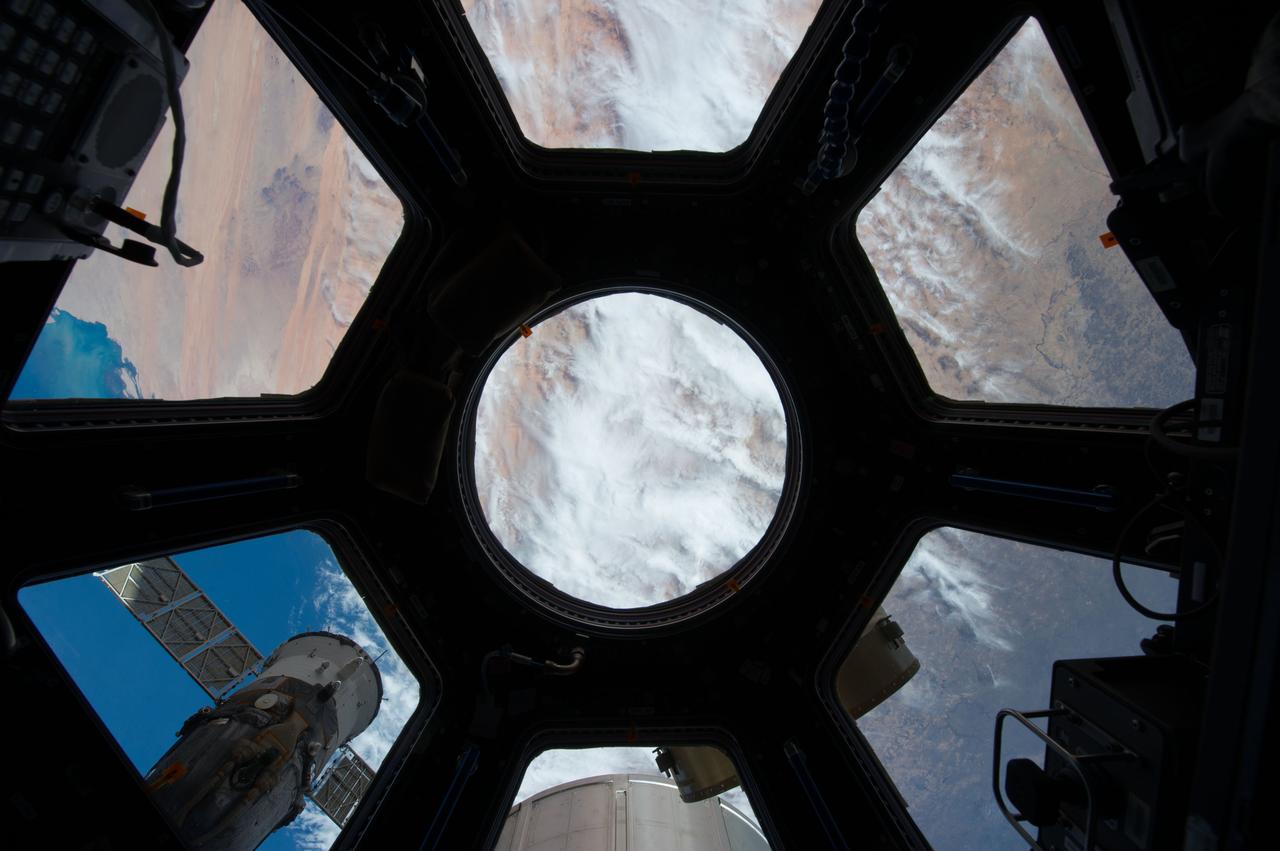
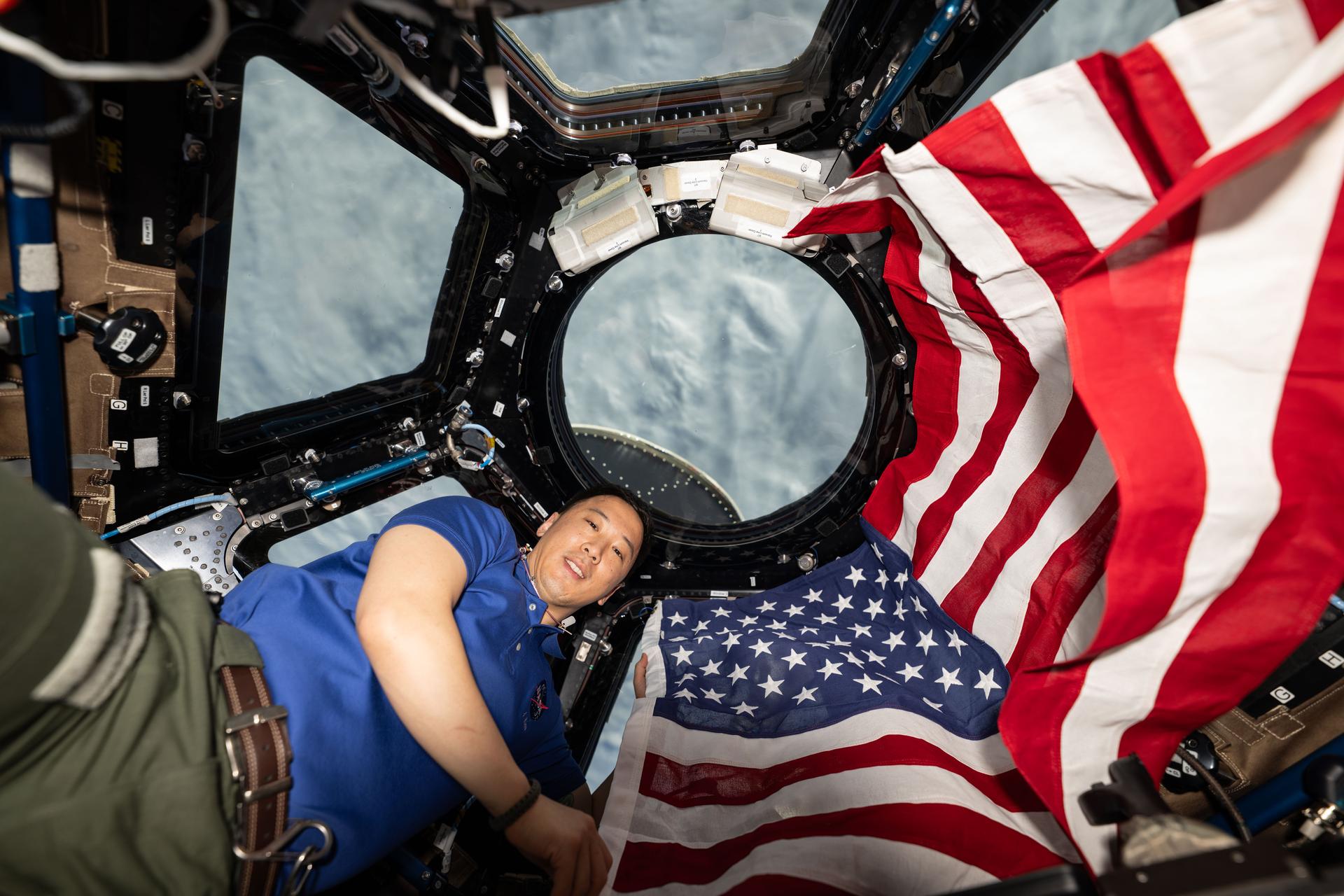
This unique experience is known as the overview effect – a term coined in 1987 by space philosopher and author Frank White in a book of the same name. The phenomenon creates powerful changes in the way astronauts think about Earth and life and can be particularly strong for those who lived and worked aboard the International Space Station during its 25 years of continuous human presence. The orbiting laboratory’s cupola module, equipped with seven windows looking down on Earth, provides the perfect place for observation and reflection.
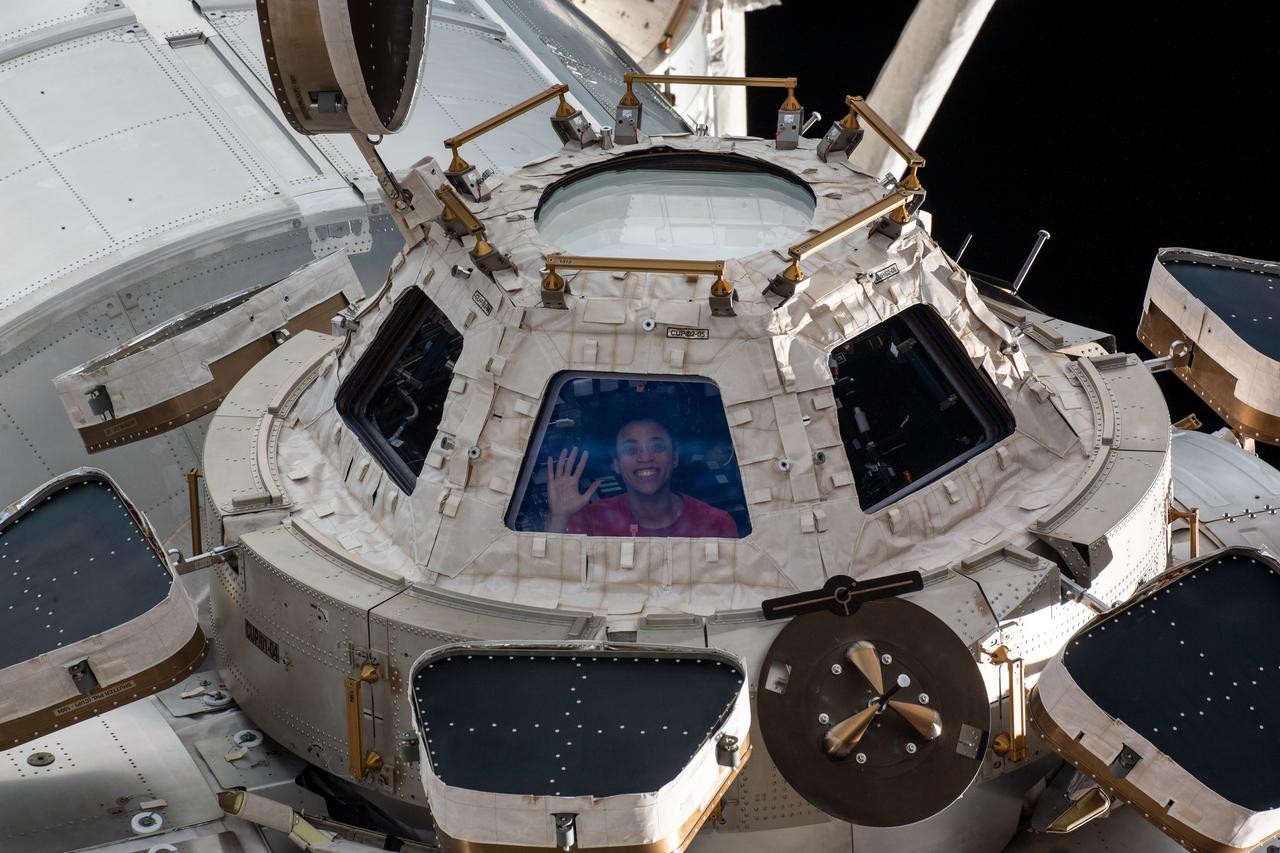
NASA astronaut Jessica Watkins is pictured looking out from the International Space Station’s “window to the world” – the cupola. Astronauts use the seven-windowed observation module to monitor the arrival of spacecrafts at the orbiting laboratory and view the Earth below.
NASA
As Artemis II Mission Specialist Christina Koch explained:
“The overview effect is when you’re looking through the cupola and you see the Earth as it exists with the whole universe in the background. You see the thin blue line of the atmosphere, and then when you’re on the dark side of the Earth, you actually see this very thin green line that shows you where the atmosphere is. What you realize is every single person that you know is sustained and inside of that green line and everything else outside of it is completely inhospitable. You don’t see borders, you don’t see religious lines, you don’t see political boundaries. All you see is Earth and you see that we are way more alike than we are different.”
Koch’s Artemis II crewmate, NASA astronaut Victor Glover, said the overview effect’s potency is closely tied to the “sea level effect” – humanity’s shared experience on Earth. “You come back to sea level, and then you have a choice,” he explained. “Are you going to try to live your life a little differently? Are you going to really choose to be a member of this community of Earth?”
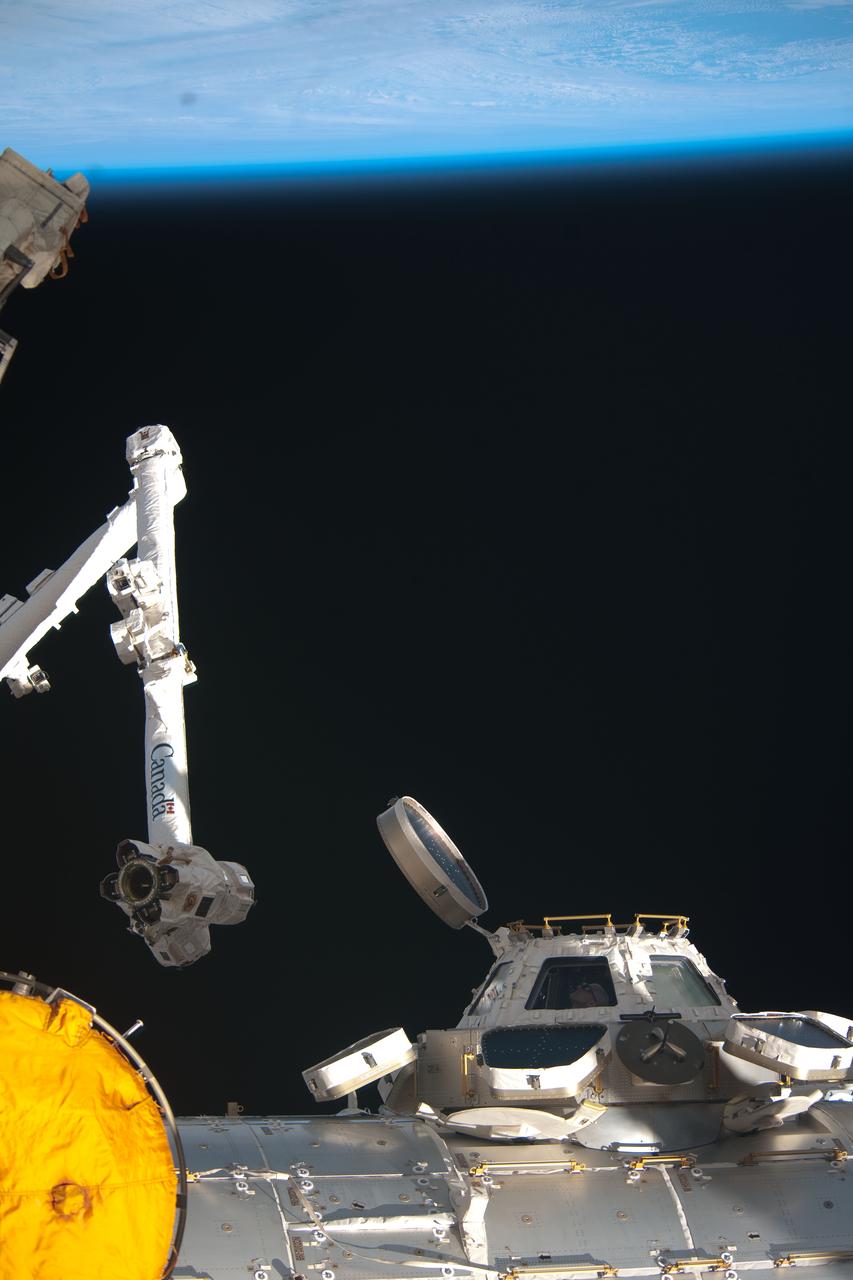
NASA astronaut Don Pettit, Expedition 30 flight engineer, is pictured in a window of the cupola of the International Space Station, backdropped by Earth’s horizon and the blackness of space.
NASA
Many astronauts emphasize the importance of unity after experiencing the overview effect. “You see that it’s a single planet with a shared atmosphere. It’s our shared place in this universe,” said former NASA astronaut Bob Behnken. “I think that perspective, as we go through things like the pandemic or we see the challenges across our nation or across the world, we recognize that we all face them together.”
Seeing the Earth from space can also change their concept of home. Former NASA astronaut Nicole Stott recalls wanting to see her home state of Florida during her first mission to the International Space Station. “Finally, we were flying over Florida. I wanted to go to the window and see it, and then realized somewhere down the line that I wasn’t looking at Florida that same way anymore,” she said. “I still wanted to see Florida, but Florida had just become this special part of home, which is Earth. We’re all earthlings.”
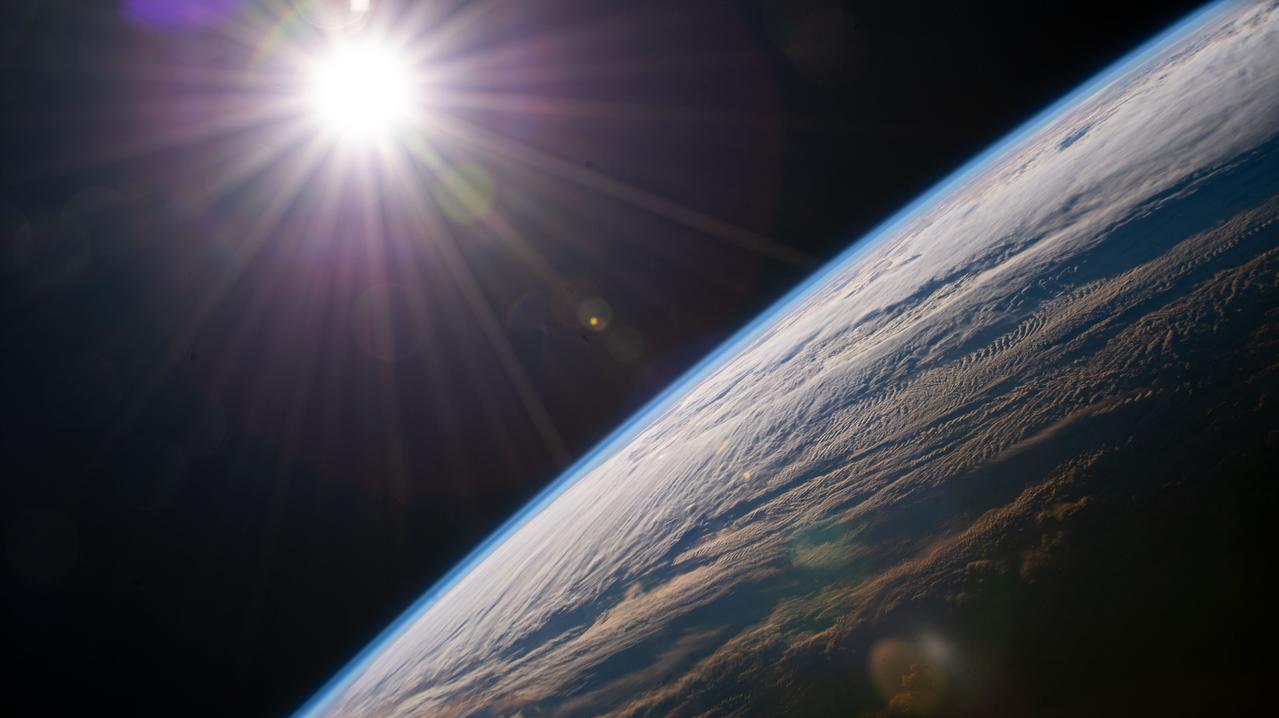
The sun shines above Earth’s horizon as the space station orbits 264 miles above the Canadian province of Quebec.
NASA
For some astronauts, their perspective shift inspired them to make changes on the ground. “I think if you’re not a conservationist before you go to space, you’re at least partly a conservationist when you come back. Because when you see how thin that atmosphere is, that protective layer that we have here, you think, wow, we really have to take care of this because it does look so fragile from space,” said retired NASA astronaut Mike Foreman.
Others hope to share the overview effect with more people. “That perspective helps you grow. It has really inspired me to try to get more people this experience and to get a permanent foothold in the stars for our species,” said former NASA astronaut Jack Fischer. “I want to do everything I possibly can to help the human species, humanity as a whole, go further and grow and evolve like I know they’re capable of.”
An Earth observation taken through cupola windows by the Expedition 39 crew. Portions of the International Space Station are in view.
NASA
Future crews to the orbiting laboratory can look forward to a similar experience. “In that instant, when you’re overwhelmed with that vista, when your eyes see nothing but the beauty of the Earth – every single crew member that I brought in [the cupola] for that exposure, cried,” said retired NASA astronaut T.J. Creamer. “It is heart stopping. It is soul pounding. It is breathtaking.”
For more astronaut perspectives from the International Space Station, watch “Down to Earth” on NASA+.
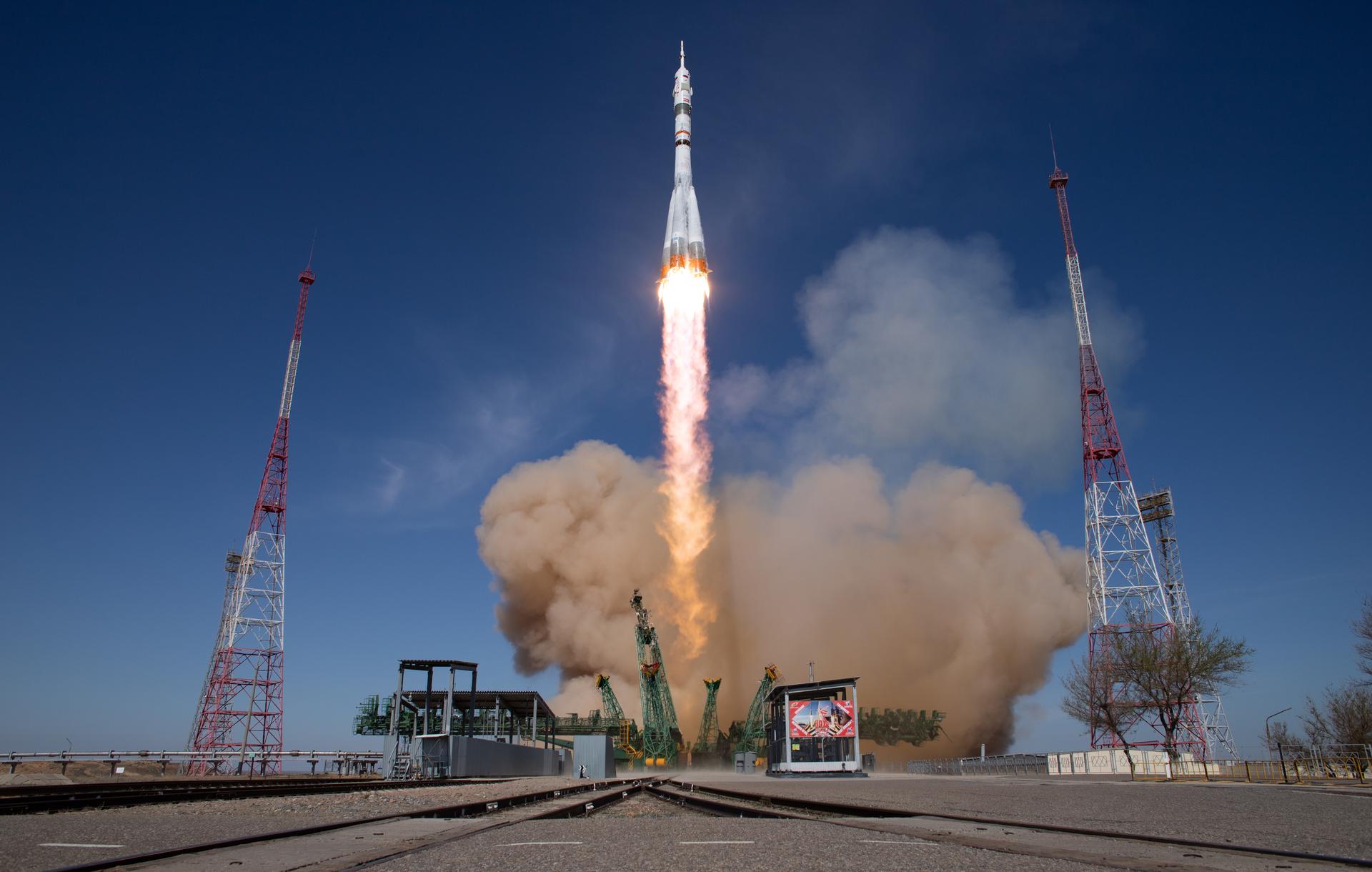
A Soyuz rocket launches to the International Space Station with Expedition 73 crew members aboard, Tuesday, April 8, 2025, at the Baikonur Cosmodrome in Kazakhstan.
NASA/Joel Kowsky
NASA astronaut Chris Williams will launch aboard the Roscosmos Soyuz MS-28 spacecraft to the International Space Station on Thursday, Nov. 27, accompanied by cosmonauts Sergey Kud-Sverchkov and Sergei Mikaev, where they will join the Expedition 73 crew advancing scientific research.
Williams, Kud-Sverchkov, and Mikaev will lift off at 4:27 a.m. EST (2:27 p.m. Baikonur time) from the Baikonur Cosmodrome in Kazakhstan. Live launch and docking coverage will be available on NASA+, Amazon Prime, and the agency’s YouTube channel. Learn how to watch NASA content through a variety of platforms, including social media.
After a two-orbit, three-hour trip to the orbital complex, the spacecraft will automatically dock to the station’s Rassvet module at approximately 7:38 a.m. Shortly after, hatches will open between Soyuz and the space station.
Once aboard, the trio will join NASA astronauts Mike Fincke, Zena Cardman, and Jonny Kim, JAXA (Japan Aerospace Exploration Agency) astronaut Kimiya Yui, and Roscosmos cosmonauts Sergei Ryzhikov, Alexey Zubritsky, and Oleg Platonov.
NASA’s coverage is as follows (all times Eastern and subject to change based on real-time operations):
9:50 a.m. – Hatch opening and welcome remarks coverage begins on NASA+, Amazon Prime, and YouTube.
10:10 a.m. – Hatch opening
Williams, Kud-Sverchkov, and Mikaev will spend approximately eight months aboard the space station as Expedition 73/74 crew members, before returning to Earth in summer 2026. This will be the first spaceflight for Williams and Mikaev, and the second for Kud-Sverchkov.
During his stay aboard station, Williams will conduct scientific research and technology demonstrations aimed at advancing human space exploration and benefiting life on Earth. He will help install and test a new modular workout system for long-duration missions, support experiments to improve cryogenic fuel efficiency and grow semiconductor crystals in space, and assist NASA in designing new re-entry safety protocols to protect crews during future missions.
For more than 25 years, people have lived and worked continuously aboard the International Space Station, advancing scientific knowledge and making research breakthroughs that are not possible on Earth. The station is a critical testbed for NASA to understand and overcome the challenges of long-duration spaceflight and to expand commercial opportunities in low Earth orbit. As commercial companies concentrate on providing human space transportation services and destinations as part of a robust low Earth orbit economy, NASA is focusing its resources on deep space missions to the Moon as part of the Artemis campaign in preparation for future human missions to Mars.
Learn more about International Space Station research and operations at:
25 Years of Scientific Discovery Aboard the International Space Station
November marks 25 years of human presence aboard the International Space Station, a testament to international collaboration and human ingenuity. Since the first crew arrived on Nov. 2, 2000, NASA and its partners have conducted thousands of research investigations and technology demonstrations to advance exploration of the Moon and Mars and benefit life on Earth.
Researchers have taken advantage of the unique microgravity environment to conduct experiments impossible to replicate on Earth, transforming research across disciplines. More than 4,000 experiments have pushed the boundaries of science, sparked discoveries, and driven scientific breakthroughs.
“25 years ago, Expedition 1 became the first crew to call the International Space Station home, beginning a period of continuous human presence in space that still continues to this day,” said NASA acting administrator Sean Duffy. “This historic milestone would not have been possible without NASA and its partners, as well as every astronaut and engineer who works to keep the lights on in low Earth orbit.”
To celebrate a quarter century of innovation in microgravity, NASA is highlighting 25 scientific breakthroughs that exemplify the station’s enduring impact on science, technology, and exploration.
Building the road to the Moon and Mars
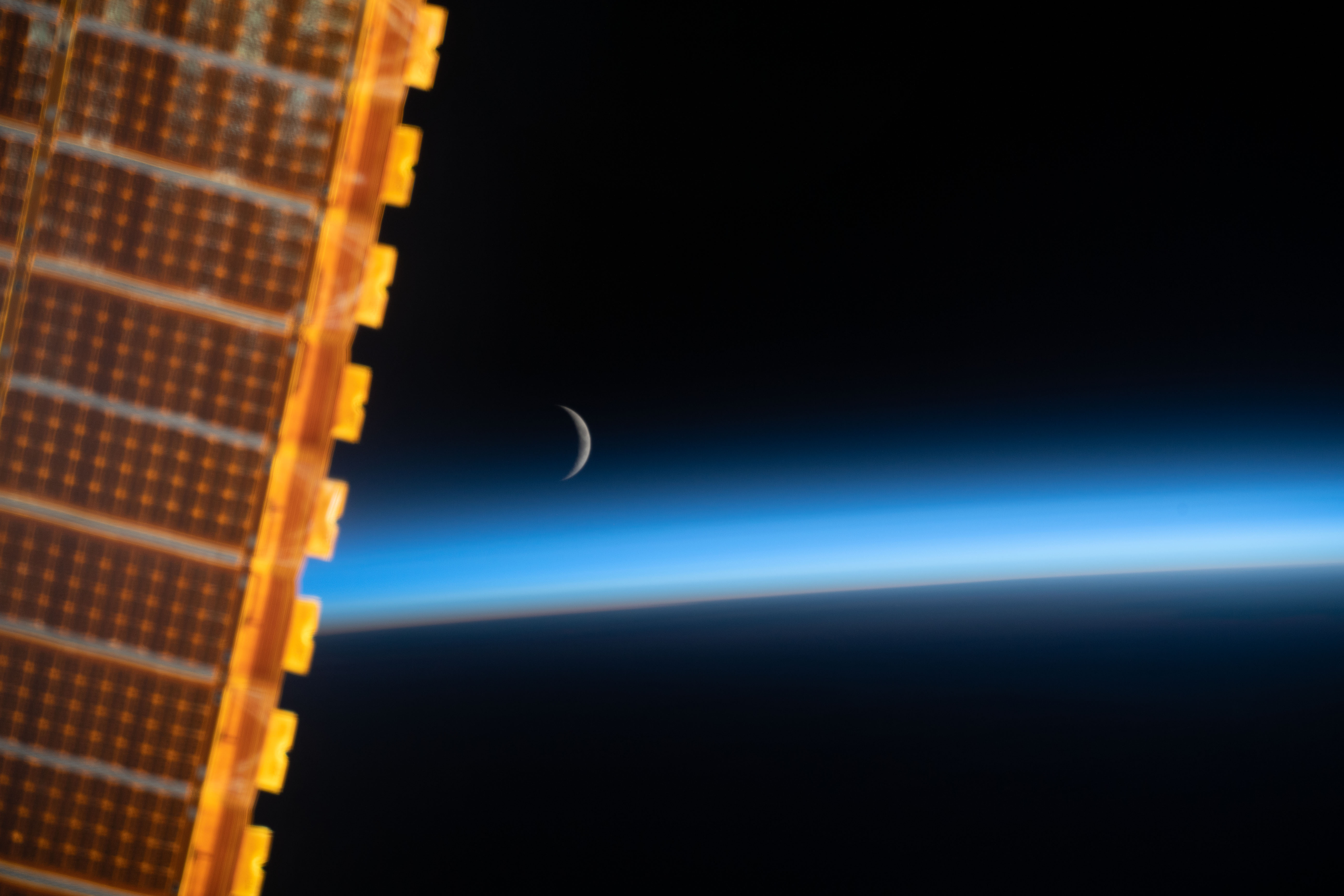
The waxing crescent moon appears just above the Earth’s atmosphere as the International Space Station orbits the Earth.
Navigation, communication, and radiation shielding technologies proven aboard the space station are being integrated into spacecraft and missions to reach the Moon and Mars.
Robotic systems, for example a robotic surgeon and autonomous assistants, will expand available medical procedures and allow astronauts to dedicate time to more crucial tasks during missions far from Earth.
Astronauts have used recycled plastic and stainless steel to 3D print tools and parts. The ability to 3D print in space lays the groundwork for on-demand repair and fabrication during future deep space missions where resupply isn’t readily available.
Humanity’s push to the Moon and Mars begins with discoveries in low Earth orbit. From demonstrating how astronauts can live, work, and repair equipment off Earth to testing life-support systems and advanced materials, every innovation aboard the station helps to advance NASA’s Artemis and other exploration initiatives and brings humanity closer to thriving beyond our planet.
Sustaining life beyond Earth
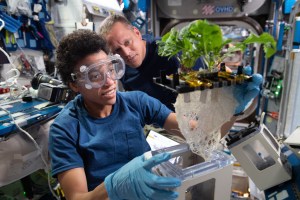
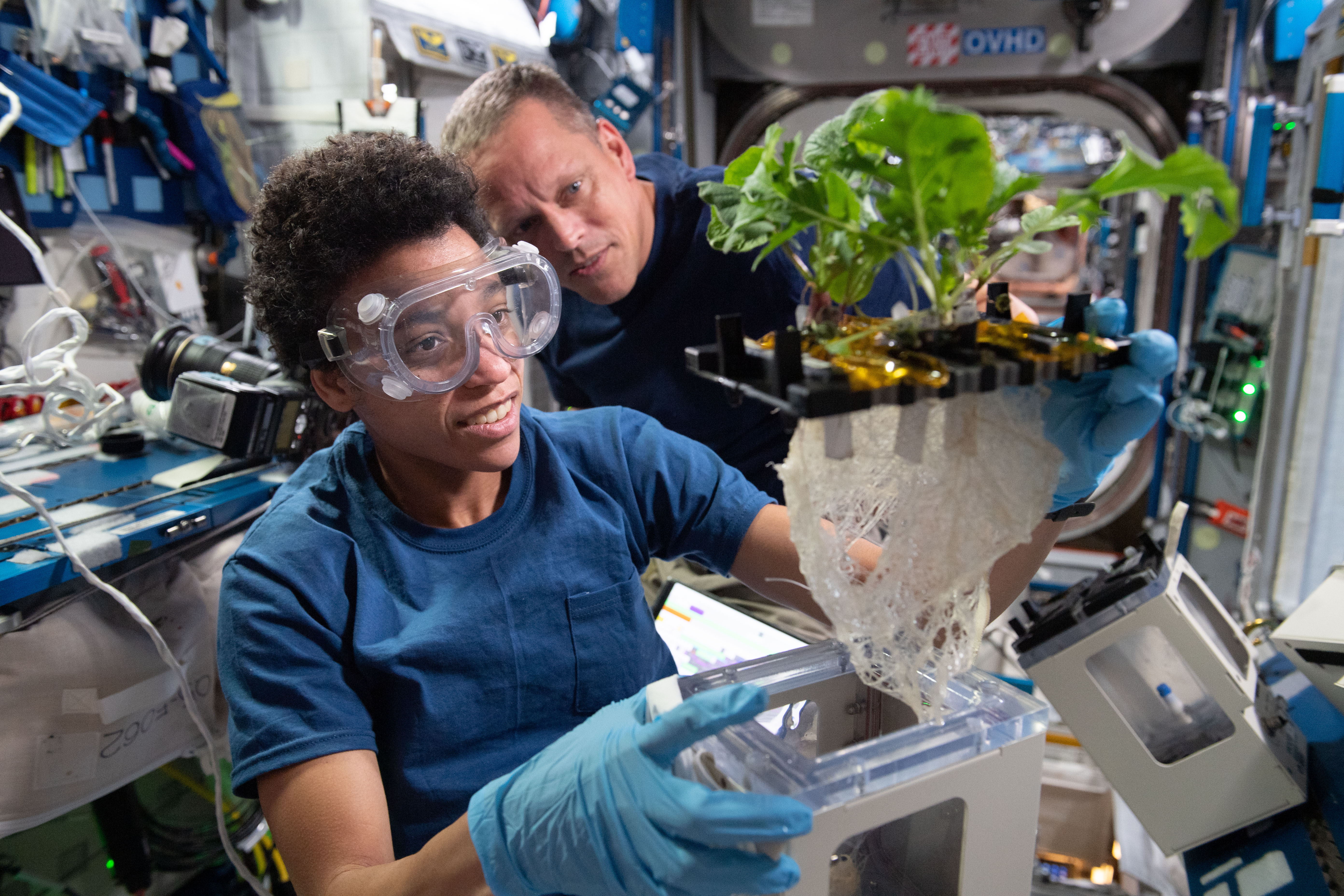
NASA astronauts Jessica Watkins, front, and Bob Hines, back, work on XROOTS aboard the International Space Station. This experiment used the station’s Veggie facility to test soilless hydroponic and aeroponic plant growth.
NASA
As NASA prepares to return humans to the Moon through the Artemis program and push onward to Mars, sustaining life beyond Earth is more critical than ever.
Astronauts have grown more than 50 species of plants in space, including tomatoes, bok choi, romaine lettuce, and chili peppers.
Advanced life support systems are capable of recycling up to 98% of water in the U.S. segment aboard the space station, the ideal level needed for exploration missions.
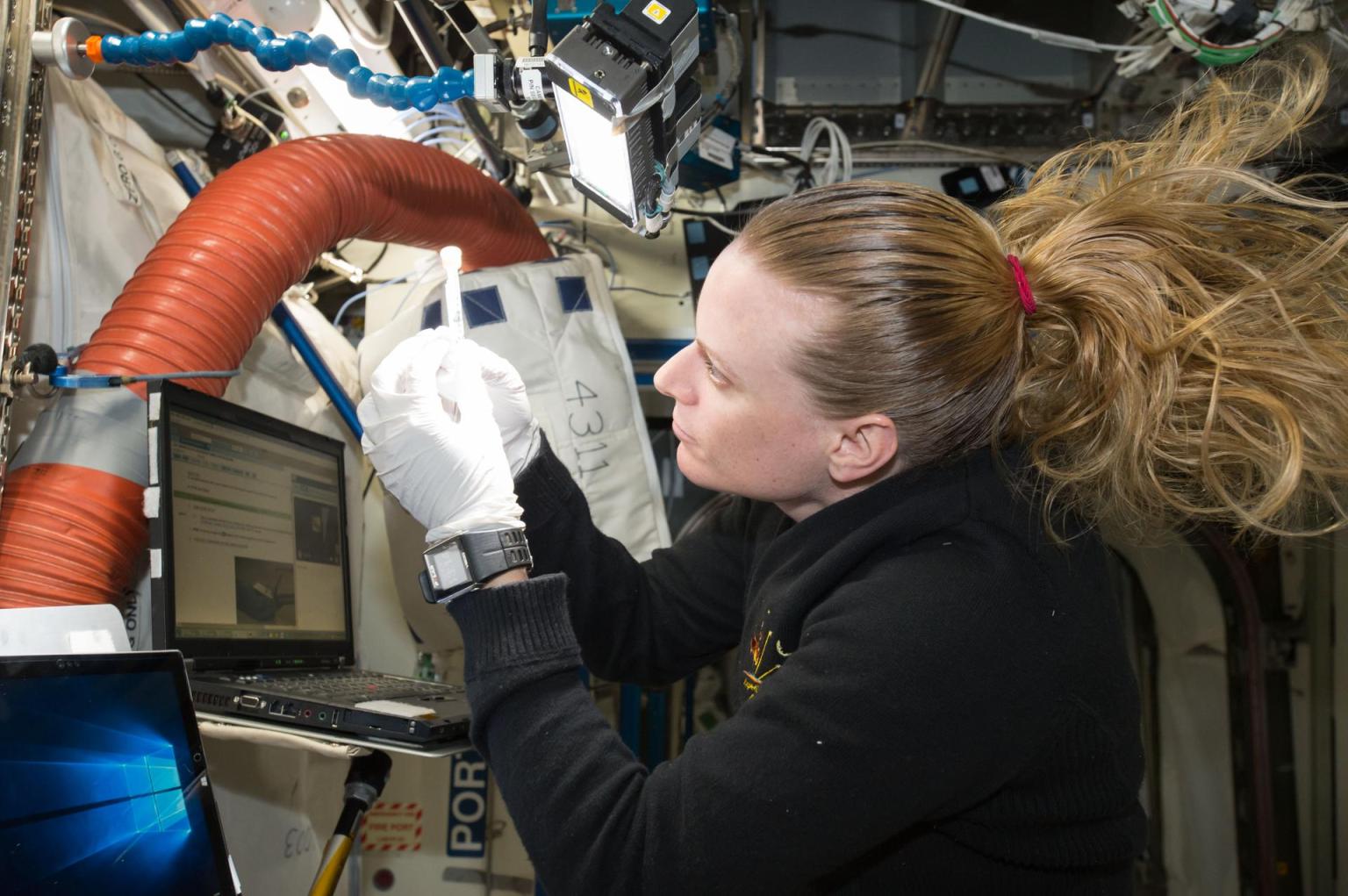
Researchers have sequenced DNA in orbit and are advancing techniques to enable real-time assessment of microbial life in space, which is essential to maintaining astronaut health.
Why this matters:
By growing food, recycling water, and improving medical care in space, NASA is paving the way for future long-duration missions to the Moon and Mars while revolutionizing agriculture and medicine back home.
Helping humanity on Earth
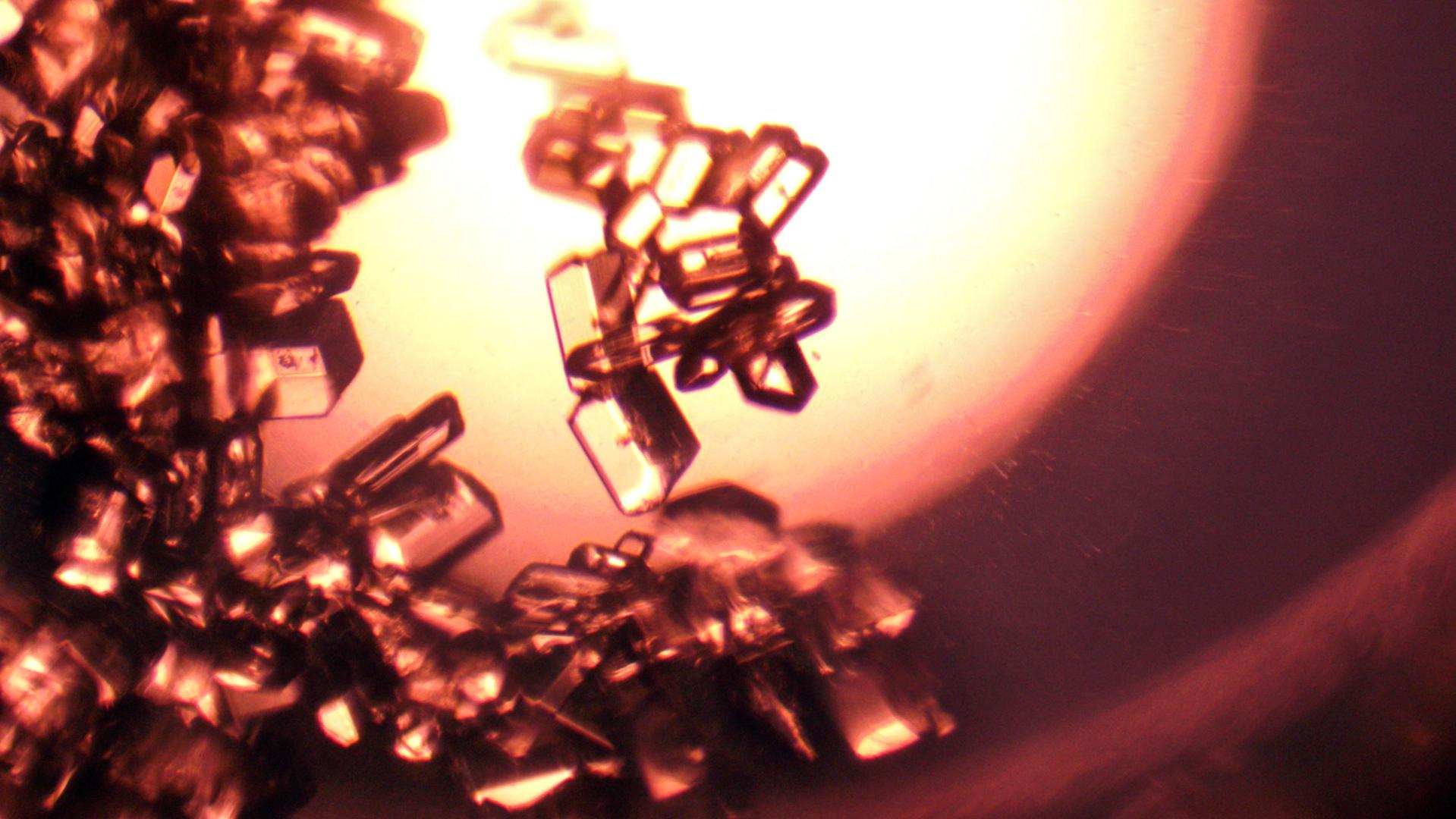
Pharmaceutical crystals grown aboard the International Space Station are shown after returning to Earth.
Redwire
Research aboard the orbiting laboratory not only pushes humanity farther into the cosmos but can help address complex human health issues on the ground. By providing a platform for long-term microgravity research, the space station fosters breakthroughs that yield direct benefits to people on Earth.
Research aboard the space station provides new insights to develop treatments for diseases like cancer, Alzheimer’s, Parkinson’s, and heart disease by revealing how microgravity alters cellular functions.
New developments in medicine for cancer, muscular dystrophy, and neurodegenerative diseases have come from growing protein crystals in microgravity with larger, more organized structures.
High quality stem cells can be grown in greater quantities in space, helping to develop new regenerative therapies for neurological, cardiovascular, and immunological conditions.
Pioneering efforts in 3D bioprinting, which uses cells, proteins, and nutrients as source material, have produced human tissue structures such as a knee meniscus and heart tissue, a major step toward manufacturing organs in space for transplant patients on Earth.
Researchers are using miniaturized tissue models to observe how space affects tissues and organ systems, offering new ways to develop and test medicines to protect astronauts on future missions and improve treatments on Earth.
Photos taken by astronauts have supported emergency response to natural disasters, such as hurricanes, with targeted views from space.
Instruments mounted on the space station protect critical space infrastructure and provide data on the planet’s natural patterns by measuring Earth’s resources and space weather.
Why this matters:
Microgravity research is moving us closer to manufacturing human organs in space for transplant and revealing new ways to fight cancer, heart disease, osteoporosis, neurodegenerative disease, and other serious illnesses that affect millions of people worldwide. The station also serves as an observation platform to monitor natural disasters, weather patterns, and Earth’s resources.
Understanding our universe
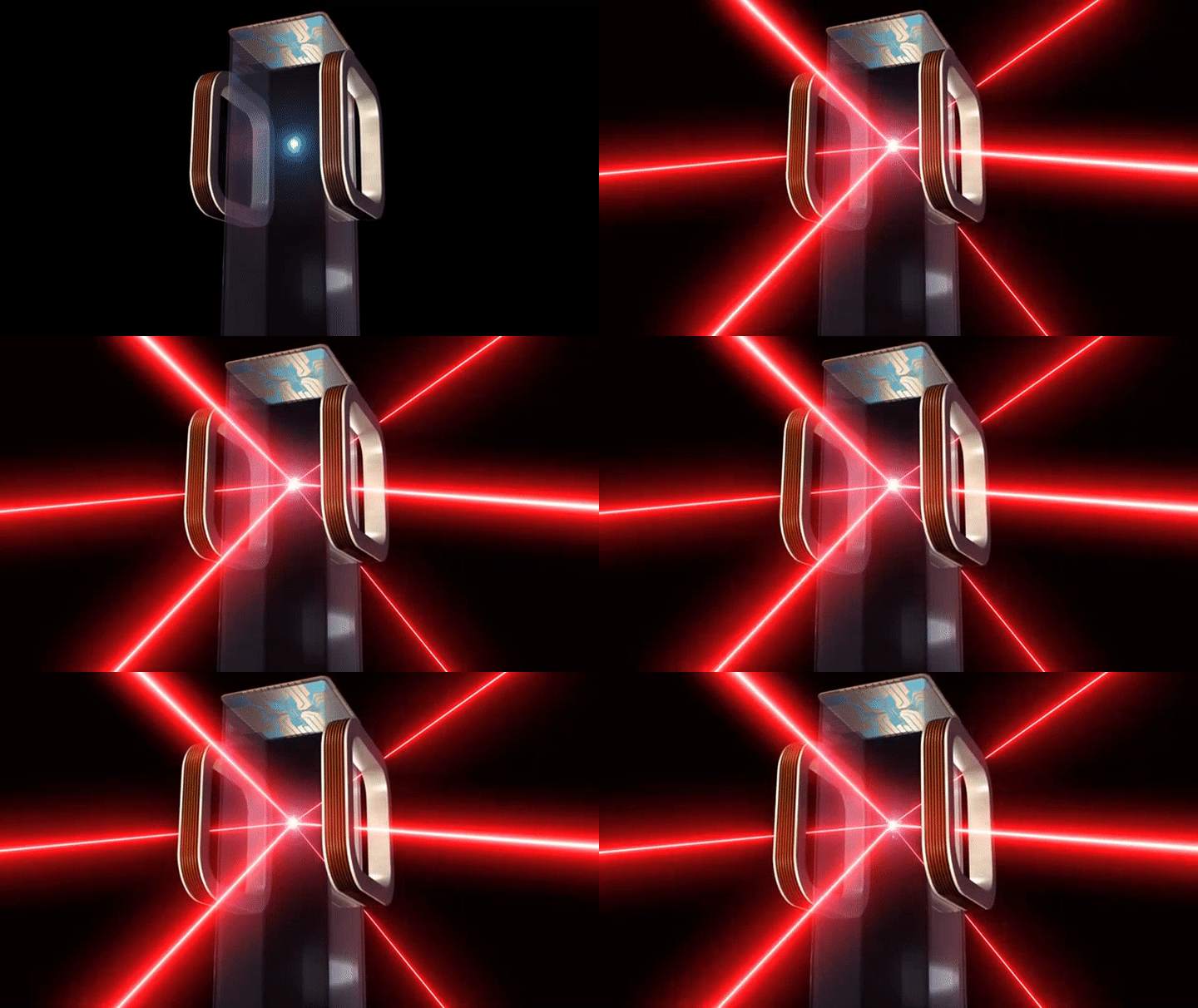
Artist concept of operations inside NASA’s Cold Atom Laboratory aboard the International Space Station.
NASA
The space station offers scientists an unparalleled vantage point to learn about the fundamental behavior of the universe. By studying cosmic phenomena typically blocked or absorbed by Earth’s atmosphere and observing physics at an atomic level, researchers can probe mysteries impossible to study from Earth.
Researchers have recorded billions of cosmic events, helping scientists search for antimatter and dark matter signatures in space.
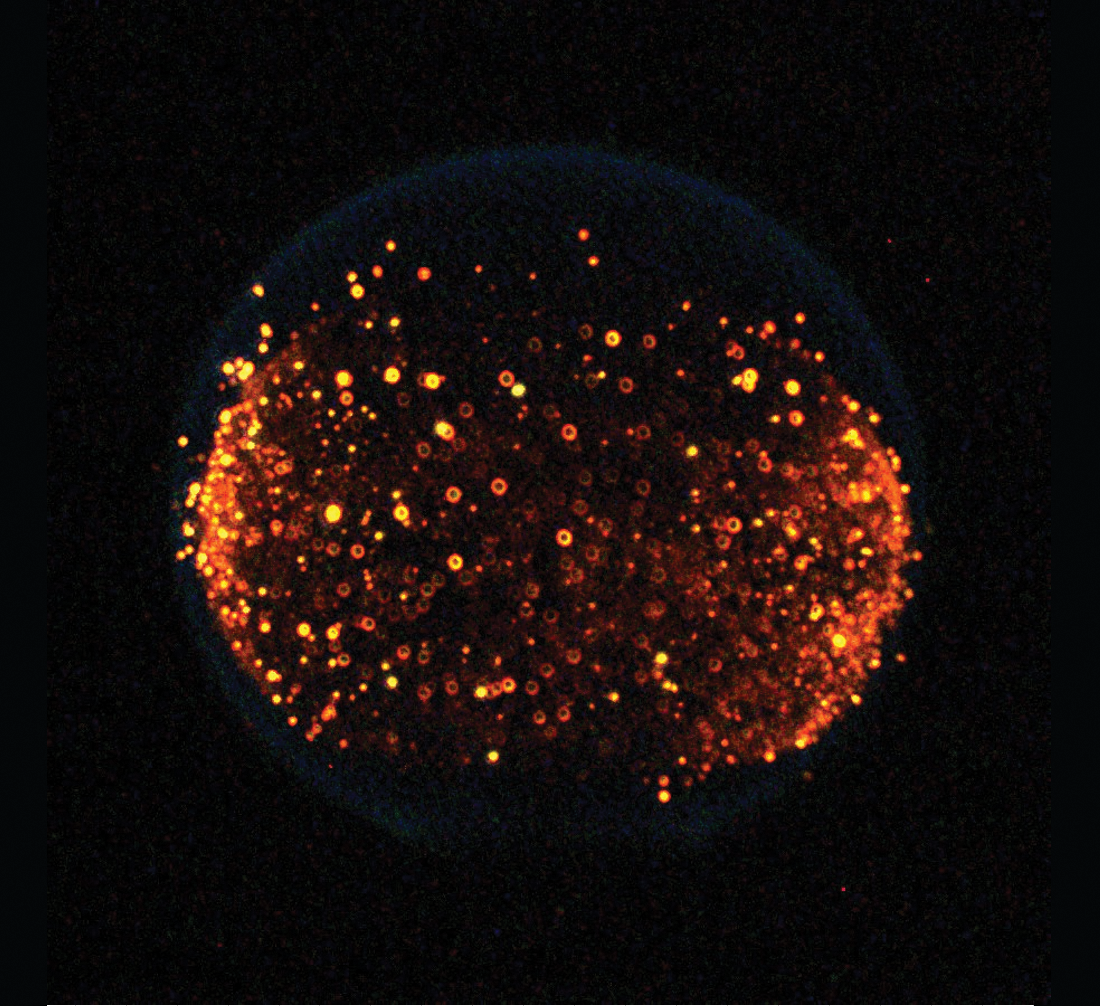
Scientists have created and studied the fifth state of matter on the space station, allowing researchers to use quantum science to advance technology like space navigation, satellite operations, and GPS systems on Earth.
Why this matters:
Research aboard the space station is helping us unravel the deepest mysteries of our universe, from the smallest quantum particles to the most powerful cosmic explosions. Observations of collapsing stars and black holes could inspire new navigation tools using cosmic signals and expand our grasp of space-time. Studies of antimatter and dark matter bring us closer to understanding the 95% of the universe invisible to the human eye. Creating the fifth state of matter in space unlocks new quantum pathways that could transform technology on Earth and in space.
Learning new physics
This image shows a flame ignited as part of the Flame Design investigation on the International Space Station.
NASA
Physical processes behave differently in microgravity, offering scientists a new lens for discovery.
Engineers can design more efficient fuel and life support systems for future spacecraft thanks to studies of fluid boiling, containment, and flow.
Analyzing gels and liquids mixed with tiny particles in space helps researchers fine-tune material compositions and has led to new patents for consumer products.
Breakthroughs in fundamental physics aboard the space station drive innovation on Earth and advance spacecraft fuel, thermal control, plant watering, and water purification systems. Research in soft materials is improving products in medicine, household products, and renewable energy, while cool flames studies may lead to cleaner, more efficient engines.
Enabling global access to space
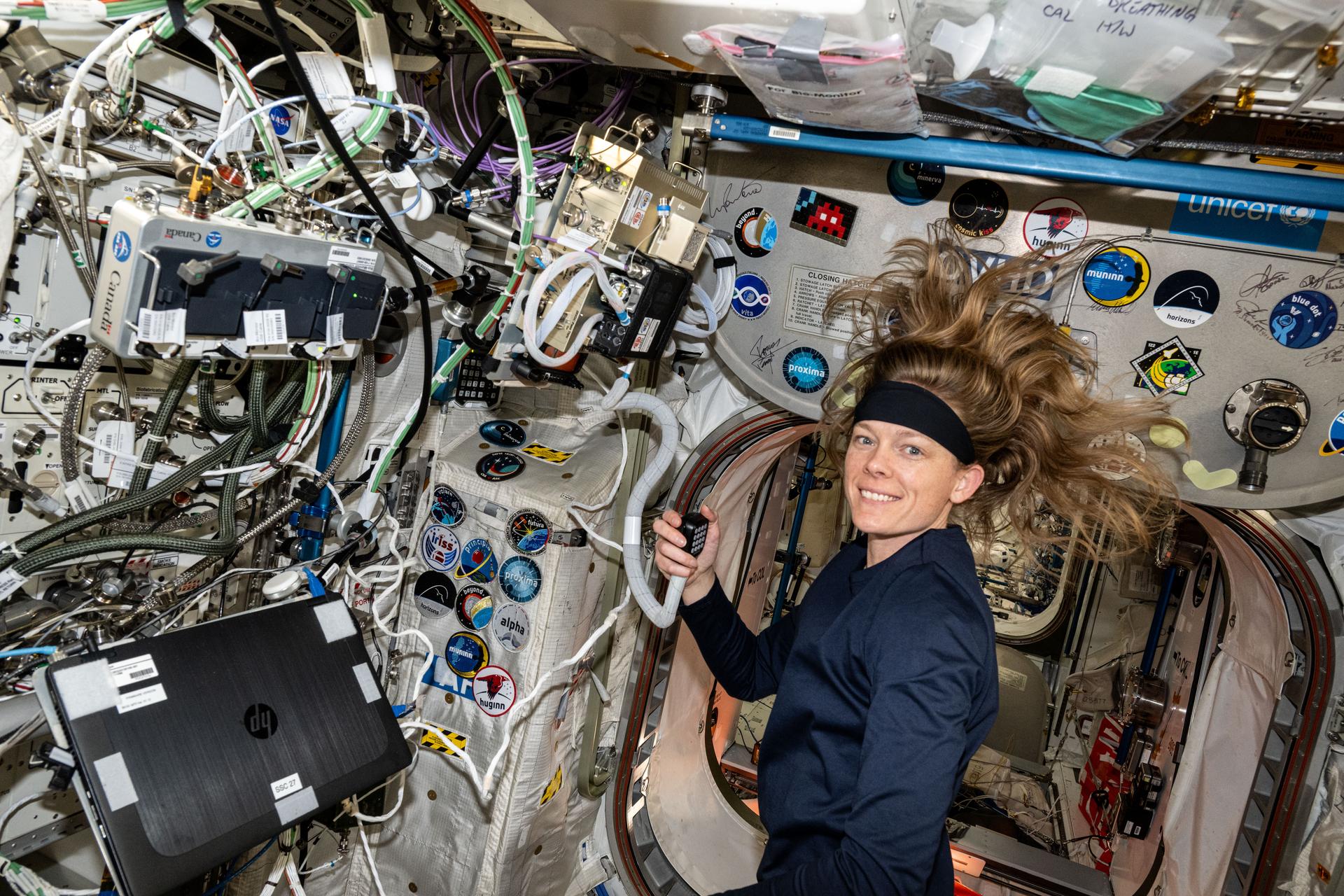
NASA astronaut Nichole Ayers talks on a ham radio with students from Lakeside Junior High School in Springdale, Arkansas. Ayers answered questions from the students about her experience living and working aboard the International Space Station.
NASA
Since 2000, the space station has opened doors for private companies, researchers, students, and astronauts around the world to participate in exploration and help propel humanity forward to the Moon and Mars.
The space station is a launchpad for the commercial space economy, enabling private astronaut missions and hosting hundreds of experiments from commercial companies, giving them the chance to strengthen their technologies through in-orbit research, manufacturing demonstrations, and innovation.
CubeSats deployed from the space station enable students and innovators around the world to test radio antennas, small telescopes, and other scientific demonstrations in space.
More than one million students have engaged with astronauts via ham radio events, inspiring the next generation to participate in science, technology, engineering, and mathematics.
The space station has enabled the space economy, where commercial research, manufacturing, and technology demonstrations are shaping a new global marketplace. NASA and its international partners have established a leadership position in low Earth orbit, creating new opportunities for industry and paving the way for exploration missions to the Moon, Mars, and beyond.
Learn more about the research aboard the International Space Station at:
NASA named astronaut Scott Tingle as chief of the Astronaut Office at the agency’s Johnson Space Center in Houston, effective Nov. 10. A decorated spaceflight veteran and former captain in the United States Navy, Tingle has logged more than 4,500 flight hours in 51 different aircraft and served as a flight engineer aboard the International Space Station.
As chief astronaut, Tingle is responsible for managing astronaut resources and operations. He also will help develop astronaut flight crew operations and make crew assignments for future human spaceflight missions, including Artemis missions to the Moon.
“Our Johnson Space Center team congratulates Scott on his selection as chief of the Astronaut Office. We wish him well as he takes on this new and exciting leadership role,” said Johnson Space Center Director Vanessa Wyche. “I extend my sincerest thanks to Joe Acaba, for his dedicated service to the Astronaut Office, as he completed the tremendous task of preparing our astronaut corps for daring missions to and from the International Space Station and integrated their expertise and space knowledge to develop and test future technologies, software, and procedures making space travel safer and more attainable for our nation’s explorers.”
A native of Randolph, Massachusetts, Tingle was selected as a NASA astronaut in 2009. He holds a bachelor’s degree in mechanical engineering from Southeastern Massachusetts University and a master’s degree in mechanical engineering from Purdue University in West Lafayette, Indiana.
Tingle most recently served as a flight engineer aboard the space station, spending more than six months in orbit during Expedition 54/55. He was the flight engineer and United States Operational Segment lead for the mission, which launched from the Baikonur Cosmodrome aboard a Soyuz spacecraft on Dec. 17, 2017, and concluded with landing on June 3, 2018. Since returning to Earth, he has supported the Astronaut Office in various roles, including mission support, technical leadership, and crew readiness activities.
Before coming to NASA, Tingle worked for The Aerospace Corporation in El Segundo, California, where he served as a technical staff member supporting the company’s propulsion department. He was commissioned as a naval officer in 1991 and went on to complete a distinguished career, earning the rank of captain before retiring. Follow Tingle on X.
Tingle succeeds NASA astronaut Joe Acaba, who had served as chief of the Astronaut Office since February 2023. Acaba has transitioned to the center director’s staff, where he provides technical advice on mission planning and strategy at NASA Johnson. In this new role, he leads the center’s alignment with NASA’s strategic plan and human spaceflight priorities, supports the agency’s STEM workforce goals, and advances collaboration with commercial space, academia, and other government partners as NASA continues its exploration beyond low Earth orbit.