
EU tables proposal for COP30 fossil fuel roadmap after settling internal rift

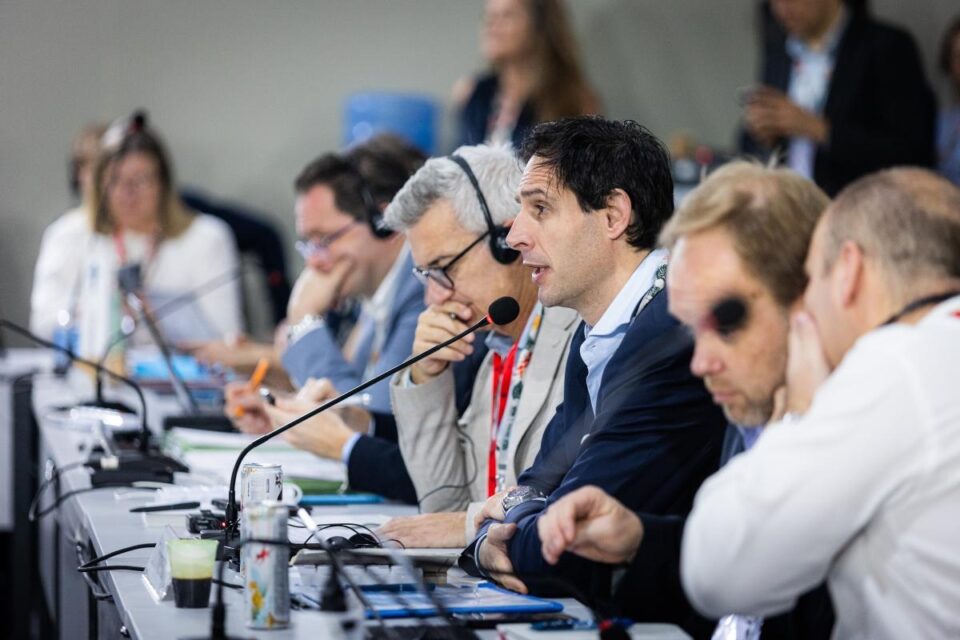


The European Union has put forward a proposal for a “Mutirão” roadmap to transition away from fossil fuels, after hesitation from Italy and Poland had earlier prevented the bloc from adopting a united position on a key issue at stake in Belém.
The EU wants COP30 to start a process to fast-track the COP28 pledge to move away from oil, gas and coal that would build on actions set out by countries in their national climate plans, while recognising that the transition will happen at different paces across the world.
The EU’s text proposal said the COP30 and COP31 presidencies would oversee the development of the roadmap with the aim of producing an annual report for countries to review and decide on next steps, specifying that the process would also involve “actors and processes for finance”.
Earlier rift resolved
Wopke Hoekstra, European Commissioner for Climate, said on Wednesday evening he had told Brazil’s President Lula that a roadmap would be a “pivotal part” of the success of COP30.
“We’ve decided to come up with a proposal that in our view does justice to more ambition to reflect that the world needs a roadmap,” he said, calling the language put on the table “as ambitious as possible, as broad as possible”.
The breakthrough came after extensive discussions between EU member states to overcome resistance from Italy and Poland to supporting a joint stance on the roadmap, which could become one of the most significant decisions of COP30, if agreed.
Before the proposal was tabled, one EU negotiator told Climate Home earlier on Wednesday that if the bloc could not agree to a united position on the roadmap, it could not formally advocate for it in negotiations, putting at risk a strong outcome on the transition away from fossil fuels.
Momentum for roadmap building
More than 80 countries want COP30 to start a process for crafting a blueprint for the world to transition away from fossil fuels, which would put the landmark COP28 deal into practice. Initial supporters of the idea included 25 EU member states, excluding Poland and Italy.
The EU Commission and the country holding its rotating presidency – currently Denmark – negotiate at COP30 on behalf of all of the bloc’s member states. Its general negotiating position for the UN climate summit was set by ministers from all 27 member states at the end of October.
They agreed to “reiterate the call for transitioning away from fossil fuels in energy systems” – the language of the COP28 deal in 2023 – and to call on countries, “particularly major emitters, to operationalise their contribution to the call”. But the mandate to the negotiating team does not include specific references to a roadmap.
The idea was first floated by Brazilian Environment Minister Marina Silva in June, but it has only been gathering momentum since governments arrived in the Amazon city for COP30. Rapid developments over the past ten days have caught many countries off guard.
Pushback from petrostates
A draft “Mutirão” decision – expected to be the main political outcome of the Belém summit – published on Tuesday morning mentions the transition away from fossil fuels among a wide sweep of options for how to find agreement on the thorniest issues.
One option would encourage governments to convene a roundtable aimed at supporting countries to develop “just, orderly and equitable transition roadmaps”, including for reducing dependency on fuels and stopping deforestation. However, that appears to refer to domestic blueprints and stops short of advocating for a global roadmap that over 80 countries are calling for.
COP30 president André Corrêa do Lago said on Tuesday evening that the text “opens the door” between two “extremes”. “Most of the countries are either very favourable [to the fossil fuel roadmap] or it is a red line,” he added.
Petrostates within the Arab group, led by Saudi Arabia, previously pushed back against following up to the Dubai deal and are expected to mount strong opposition against efforts to include reference to a roadmap in the text.
Not a “top-down” process
A Polish negotiator declined to comment on the matter, citing ongoing talks.
Early in November, Poland was among a handful of countries that opposed a new EU target to cut emissions 90% by 2040, from 1990 levels, which was adopted by the bloc through majority voting, Reuters reported.
A spokesperson for the EU Commission declined to comment.
Before the EU put forwards its proposal, Jennifer Morgan, climate envoy for Germany until earlier this year, told Climate Home News that supporting a roadmap to transition away from fossil fuels was clearly in the EU’s interest.
“Policy to support such a roadmap… is already in many directives, and you see the growth of renewables. And so I would expect them to throw their full weight into this,” she said.
She added that as the process is meant to be something that is “nationally determined” and “not some top down thing that’s coming to tell them to do something different than what they already have in law, I would expect that they could support it.”
The post EU tables proposal for COP30 fossil fuel roadmap after settling internal rift appeared first on Climate Home News.
Source Link EU tables proposal for COP30 fossil fuel roadmap after settling internal rift