
COP30 Bulletin Day 7: Brazil sets out options to agree a Belém package


At the start of COP30, to get the agenda approved, Brazil promised to hold consultations on four controversial issues: ambition on emissions reductions, transparency of data, trade and finance. This Sunday night, after most delegates had spent their day off exploring the Amazon, the presidency released a five-page document capturing what was said in those consultations.
Nothing in that “summary note” has been agreed by countries. But it collects together divergent views and forms the basis of what could become a politically agreed statement on those issues that lack a negotiating home. It has three key strands on boosting climate finance, strengthening emissions reductions and tackling trade measures linked to decarbonisation.
The COP30 presidency told journalists on Monday afternoon that a first draft would be presented to countries – whose environment ministers are now in town – at some point on Tuesday. It added that there would be two “packages” this week: the first dealing with the four homeless issues and related themes being negotiated such as adaptation and just transition – and a second for remaining items at the talks.
After some confusion over the details and sequencing of the diplomatic plan, a letter from COP30 President André Corrêa do Lago said the aim was to hold a plenary session to gavel through the first “Belém political package” by the middle of this week.
That would mean completing “a significant part of our work” by Tuesday evening, he wrote – to which end negotiations will continue late into the night “in task-force mode”. The presidency added that countries wanted this unusual structure to the UN climate summit – where the hardest decisions are usually made at the end – to demonstrate that the multilateral process is working.

Earlier on Monday morning, UN climate chief Simon Stiell had already urged governments “to get to the hardest issues fast”.
“When these issues get pushed deep into extra time, everybody loses. We absolutely cannot afford to waste time on tactical delays or stone-walling,” he added.
The summary note issued on Sunday includes key rhetorical messages the COP30 presidency wants to include – that this is a “COP of Truth”, multilateralism is alive (despite President Trump’s efforts to thwart climate action) and the Paris Agreement is now moving from negotiation to implementation.
On emissions-cutting and the need to raise ambition – sorely lacking after the latest round of national climate plans (NDCs) – the note includes an option to hold an annual review and explore the “opportunities, barriers and enablers” to achieve the global efforts agreed at COP28 in Dubai to triple renewable energy and double energy efficiency by 2030; accelerate action to transition away from fossil fuels; and halt and reverse deforestation. This is essentially where any reference to a roadmap to transition away from fossil fuels could be anchored.
-
COP30 Bulletin Day 5: COP30 could greenlight work on a fossil fuel transition roadmap
At the climate talks in Belém, governments are considering whether to launch a process to craft a roadmap and how that might look -
COP30 Bulletin Day 6: First week ends with a colourful march and much work left to do
UN climate chief Simon Stiell tells governments “to give a little to get a lot”, as many thorny issues remain for ministers to resolve next week


The document also includes proposals to “urge” developed nations to include finance in their NDC climate plans and “encourage” all countries that have set a range of percentage emissions reductions in their NDCs – like the EU’s 66.25-72.5% – to move toward the upper end of the range.
On finance, options include a three-year work programme on provision of finance by wealthy governments and a goal to triple adaptation finance (something the least-developed countries are pushing for) or just repeating the finance goal agreed at COP29 and “noting” a new roadmap to achieve that (which rich nations very much prefer).
There are also various options for how to talk about where climate and trade overlap: an annual dialogue, roundtables, consultations, a new platform or just to keep discussing in the ‘response measures’ strand of climate talks.
Li Shuo, head of the Asia Society Policy Institute’s China Climate Hub, told Climate Home News it was highly significant that – after two years of the issue being buried in climate talks – trade has now been “anchored in the endgame of this COP”.
The various potential outcomes in the summary note could be included in existing agenda items or they could be lumped together into what the Brazilian government says could be called a “mutirão decision” or a delivery, response or global action plan.
Essentially, after governments ignored the presidency’s pleas not to add contentious items to the agenda, it looks like they could get at least some of what they want by turning those issues into the headline deal from COP30 .
Korea joins coal phase-out coalition at COP30
As fossil fuels have grabbed headlines at COP30, major coal producer South Korea kicked off the second week of the Belém conference with an actual concrete pledge: the country will phase out most of its coal power by 2040.
Operating the seventh-largest coal fleet in the world, Korea announced on Monday that it will join the Powering Past Coal Alliance (PPCA), an initiative launched in 2017 by the UK and Canada to encourage countries to wean themselves off the planet’s largest source of emissions. Oil and gas exporter Bahrain is another new member.
Asian industrial giant Korea said that out of 62 operating coal power plants, it will commit to retiring 40 of them by 2040. The phase-out date of the remaining 22 plants “will be determined based on economic and environmental feasibility”.
-
Morocco sets date for coal phase-out for the first time in climate plan
The 2040 deadline is dependent on external support, but the phase-out will still be achieved unconditionally in the 2040s, according to the country’s updated NDC -
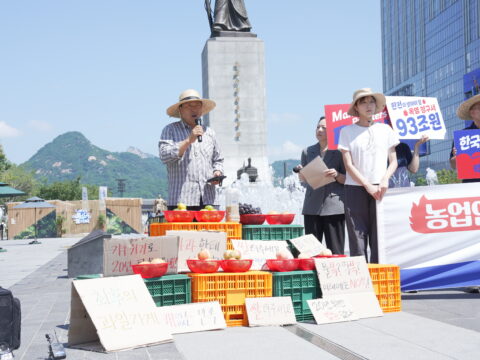
After floods and failed harvests, Korean farmers sue state power utility for damages
Six farmers are seeking compensation from South Korea’s KEPCO, arguing its fossil fuel emissions have contributed to economic and emotional harm -
Bid to end export credit help for oil and gas fails, with Korea and Türkiye opposed
The EU, UK and Canada wanted fellow OECD members to commit to stop supporting foreign fossil fuels before Donald Trump takes over as US president


Korean Minister of Environment Kim Sung-Hwan said at an event announcing the pledge that the country will play a “leading role” in the energy transition.
“South Korea is known as a manufacturing powerhouse. Unfortunately renewable energy has taken a low share in our power mix, but going forward we are determined to foster renewable energy industries,” he told journalists. “We will show the world that we can create a decarbonised energy transition.”
Asked about a fossil fuel transition roadmap – an idea floated around by many governments in Belém – Sung-Hwan said “humanity and all of the governments should work together to achieve a decarbonised green transition”, adding that “COP30 will be an important momentum”.
UK climate minister Katie White said Korea was taking an “ambitious step”, and that they can “reap the rewards that we are seeing from our own clean energy transition”.
Despite a slight drop in recent years, coal remains South Korea’s biggest source of electricity generation, providing about a third of its power. Nuclear and gas supply most of the rest.

India talks up clean energy, but new NDC nowhere to be seen
As India’s environment minister Bhupendra Yadav arrived in Belém on Monday to extol the country’s “pioneering progress” on renewables, one Paris Agreement-sized elephant looms in the room: the country’s NDC — still nowhere in sight.
At a packed-out event in the UK pavilion, Yadav showered his boss, Prime Minister Narendra Modi, with praise as he boasted that India recently achieved its goal of having 50% of its installed electricity capacity from non-fossil fuel sources five years ahead of the 2030 target set in its latest national climate plan.
Yet Yadav remained conspicuously silent on India’s new climate blueprint – including its 2035 emissions-reduction goal – which should have been released ahead of COP30. India, the world’s third-largest greenhouse gas emitter, is the most significant of the three G20 nations not to have announced new targets, alongside Saudi Arabia and Argentina.
When reporters asked Yadav about the NDC’s whereabouts at the end of the event, he quickly made a beeline through the crowd for the pavilion’s exit, refusing to answer questions on the topic.
During the fireside chat, Yadav talked about how India’s investment in its national renewable energy manufacturing is creating green jobs, which, he said, the success of India’s clean energy policies depends on.
“Economic development and decarbonisation will work together,” the minister said, emphasising that the energy transition process “must be affordable, effective and accessible to the common person”.
Fossil fuels – primarily coal – still supplied more than two-thirds of India’s power generation last year. But fossil-fuel electricity output fell in the first half of 2025 compared with the same period in 2024, according to the think tank Ember.
Cryptically, Yadav remarked that “fixing targets alone is not sufficient” and that one must “work on it and see the futuristic aspect of that.”
Later on Monday night, Indian news agency PTI reported that the minister told journalists internal processes on the NDC, including cabinet approval, are underway. “We have made a statement that we will release it soon. It will be by December,” he was quoted as saying.
Methane emissions set to rise by 2030 – but drop still within reach
Four years ago at COP26 in Glasgow, more than 100 countries signed up to slash methane emissions by 2030. At COP30, the first review of that Global Methane Pledge (GWP) shows methane emissions still going up – but strong policies could make a difference.
The Global Methane Status report put together by the UN Environment Programme shows that, under current legislation, methane emissions are projected to increase by 5% by 2030 compared to 2020 levels – which is still better than the scenarios forecast when the pledge was first launched.
However, if countries put into practice their new climate plans presented this year, an 8% reduction in methane emissions could be achieved by 2030, which would mark the first sustained fall in emissions of this potent greenhouse gas.
Currently, 42% of emissions come from the agriculture sector, mostly from belching cows and their manure. Energy produces 38%, mostly from gas leaks and venting, and waste accounts for 20% mainly from landfills.

The report says some of the most cost-effective actions to reduce methane are in the oil and gas sector, since reducing gas leaks and venting would prevent wasted energy and the industry can afford to invest in leakage prevention.
Addressing methane emissions is one of the more effective ways of tackling climate change, because it traps 80 times more heat in the atmosphere than CO2 but has a shorter lifespan. Some countries, led by Barbados, have even called for a legally binding methane treaty precisely because of this reason.
EU energy commissioner Dan Jorgensen said the GWP has turned “ambition into tangible progress” but added that “we need to do more”. “Our task now is to scale these solutions rapidly, working together to keep 1.5C within reach and secure a healthier future for our people and our planet,” he said.
Angela Churie Kallhauge, executive vice president of impact at the Environmental Defense Fund said in a statement that “we simply cannot afford to waste our best near-term opportunity to slow climate change; it’s time to move beyond pledges and immediately demand scaled-up action that delivers measurable cuts.”
COP pledges to UN’s Adaptation Fund disappoint for third year
A COP30 fundraising session for the Adaptation Fund on Monday saw only limited pledges, which would leave it far short of a minimum target of $300 million this year.
New pledges were made by Spain ($23.1m), Ireland ($11.6m), the Walloon region of Belgium ($3.5m), Luxembourg ($5.8m), Switzerland ($5.1 million), South Korea ($842,700) and Iceland ($617,100). Germany – the fund’s largest donor over its 18 years of operation – announced a contribution of 60 million euros ($69.4m). Sweden confirmed a contribution of $13.8 million announced earlier this year.
The Adaptation Fund said more than $133 million had been announced in new pledges, mostly from long-time donors to its coffers. Mikko Ollikainen, head of the Adaptation Fund, said the money would help it reach more vulnerable communities in developing countries with urgently needed adaptation projects on the ground.
He added, however, that the Adaptation Fund “faces unprecedented demand for its work, and can receive funds from a variety of sources, so we are also hopeful others will come forward in the coming days.”
To date, it has committed $1.5 billion to more than 200 concrete adaptation projects in 108 countries, and has made strides in providing direct support for country systems and local leadership.
Germany’s environment minister Carsten Schneider said he hoped his country’s “contribution will build trust further and lend momentum to the search for joint solutions in Belém”.
The Adaptation Fund was set up under UN climate talks and helps developing countries roll out pioneering resilience projects.
Campaigners said indications so far are that pledges to the fund in 2025 will fall “well short” of the $300 million floor – likely amounting to less than half – which would be the third year in a row the fund’s target is missed. It has a pipeline of unfunded projects that require more than $700 million in funding.
Comment: Global Goal on Adaptation – Weighing the cow won’t make it fatter
There is particular concern about the scarcity of donor pledges at a COP where progress on adaptation is supposed to be one of the key wins, with least-developed countries calling for a new adaptation finance goal of $120 billion a year by 2030 to be agreed in Belém.
In addition, last year at COP29 all governments said they would aim to triple outflows from the UN climate funds – including the Adaptation Fund – by 2030. According to campaigners, two other funds for vulnerable nations have cancelled their pledging sessions at COP30, which usually reflects low donor interest.
Liane Schalatek, associate director of the Heinrich Böll Foundation in Washington DC, described Monday’s shortfall in commitments for the Adaptation Fund as “galling and disastrous”, adding it showed the climate finance goal agreed last year in Baku “is already not worth the paper the decision was printed on”.
“The people and communities in developing countries already facing severe climate impacts, and needing no-frills full-cost grant support for their survival, deserve better as a matter of justice, as a matter of decency, and as a matter of international law,” she added.
Row over climate funds for wealthy developing countries
A dispute at last month’s Green Climate Fund board meeting resurfaced in ministers’ speeches at COP30 today, with developing countries crying foul over a decision by some developed nations to deny Oman funds for an early-warning system because of its above-average GDP per capita.
Five developed countries – the UK, France, Sweden, Switzerland and Denmark – opposed giving Oman a $15-million grant. Eighteen countries on the Fund’s board – including several developed countries – had wanted to give Oman the funds, but the GCF’s high bar for decisions meant they were out-voted.
France’s representative told the meeting Oman was a “high-income country whose GDP per capita is equivalent to that of some EU member states”, saying that meant giving the Gulf state scarce GCF grants was “simply not acceptable”. Exceptions to this rule can, however, be made for small island developing states, he added.
That argument was criticised by fellow board members, with the Saudi and Ghanaian representatives saying it amounted to “discrimination”, while Pakistan’s envoy accused countries of using “political considerations”, which he did not spell out.
At today’s “high-level segment” in Belém, Palau’s Environment Minister Steven Victor, for the Alliance of Small Island States, criticised “arbitrary conditions based on per capita incomes and population size by some board members”. Iraq’s environment minister, speaking on behalf of the G77+China, expressed “great concern” about “a minority of [GCF] board members representing a few developed countries” blocking the funds for Oman.
The post COP30 Bulletin Day 7: Brazil sets out options to agree a Belém package appeared first on Climate Home News.
Source Link COP30 Bulletin Day 7: Brazil sets out options to agree a Belém package